The journal
What are common mistakes in dumbbell rows? Practical fixes for safer, stronger pulls
dumbbell rows proper form: practical fixes for rotation, shrugging, elbow path, and unstable setups to protect the back and improve lat engagement.
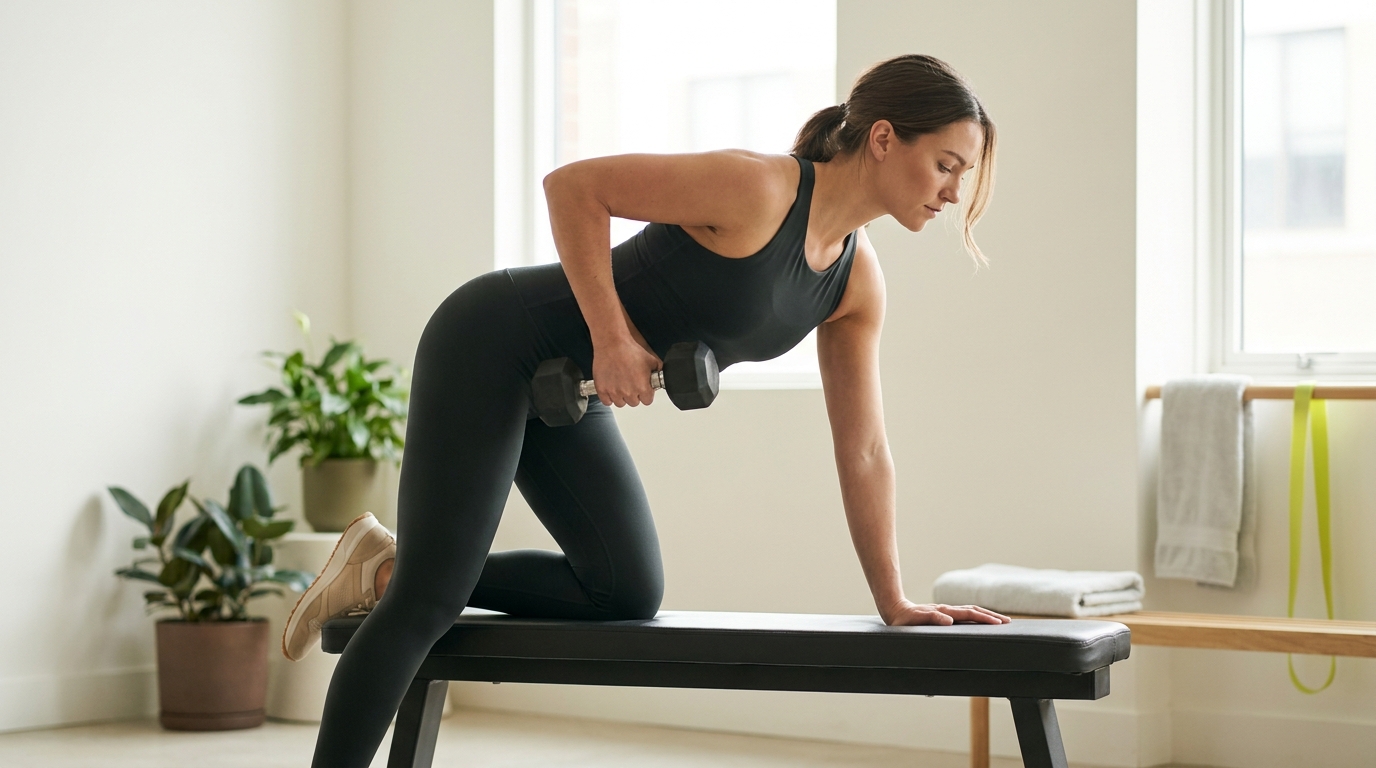
Why form matters for dumbbell rows: what good technique protects and trains
dumbbell rows proper form
The primary training goal of a one-arm dumbbell row is to load the latissimus dorsi while supporting posterior chain function and maintaining spinal safety. Good technique keeps the work on the lats and mid back rather than letting the upper traps and rear deltoids take over, and it reduces excessive shear and rotation forces on the spine. For an exercise overview and setup cues that emphasize this balance, see the ACE exercise library and recommendations ACE exercise library.
Poor technique commonly shifts force away from the target muscles and onto other structures. For example, excessive torso rotation reduces lat focus and increases spinal load, and shrugging the working shoulder signals weak scapular control that can move tension into the upper trapezius. Use a controlled setup and consistent movement quality, following the technique cues in ACE single-arm row technique.
What are the most common technical mistakes in one-arm dumbbell rows and how can I fix them?
The most common mistakes are torso rotation, elbow flaring, shoulder shrugging, shortened range of motion, and an unstable base; correct them by bracing the core, keeping hips and shoulders square, initiating the pull with scapular retraction and depression, directing the elbow toward the hip, using full controlled reps, and regressing to chest-supported or half-kneeling drills when needed.
EMG comparisons across row variations are limited and do not fully settle which subtle grip or path is objectively best for every goal. Because direct quantitative evidence specific to every dumbbell row variant is sparse, most practical guidance is informed by coaching consensus and clinical safety advice, rather than a single definitive study. For a technical baseline and exercise description that supports this coaching approach, consult the ExRx technique summary ExRx dumbbell bent-over row.
Setup and bracing: the core framework for a controlled one-arm dumbbell row
Start with a stable base: choose either a bench-supported row with three points of contact or a grounded split stance that forms a tripod. A bench-supported position typically uses the non-working hand and knee on the bench plus the planted foot for three clear contact points. A split stance keeps the hips level and gives a wide footprint to resist rotation. Both setups help limit torso sway and momentum and let you focus on the pulling mechanics.

Before lifting, brace your trunk by taking a diaphragmatic breath and gently tightening the abdominal wall to protect the lower back. Maintain a neutral spine from the tailbone to the base of the skull, and keep the head in line with the spine rather than craning up or dropping down. Visual and tactile checks are useful: place the free hand on the hip to sense rotation, and use a mirror or phone video for a quick outside check of alignment.
Check shoulder and hip alignment: the working shoulder should sit slightly lower than the non-working side when braced, not shrugged toward the ear. Keep the hips square to the bench or to the floor so the torso does not rotate during the pull. Use a light practice rep to confirm you can hold this position while moving the shoulder blade through controlled retraction and depression—this establishes the baseline for effective reps.
Foot placement and grip matter: with a bench-supported row, the planted foot should be far enough under the body to create a stable triangle with the supporting knee and hand. In a split stance, distribute weight evenly and avoid letting the rear hip rotate back. Use a neutral or pronated grip as your program requires, but test the setup first with an empty hand or light dumbbell to confirm you can hold the pelvis and ribcage square before progressing load.
Final quick checks before the first working set: can you breathe and brace without losing spine position, can you pull the shoulder blade down and back before moving the elbow, and can you complete a full controlled descent into a long lat stretch? If not, reduce load or switch to a chest-supported or half-kneeling variation until those checks pass.
Common mistakes in dumbbell rows and what they do (the anatomy of error)
Excessive torso rotation
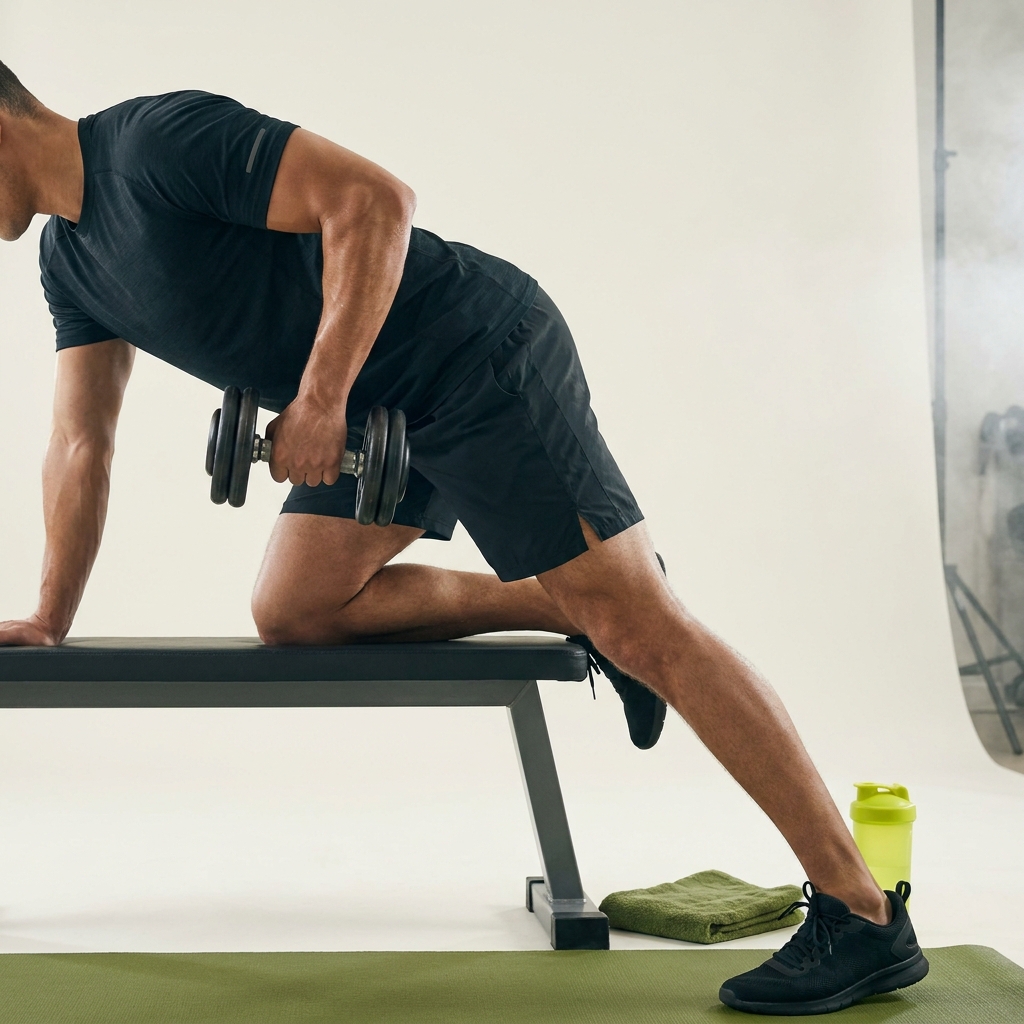
What it looks like: the ribcage twists and the hips open toward the working side during the pull, turning the move into a torso rotation drill rather than a lat-focused row. Why it matters: rotation reduces effective lat loading and increases shear on the lumbar spine, making the pull less efficient and potentially riskier. The correction is to brace the core, keep hips and shoulders square, and use a bench or a firm split stance to resist rotation; coaching resources recommend these bracing cues to preserve lat emphasis ACE single-arm row technique, and common form flaws are summarized on Muscle & Strength.
Elbow flaring vs. elbow-to-hip path
What it looks like: the elbow opens out to the side so the hand moves in a straight line backward instead of angling the elbow toward the hip. Why it matters: an outward elbow path tends to shift work into the rear deltoid and upper traps, which reduces lat engagement. The practical fix is to cue an elbow path toward the hip so the upper arm tracks closer to the torso on the concentric phase, improving lat activation and reducing trap dominance Verywell Fit one-arm row guide. See tips from Tony Gentilcore.
Shrugging and poor scapular control
What it looks like: the shoulder elevates toward the ear as the weight is pulled, or the shoulder blade moves erratically instead of moving smoothly. Why it matters: shrugging indicates the upper trapezius and neck muscles are taking more load than intended. A reliable cue is to "pack the shoulder" by initiating the rep with a controlled scapular retraction and depression, which sets a stable base for the elbow to pull from and reduces unwanted shoulder elevation. Coaching materials emphasize this scapular sequence before the arm moves to protect the shoulder and direct force to the lats ACE exercise library.
Cutting range of motion short
What it looks like: either the descent stops early so the lats do not reach a full stretch, or the concentric phase finishes before the elbow comes toward the hip. Why it matters: shortened range reduces the total work done by the target muscles and limits strength and hypertrophy signals. Restore full ROM by controlling the eccentric to a full, pain-free stretch and finishing the pull with the elbow aimed at the hip, then lowering slowly without letting the torso flex or extend. Technique summaries advise prioritizing full controlled reps over heavier loads to build durable movement patterns ExRx dumbbell bent-over row. For more on range control see Rep & Range on exercise range of motion.
Unstable base and momentum
What it looks like: the torso rocks or the hips bounce as load increases, using momentum to complete reps. Why it matters: momentum reduces time under tension for the intended muscles and increases load on stabilizing structures, often hiding weaknesses. The solution is a secure bench support or a solid split stance, and to reduce load until you can execute disciplined repetitions with minimal body swing. Coaching overviews highlight stable support and deliberate pacing as primary controls against momentum NSCA discussion on row variations.
Rep & Range bench and support recommendations
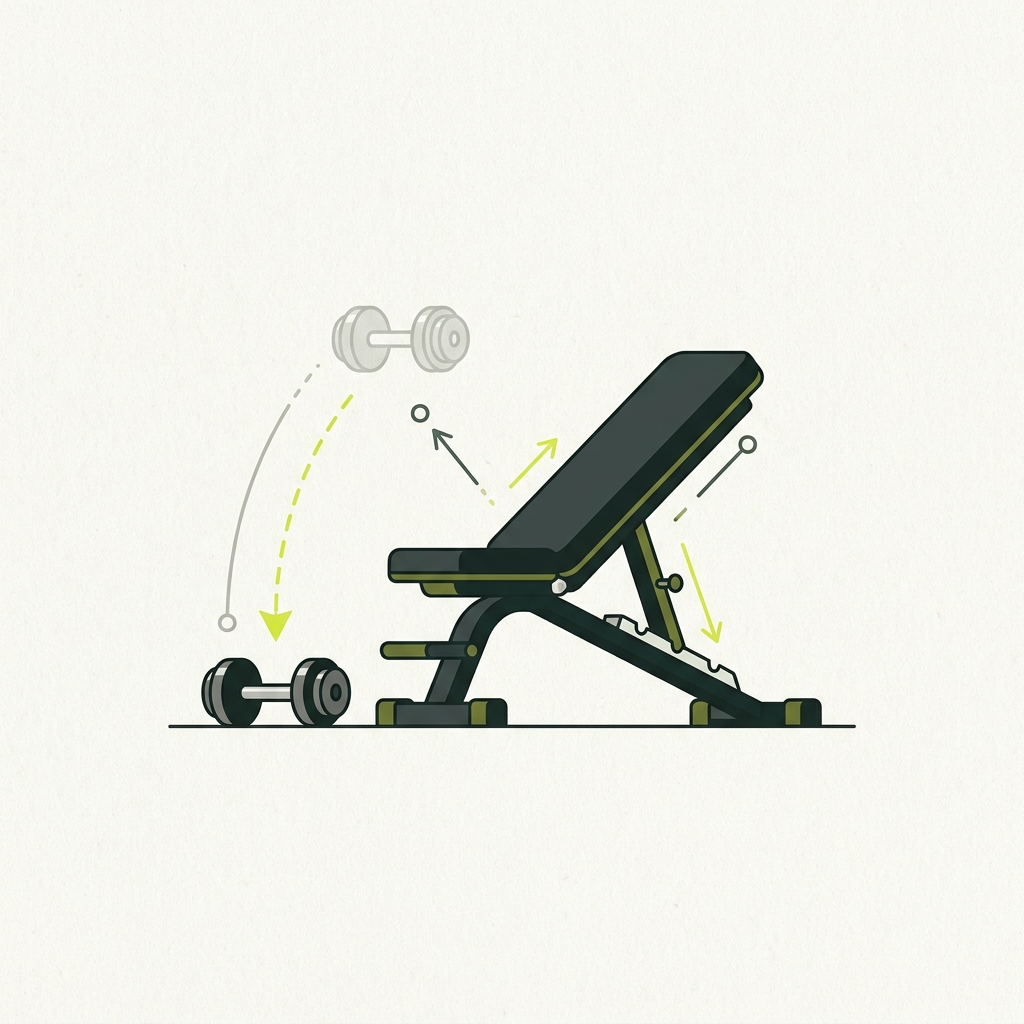
Each of these faults often appears together: an unstable base invites rotation, which then encourages elbow flaring and shrugging. Addressing the base and the scapular set before increasing weight breaks that chain and guides the stimulus back to the lats and mid back.
Coaching cues and drills to fix dumbbell row form
Immediate cues to use on the next set: "pack the shoulder" before every rep, "drive the elbow to the hip" on the concentric, and "lower with control" on the eccentric. Short cue strings are easier to remember during a set, so choose one phrase that reminds you of setup and one that reminds you of the pull path.
Drills that groove the desired mechanics include chest-supported rows to remove the need to brace the hips, half-kneeling cable rows to isolate the elbow-to-hip path, and slow isometric pauses at the top of the pull to train scapular control and reduce shrugging. These interventions help you practice the movement without the confound of a weak base or excessive load ACE single-arm row technique.
Progression plan: begin with drills and light loads until you can maintain a packed shoulder and square hips for multiple slow reps. Then add load slowly, keeping tempo conservative: a 2-1-2 pattern can work well, meaning a two second eccentric, one second hold at the chest with a packed shoulder, and a two second reset to the bottom. Nicking tempo this way helps you avoid slipping back into momentum-driven patterns as weight increases NSCA discussion on row variations.
quick form check for a slow recorded rep
Use self-audit: film a three-rep set from the side and the back, then watch frame by frame to check for rotation, elbow path, shoulder elevation, and range. Repeat the drill work for a week before expecting heavier loads to feel natural; short focused practice beats random heavy attempts for long-term technique gains.
Programming decisions, regressions and safety criteria
When to regress: if you see persistent torso rotation, repeated shrugging, or you cannot hold scapular position for light loads, move back to drills such as chest-supported rows or half-kneeling cable rows. These regressions are not failures, they are deliberate steps to build mechanics before increasing load.
Load, volume and tempo guidance: prioritize technical repetitions over absolute load. Use lighter weights and slower tempos when working on form, aiming for sets of 6 to 12 clean reps where every rep meets your checklist. Once you can deliver consistent technical reps across sets, increase load in small increments while keeping tempo and setup checks in place. The programming emphasis should be on quality first, then gradual progression once mechanics are stable Rep & Range on progressive overload.
Safety flags and when to seek help: stop and consult a professional if you experience sharp pain, radiating symptoms, numbness, or weakness that appears during or after row variations. These are red flags that need assessment rather than iterative technical tweaks. For guidance on technique that reduces back strain while training the posterior chain, the ACE exercise library provides technique instructions ACE single-arm row technique. For another exercise demonstration, see Cleveland Clinic on dumbbell rows.
Quick troubleshooting checklist and closing summary
Two-minute form check: 1) setup and bracing, 2) single slow practice rep with video or mirror, 3) review for hip-shoulder square, scapular pack, elbow-to-hip path, full eccentric stretch, and lack of shrug. If any item fails, regress to a drill and practice the weak link for a week before retesting.
Common coach cues to try immediately: "brace and breathe," "pack the shoulder," "pull the elbow to the hip," "lower with control," and "feet and hips square." These cues prioritize neutral spine, correct elbow trajectory, stable scapular mechanics, full ROM, and a secure base.
Summary: the top priorities for safer, more effective rows are a neutral spine with solid bracing, a stable base, initiating the movement with scapular retraction and depression, directing the elbow toward the hip, and using a full controlled ROM. Most practical recommendations come from coaching consensus and clinical resources rather than new EMG trials, so focus on durable mechanics and steady progression over chasing marginal muscle activation claims ACE exercise library.
Frequently asked questions
How do I stop rotating during single-arm dumbbell rows?
Use a bench-supported setup or a wide split stance, brace the core, keep hips and shoulders square, and practice light controlled reps while filming your form to confirm reduced rotation.
Is shrugging during the row normal?
No, shrugging usually shows weak scapular control; initiate the rep with a controlled scapular retraction and depression and use lighter loads or chest-supported rows until it stops.
When should I see a professional about row pain?
If you have sharp pain, radiating symptoms, numbness, or new weakness during or after rows, stop and seek professional assessment rather than continuing to self-correct.
Improved form yields better training outcomes and reduces unnecessary spinal load. Make setup and scapular sequencing nonnegotiable parts of your routine, use regressions when needed, and progress deliberately. If you have ongoing pain or neurological symptoms, seek a professional evaluation before continuing a program of loaded rows.
References
- https://www.acefitness.org/resources/everyone/exercise-library/215/one-arm-dumbbell-row/
- ACE single-arm row technique
- https://exrx.net/WeightExercises/BackGeneral/DBBentOverRow
- https://www.verywellfit.com/how-to-do-the-one-arm-dumbbell-row-3120169
- https://www.nsca.com/education/articles/coach/row-variations-and-back-training/
- https://www.muscleandstrength.com/articles/dumbbell-row-form-flaws-set-up-execution
- https://tonygentilcore.com/2018/08/5-dumbbell-row-mistakes-instead/
- https://health.clevelandclinic.org/dumbbell-rows
- https://repandrange.com/workouts/exercise-atlas/supported-row
- https://repandrange.com/guides/exercise-range-of-motion
- https://repandrange.com/guides/progressive-overload
Product options for this topic
As an Amazon Associate I earn from qualifying purchases. These are researched options, not hands-on test results. Check the exact size or model, current price and availability on Amazon.
| Product option | Fit and limits to check | Retailer |
|---|---|---|
| CAP rubber-coated hex dumbbells, 10 lb pair | A pair of fixed-weight dumbbells for exercises suited to this load. Choose weight for your current ability; a single pair will not cover every exercise or progression. | View on Amazon |