The journal
Is it better to do dumbbell rows with one arm or two? Practical technique and programming advice
dumbbell rows proper form explained, with step-by-step cues, programming rules and sample workouts to choose between one-arm and two-arm rows.
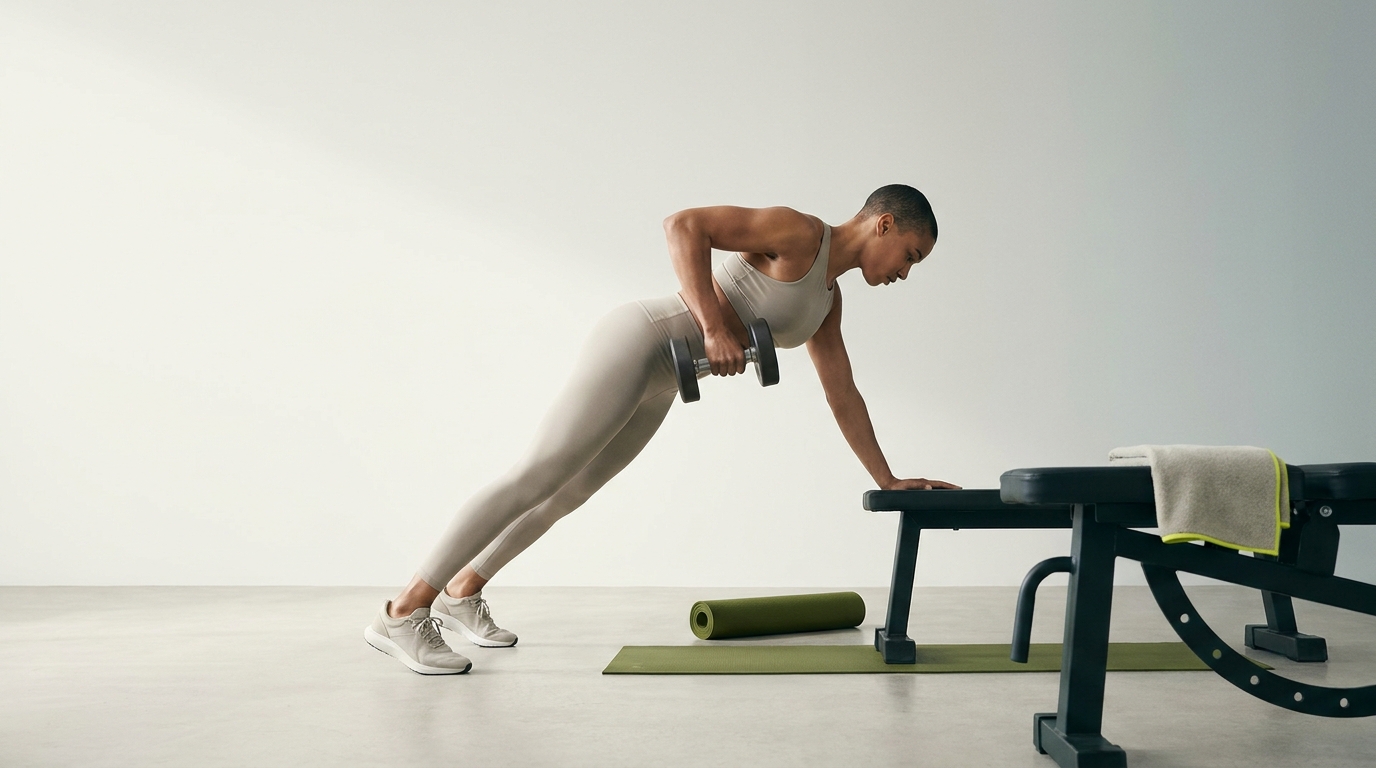
Quick answer: Which is better and why
Short verdict: neither one-arm nor two-arm rows are universally better. Each variation has clear strengths depending on whether you need unilateral control, heavier total load, or a faster workout structure.
Use one-arm rows when you need to correct asymmetry, train core anti-rotation under single-side load, or when bench or rack setup is limited. Choose two-arm rows when your goal is to move more total weight, save time, or emphasise symmetric loading with less torso rotation.
Is it better to do dumbbell rows with one arm or two?
Neither is universally better. One-arm rows are best for addressing imbalances and adding anti-rotation demand, while two-arm rows are more time-efficient and typically let you move heavier total loads.
This article lays out practical cues, programming rules and quick fixes so you can test both variations and pick the one that matches your goals and limits.
Below, the technical section gives exact setup and pull cues to practise dumbbell rows proper form safely.

Dumbbell rows proper form: how to do one-arm rows and two-arm rows step by step
One-arm dumbbell row: setup, pull and breathing cues
Start with a solid setup. Place one knee and the same-side hand on a flat bench, or keep a staggered stance if you prefer floor support. The working foot should be planted under the hip so the torso is stable. Hold the dumbbell in the free hand, shoulder blades relaxed but ready to set.
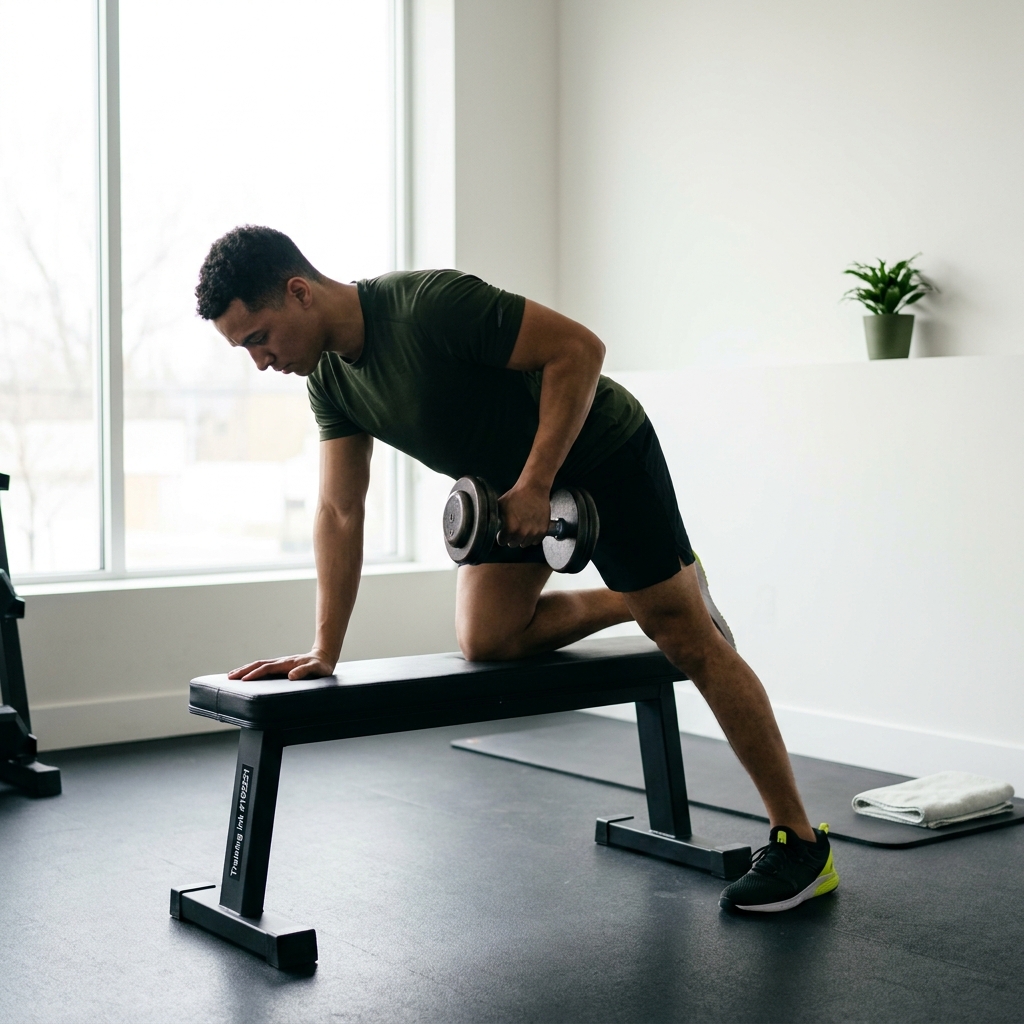
Set the spine to neutral by hinging at the hips and keeping the neck in line with the torso. Avoid letting the lower back round. Before the first rep, inhale and brace the ribcage down toward the pelvis. That brace maintains a stable torso during the pull.
Initiate the pull by driving the elbow toward the hip, not by curling the wrist. Think of the elbow as the lead point and aim to bring the elbow slightly past the torso to feel lat engagement, while keeping the shoulder blade retracting and tracking the ribs. Pause briefly at the top to finish the scapular retraction.
Control the eccentric phase as you lower the dumbbell back to the start. Keep tension through the lats and avoid letting the shoulder collapse. Exhale on the concentric or at the top of the pull, depending on your breathing preference, and inhale as you lower for the next rep.
Load selection: choose a weight that allows a full pull without the torso rotating toward the working side. If you feel large rotation or you must swing, reduce load and focus on strict positions.
Two-arm supported dumbbell row: setup, body position and common grips
For a two-arm supported option, stand with a flat bench at hip height. Place both hands on the bench and hinge from the hips until the torso is near parallel to the floor, or use a staggered hand position for comfort. Hold one dumbbell in each hand with a neutral grip, palms facing inward, or use a pronated grip for a slightly different upper-back emphasis.
Keep the spine neutral and the chest slightly proud, avoiding letting the shoulders round forward. Set the scapulae by thinking of pulling the shoulder blades down and together before initiating the row. This sets the tension in the posterior chain and reduces the chance of pulling with the arms only.
Pull both dumbbells simultaneously in a controlled path toward the lower ribs or hips depending on your build and comfort. Aim for elbow paths that stay close to the body to emphasise the lats, or slightly wider for more upper-trap and posterior delt involvement.
Keep the hips and pelvis stable. You should feel the effort in the mid and upper back rather than the low back. Lower both dumbbells with control and reset before the next rep, especially at higher loads where momentum can creep in.
Key form checkpoints that apply to both variations
Neutral spine is non-negotiable. Use a hip hinge rather than a rounded back. If you cannot hold a neutral spine at working loads, reduce weight and prioritise mobility or lighter technical practice.
Rib-to-pelvis tension keeps the torso rigid. Before each set, draw the ribs slightly down and brace the core. This reduces torso rotation during unilateral work and protects the lumbar spine during bilateral loading.
Scapular control matters more than how heavy you lift. Begin the rep by setting the scapula, then drive the elbow to the hip or lower rib. Finish with a small pause of scapular retraction to ensure the back muscles, not the arms, are finishing the movement.
Range of motion should be controlled and consistent. Avoid overreaching or letting the shoulder hang at the bottom. A full lat pull is not always maximal arm extension; it's the point where the shoulder blade allows the lat to lengthen without compromising the shoulder joint.
Benefits and trade-offs: what each variation trains best
Muscle emphasis differs by variation. Unilateral training helps expose left-right strength and mobility differences. One-arm rows increase unilateral demand and often produce stronger lat and oblique recruitment on the working side because the torso must resist rotation. Two-arm rows can allow heavier absolute loads and more symmetric stimulation across the posterior chain.
Unilateral training helps expose left-right strength and mobility differences. If one side consistently lags in range or strength, single-arm work highlights that deficit and enables targeted correction through repetitions or slightly higher weekly volume on the weaker side.
Stability and core demand also shift between variations. One-arm rows create more anti-rotation torque, asking the obliques and hips to stabilise. Two-arm rows reduce that single-side torque, which can make them a better choice when you want to focus purely on back strength or hypertrophy without added anti-rotation fatigue.
Load and progression implications are practical. Two-arm rows are often time-efficient and let you progressively overload total volume more easily. One-arm rows require attention to tempo and control to avoid using momentum, and progress is often best tracked by improving strict reps, then adding load or sets.
How to choose: programming rules and decision criteria
Start with goals. If your priority is strength and moving heavier weight in the shortest time, include two-arm rows as a main accessory. If your priority is correcting imbalances, improving single-side control, or rehabbing a unilateral deficit, prioritise one-arm rows for several weeks.
Consider practical constraints. If you have limited time or equipment, two-arm rows can be more efficient. If bench or rack availability is restricted, one-arm rows require only one dumbbell and a small footprint.
track tempo, load and imbalance in row training
Progression rules: for strength focus, use lower reps and higher load, for hypertrophy favour moderate reps with controlled eccentrics. When programming unilateral work, match the weaker side first and avoid exceeding the stronger side by more than one working set until balance improves.
Use this simple checklist: define goal for the block, pick primary row type, set weekly volumes and test a 2-week technical block if form breaks. Swap or rotate variations across mesocycles to keep gains balanced and to prevent overuse of the same movement pattern.
Common mistakes and quick fixes for safer, more effective rows
Typical technical errors for one-arm rows
Rounded back under load is common. Fix it by dropping the weight and repeating strict 5 to 8 slow reps with a strong brace before increasing load. Use tactile feedback such as a hand on the bench to feel a neutral spine.
Excessive torso rotation often masquerades as a stronger pull. Reduce rotation by bracing the ribs and slowing the concentric. You can also shorten the range until control is restored or use a supported chest-on-bench single-arm row as an intermediate option.
Typical technical errors for two-arm rows
Shrugging or letting the arms lead the pull reduces lat involvement. Cue pulling the elbows toward the hips and thinking 'elbow to pocket' rather than 'hand to chest'. This keeps the movement driven by the back muscles.
Using momentum on the lower back at higher loads is another frequent fault. To fix this, lower the weight, reset between reps, or use a tempo of 2 seconds concentric and 2 seconds eccentric to reinforce control.
Simple drills and cues to correct each mistake
Drill: paused top reps. Pause for one to two seconds at the top with full scapular retraction. This trains the back to finish the pull and reduces arm-dominant patterns.
Drill: partial reps to correct range. If full range produces rotation, perform three-quarter reps in strict position until strength and core control improve.
When to deload: if pain appears in the shoulder or lumbar spine during strict technique, stop adding load and consult a qualified professional. Use lighter technical sets and address mobility or stability deficits before resuming progression.
Practical examples: sample workouts and progressions using each variation
Beginner to intermediate sample sessions
Beginner session example: 3 sets of 8 to 10 two-arm dumbbell rows, tempo 2-0-2, rest 90 seconds. Follow with 2 sets of 8 to 10 single-arm rows on the weaker side for technical practice. Pair with push work such as push-ups for a balanced upper-body session.
Intermediate session example: 4 sets of 6 heavy two-arm rows for strength, followed by 3 sets of 8 strict one-arm rows for unilateral conditioning and symmetry. Use paused top reps on the unilateral sets to enforce scapular finish.
Advanced variants and ways to add intensity
Add intensity by increasing load, using slow eccentrics (3 to 4 seconds), inserting paused reps at the top, or implementing drop sets on two-arm rows to extend time under tension. Advanced practitioners can alternate heavy two-arm sessions with higher-volume unilateral blocks to keep balance across cycles.
Tempo manipulation is powerful. For hypertrophy, try a 3-1-3 tempo on the unilateral rows, focusing on a one-second hold at the top. For strength, use lower-rep sets with controlled but faster concentrics, ensuring the eccentric remains under control.
How to track progress and when to switch focus
Track progress by log entries noting sets, reps, tempo and perceived control. If your weaker side closes the gap over 4 to 8 weeks, reduce extra unilateral volume and fold the single-arm work into maintenance sets. If imbalance persists, prioritise the weaker side for longer blocks.
Switch focus when you hit plateaus in load or form. For example, move from a bilateral-heavy focus to a 4-week unilateral block if symmetry stalls, or return to bilateral emphasis when you need to increase overall pulling load efficiently.
Frequently asked questions
Can I use heavy weight for both one-arm and two-arm dumbbell rows?
Yes, but approach differs. Two-arm rows generally allow heavier total loads. For one-arm rows, prioritise strict control and reduce load if the torso rotates or momentum appears.
How often should I do unilateral row work to fix a strength imbalance?
Include unilateral work two to three times per week as accessory volume, matching the weaker side first and using conservative extra sets until balance improves.
Should I choose tempo or heavier load for hypertrophy?
Both work. For hypertrophy, moderate loads with controlled eccentrics and tempo variations are effective. Rotate tempo-focused blocks with heavier load phases.
Choose the variation that matches your current goal and constraints, then test it with strict technique for several weeks. Track tempo, load and control, and switch focus only after a sensible block of practice. If pain or persistent technical issues appear, step back to lighter, tempo-controlled sets or consult a qualified coach to address mobility and stability.
References
- https://repandrange.com/workouts
- https://repandrange.com/workouts/exercise-atlas/supported-row
- https://repandrange.com/guides/reps-and-sets
- https://www.instagram.com/popular/best-way-to-do-single-arm-dumbbell-row/
- https://www.facebook.com/groups/238620256823178/posts/1359458618072664/
- https://www.facebook.com/StrengthSenseiInc/posts/dont-cheat-on-dumbbell-rowsfor-complete-development-of-the-back-muscles-dont-sac/982591238946166/