The journal
Are dumbbell rows actually effective? A clear guide with form tips
dumbbell rows proper form explained with evidence-based tips on technique, muscles, and how to program rows for strength and hypertrophy.

How effective are dumbbell rows for building back muscle and strength?
Dumbbell rows are widely used because they load the large back muscles with a compound pulling pattern, and they can be programmed in many ways to target strength or size. A key reason they are effective is that hypertrophy occurs across a broad range of loads when sets are taken near failure, which means rows can produce growth whether you use moderate or higher repetition schemes Strength and hypertrophy meta-analysis.
Another central point is that weekly hard-set volume drives much of the growth response. That makes each set of rows a meaningful contribution to total pulling volume in a program, so consistency and enough weekly sets matter more than a single perfect rep Dose-response volume review.
When lifters are already trained, building a program around multi-joint movements can deliver upper-body size and strength comparable to routines that also add many single-joint exercises. That supports using rows as a main back-building movement rather than seeing them only as an accessory Multi-joint versus single-joint trial.
Put simply, dumbbell rows are an effective tool when they are performed with sufficient effort and included as part of the weekly pulling volume. Open questions remain, for example whether unilateral rows produce different regional effects than bilateral rows, but the practical implication is clear: dose and effort matter more than the particular rep scheme.

Summary of the evidence on load, volume and exercise selection
Clinical and training syntheses consistently find that similar muscle growth can come from light or heavy loads provided sets are worked close to failure. For a gym-goer that means a choice between heavier sets of lower reps and lighter sets of higher reps can be guided by preference and recovery, not by a fixed rule that one always outperforms the other Strength and hypertrophy meta-analysis.
Because weekly hard-set volume is a strong predictor of hypertrophy, the practical question becomes how many quality sets of rows you can recover from each week. That total, across your row variations and other pulling movements, will be the main determinant of back growth rather than a single session's rep count Dose-response volume review.
Where dumbbell rows fit in a weekly plan
In a balanced program, rows serve as a primary compound horizontal pulling option that pairs well with vertical pulling and posterior chain work.
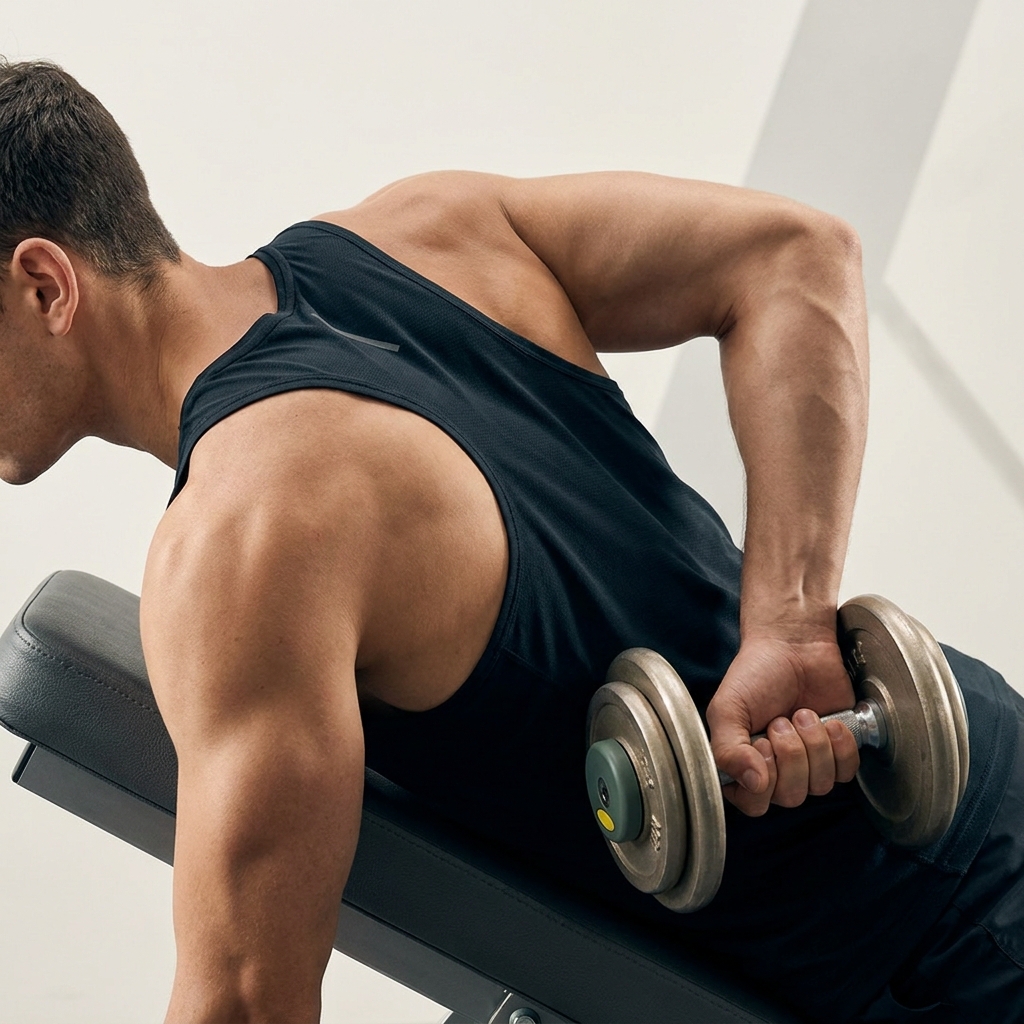
For most intermediate lifters, aim to view rows as a contributor to weekly pulling volume. Track the number of hard sets you perform across variations and aim to progress either volume or quality over time, keeping the overall plan aligned with your recovery and goals.
At their core, rowing patterns load the latissimus dorsi and mid-back musculature. Primary movers include the latissimus dorsi and the large midline muscles such as the rhomboids and middle trapezius, with the posterior deltoid and the biceps acting as secondary contributors during the pull.
Good scapular control matters because the action of scapular retraction and stable posterior shoulder positioning helps the targeted back muscles engage efficiently. Strengthening those muscles is commonly recommended in shoulder rehabilitation and performance contexts to improve control and reduce compensatory movement Scapular rehabilitation review.
quick in-gym form and rep tracker
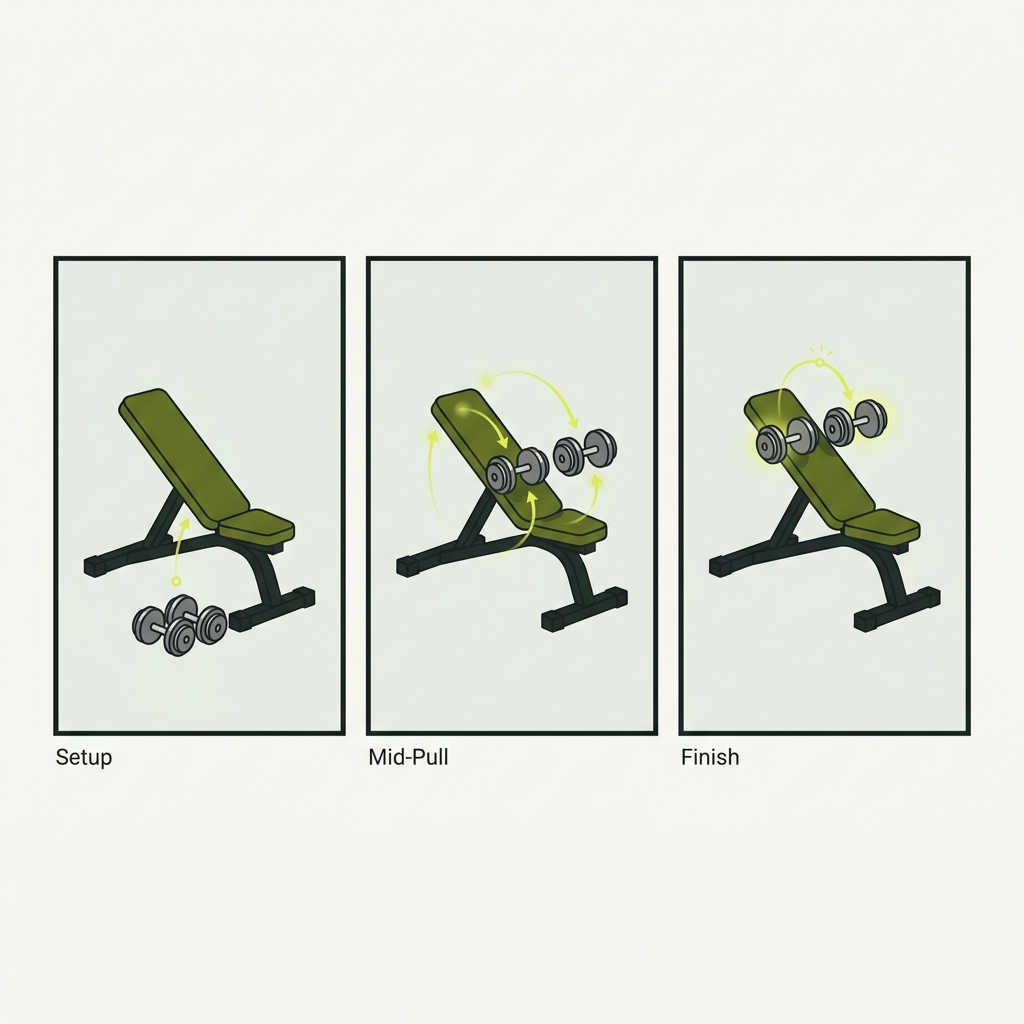
Changing hand position, torso angle and the path of the elbow changes emphasis between the lats and mid-back. For example, a flatter torso angle with the elbow pulled close to the ribcage typically increases lat emphasis, while a slightly wider elbow path and higher torso angle can shift work toward the rhomboids and middle trapezius.
The latissimus dorsi provides the powerful shoulder adduction and extension component, while the rhomboids and middle trapezius retract the scapula and help maintain a stable shoulder blade during the pull. The posterior deltoid assists, and the biceps act as an elbow flexor supporting the movement.
Because these muscles work together, small form changes can make a noticeable difference in which region of the back feels most loaded. That is why clear cues and consistent setup are useful for directing training stress to the intended muscles.
How scapular control and posture change the stimulus
If the scapula is allowed to float uncontrolled, the lifter may lose tension in the target muscles and instead use momentum or the arm to complete the rep. Teaching an initial scapular set position and maintaining it through the pull helps keep the stimulus on the back.
Similarly, a neutral spine and appropriate hip angle let the lats and mid-back work without excessive lumbar strain or trunk rotation. These positional details are small but important for both performance and shoulder health.
dumbbell rows proper form: step-by-step setup and common variants
Setup checklist for a safe, effective single-arm dumbbell row:
1. Footing: stand with feet shoulder-width apart and the weight positioned so you can hinge at the hips without reaching.
2. Hips and spine: hinge at the hips and keep a neutral spine, avoiding excessive arching or rounding.
3. Bracing: take a full breath and brace the core to stabilize the torso throughout the set.
4. Scapular position: start with a small scapular retraction, not an exaggerated squeeze, to preload the back.
5. Elbow tracking: pull the elbow up and back, leading with the elbow rather than the hand so the back muscles do the work.
6. Range of motion: lower the dumbbell with control and pull to a point where the elbow passes the torso while keeping the chest relatively still.
Are dumbbell rows effective for building back muscle and strength?
Yes, when performed with proper form and included as part of adequate weekly hard-set volume, dumbbell rows are an effective compound exercise for back hypertrophy and strength.
Movement cues and brief technique checkpoints:
Use the cue pull with the elbow to bias the lats and mid-back. Keep the chest stable and imagine dragging the elbow to your hip rather than pulling with the hand. A slow, controlled eccentric phase helps maintain tension and reduces momentum.
Variants and when to choose each:
Supported single-arm row: a hand and knee on a bench reduce torso demand and are useful when learning the movement or managing fatigue. Chest-supported row: lying chest-down on an incline bench removes lower-back load and trunk compensation. Unsupported single-arm row: offers greater core and hip stability challenge and is useful when building unilateral strength and balance. Two-arm dumbbell row: allows heavier loads and simpler loading but may reduce unilateral control training. Choose the variant that matches your goal: reduce compensation to engrain clean technique, or increase challenge to grow core and unilateral control.
Safety notes: avoid excessive trunk rotation, do not reach the weight too far forward on the setup, and resist shrugging the shoulder upward during the pull. If you feel sharp pain in the shoulder during rowing patterns, regress to a supported version and check scapular control before progressing.
Programming dumbbell rows: sets, reps and weekly volume for growth
Rep ranges and effort
Hypertrophy can be achieved across a wide load range when sets are taken near failure, so dumbbell rows can be effective whether you choose moderate or higher rep schemes. This flexibility lets you match rep ranges to overall program structure and recovery Strength and hypertrophy meta-analysis.
Practical rep options include heavier sets of 6 to 8 reps for strength bias, and sets of 8 to 15 or higher for volume-biased hypertrophy, with the important caveat that sets should be challenging and approach failure at the chosen load.
Weekly set volume guidance
Because weekly hard-set volume is a primary driver of muscle growth, plan rows as part of your total weekly pulling count. For many intermediate lifters, targeting a modest range of quality hard sets per week per muscle group and progressing that total slowly is a reliable approach Dose-response volume review.
Suggested practical ranges for rows as part of total pulling volume might mean including 6 to 12 hard sets per week of row variations combined with other horizontal and vertical pulling. Exact numbers depend on recovery, other training stressors, and whether you favor heavier, lower rep work or higher-rep volume.
Frequency and program placement
Authoritative guidance recommends training major muscle groups at least twice per week for most adults; placing rows across two sessions can help accumulate volume without making any single workout overly long NSCA position statement.
Trained lifters and exercise selection
Research shows that programs based on multi-joint exercises can produce upper-body hypertrophy similar to programs that add many single-joint movements, so focusing on compound rows and presses can be an efficient strategy for intermediate and advanced trainees Multi-joint versus single-joint trial.
Common mistakes, troubleshooting and quick fixes
Typical errors and short fixes
Excessive torso rotation often comes from trying to move too much weight or setting up too far away from the dumbbell. Correct by narrowing the range, bracing the core, and using a supported variation until control improves.
Shrugging the shoulder at the top reduces back activation and can load the cervical region. Cue a grounded shoulder and focus on retracting the scapula first, then pulling the elbow back.
Leading with the hand or allowing the arm to pull the weight reduces the target muscle stimulus. Emphasize pulling with the elbow and imagine dragging the elbow toward the hip.
Inadequate range of motion and using momentum are common when lifters rush reps. Slow the eccentric phase and control the lift; a 2 to 3 second lowering phase helps keep tension on the muscle.
Corrective drills and regressions
Chest-supported rows remove trunk compensation and are an effective regression when form breaks down. Scapular retraction drills, such as prone T raises with light weight, help train the mid-back to hold position. Tempo work and paused reps increase time under tension and reduce momentum.
When to reduce load or regress
If you cannot maintain a neutral spine, if you feel grinding or sharp pain in the shoulder, or if the set is completed with clear momentum rather than controlled muscle tension, reduce load or use a supported variation. Strengthening scapular control often fixes movement-related discomfort and helps protect the shoulder during progression Scapular rehabilitation review.
Free-weight demand and progressive exposure
Because free-weight rows require more stabilizer control than some machines, increase exposure gradually. Start with supported versions and move to unsupported or heavier unilateral work as control and capacity improve Effect of free-weight vs. machine-based strength training on ... Free weight versus machine activation study.
Because free-weight rows require more stabilizer control than many machine options, increase exposure gradually. Start with supported versions and move to unsupported or heavier unilateral work as control and capacity improve Free weight versus machine activation study.
Putting it together: sample progressions and final recommendations
Beginner to intermediate progression
Weeks 1 to 4: supported single-arm rows or chest-supported rows, 3 sets of 8 to 12, focus on setup, scapular control, and a 2 second eccentric.
Weeks 5 to 8: transition to unsupported single-arm rows, 3 to 4 sets of 6 to 10, add slightly more load while keeping form strict.
Intermediate to advanced progression
Weeks 1 to 4: two sessions per week of rows mixed with vertical pulls, include 6 to 10 total hard sets per week of row variations, use 6 to 12 reps depending on load focus.
Weeks 5 to 12: increase weekly volume gradually or add one heavier weekly session focused on lower reps, while keeping at least one higher-rep session to maintain volume and technique.
Measuring progress
Track indicators such as increased controlled load, more strict repetitions at the same weight, cleaner scapular control, and reduced compensatory movement. These practical signs show that rows are producing the intended adaptations.
Final evidence-based recommendation
Based on synthesis of load and volume research, practical RCTs on exercise selection, and authoritative training guidance, dumbbell rows are an effective building block for back strength and hypertrophy when programmed with sufficient weekly volume and effort Dose-response volume review.
Gaps and modesty in claims
There remain open questions about whether unilateral versus bilateral rows produce meaningful regional hypertrophy differences, and individual response can vary. Use rows as a flexible, evidence-aligned tool and monitor your own progress to decide exact set and rep choices.
Frequently asked questions
How often should I do dumbbell rows per week?
Aim to include rows so your back muscles receive hard sets at least twice per week, spreading volume across sessions to support recovery and progress.
Are single-arm rows better than two-arm rows?
Neither is inherently better; single-arm rows add unilateral control and core demand while two-arm options allow easier loading. Choose based on goals and current technique.
What rep range is best for back hypertrophy with dumbbell rows?
Hypertrophy can occur across a wide rep range if sets are taken near failure; choose heavier lower-rep work or higher-rep volume based on recovery and program context.
Use rows as a primary compound tool for the back, and prioritize consistent weekly hard-set volume and effort over chasing a single ideal rep count. Track technique and progress, and prefer regressions or supported variations whenever form or shoulder comfort suffers.
References
- https://health.clevelandclinic.org/dumbbell-rows
- https://pubmed.ncbi.nlm.nih.gov/27102172/
- https://pubmed.ncbi.nlm.nih.gov/28497942/
- https://pubmed.ncbi.nlm.nih.gov/28426457/
- https://pubmed.ncbi.nlm.nih.gov/25592019/
- https://pubmed.ncbi.nlm.nih.gov/19855308/
- https://repandrange.com/workouts/exercise-atlas/lat-pulldown
- https://repandrange.com/workouts/exercise-atlas/supported-row
- https://repandrange.com/workouts
- https://pmc.ncbi.nlm.nih.gov/articles/PMC10426227/
- https://www.sciencedirect.com/science/article/pii/S1050641125000513
- https://pubmed.ncbi.nlm.nih.gov/31473081/
- https://repandrange.com/