Use a controlled movement range appropriate to the exercise and your situation. A picture of a deeper position is not a reason to force your body into it.
Name the movement you are comparing
Range of motion describes the extent of movement. It depends on the exercise, setup and joints involved. A floor press and a bench press have different constraints even when they use the same dumbbells.
Record the variation in your log. If your support or movement depth changes substantially, that is a different comparison from simply adding a repetition.
Read the atlas as a cue sheet
Each movement file names its setup, primary cue, easier option and common point to check. Begin with the text and any attributed demonstration available for that exact movement.
Our muscle illustrations identify intended primary and supporting roles. They are not X-rays, measurements of activation or a judgement of your body. More colour does not mean that an exercise is better or that your technique has been verified.
Treat research as context
The cited review compared full and partial ranges within particular studies and movements. Those comparisons cannot diagnose why an individual has a restricted or uncomfortable movement. Study definitions also matter: full range in one exercise is not the same joint position as full range in another.
Use a manageable variation and control the movement rather than forcing an end position. Individual coaching is useful when the written cue is not enough to find an appropriate setup.
Keep the record honest
Note a change in support, grip or depth beside the result. This prevents a shorter or different movement from appearing to be an unexplained jump in strength.
If a movement causes pain or you are returning from injury, choose individual assessment rather than interpreting the atlas as a rehabilitation prescription.
Bring one useful question to the next session
Choose a suitable variation. Keep the movement controlled. Record changes in setup. Keep the guide beside your own record so you can see which part of the decision still needs information.
The worked example below is hypothetical. Replace its inputs with the quantities or circumstances you actually know; do not turn an illustration into a personal training or nutrition prescription.
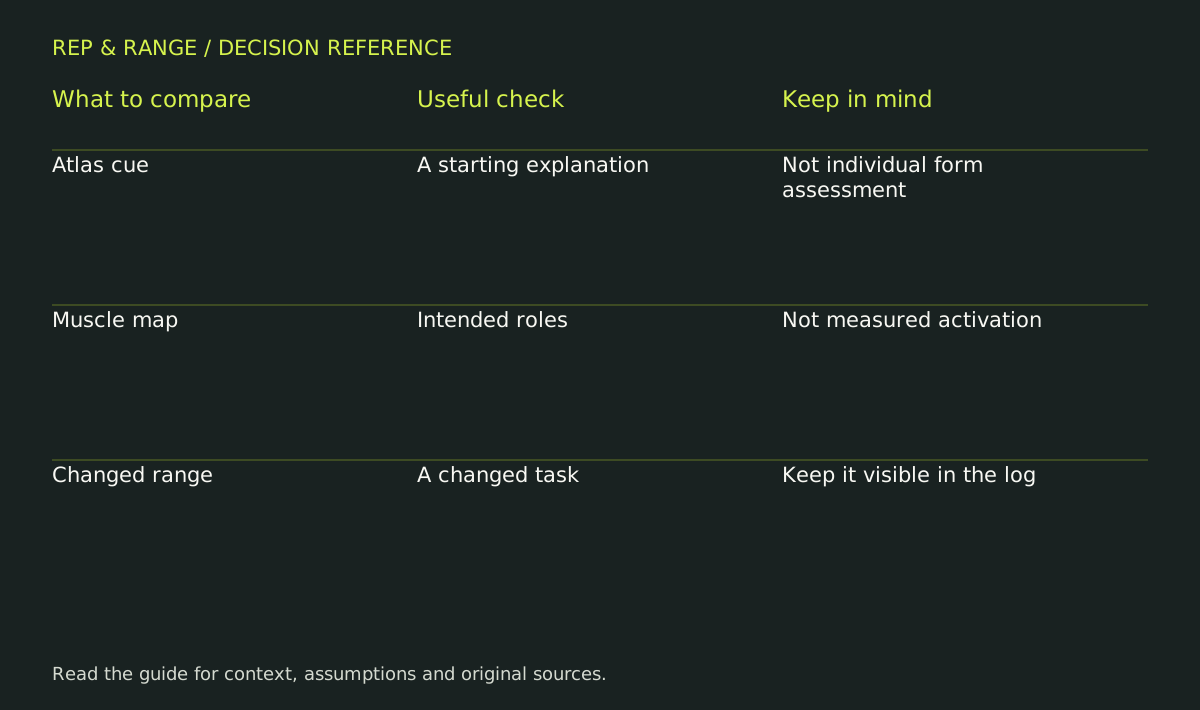
Compare the decision.
| What to compare | Useful check | Keep in mind |
|---|---|---|
| Atlas cue | A starting explanation | Not individual form assessment |
| Muscle map | Intended roles | Not measured activation |
| Changed range | A changed task | Keep it visible in the log |
AN ILLUSTRATIVE EXAMPLE
Name the variation in the record
A hypothetical reader switches from a dumbbell floor press to a bench press. Even at the same load, the support and available range differ. The log records the new variation instead of treating it as an identical task.
Take this with you.
- Choose a suitable variation
- Keep the movement controlled
- Record changes in setup
Your questions, answered.
Is a muscle heat map an X-ray?
No. The map is a simplified illustration of intended muscle roles. It does not scan the body or measure activation.
Should everyone use exactly the same depth?
No. The movement, anatomy, setup and individual circumstances matter. Do not force a position to copy an image.
Does the site verify my exercise form?
No. It does not watch your movement or assess technique. Qualified individual feedback may be useful.