The journal
Do door anchors for resistance bands damage doors?
Yes, door anchors can mark or damage unsuitable doors. Here’s how to choose a safe doorway, set up correctly, and test your anchor to reduce risk.
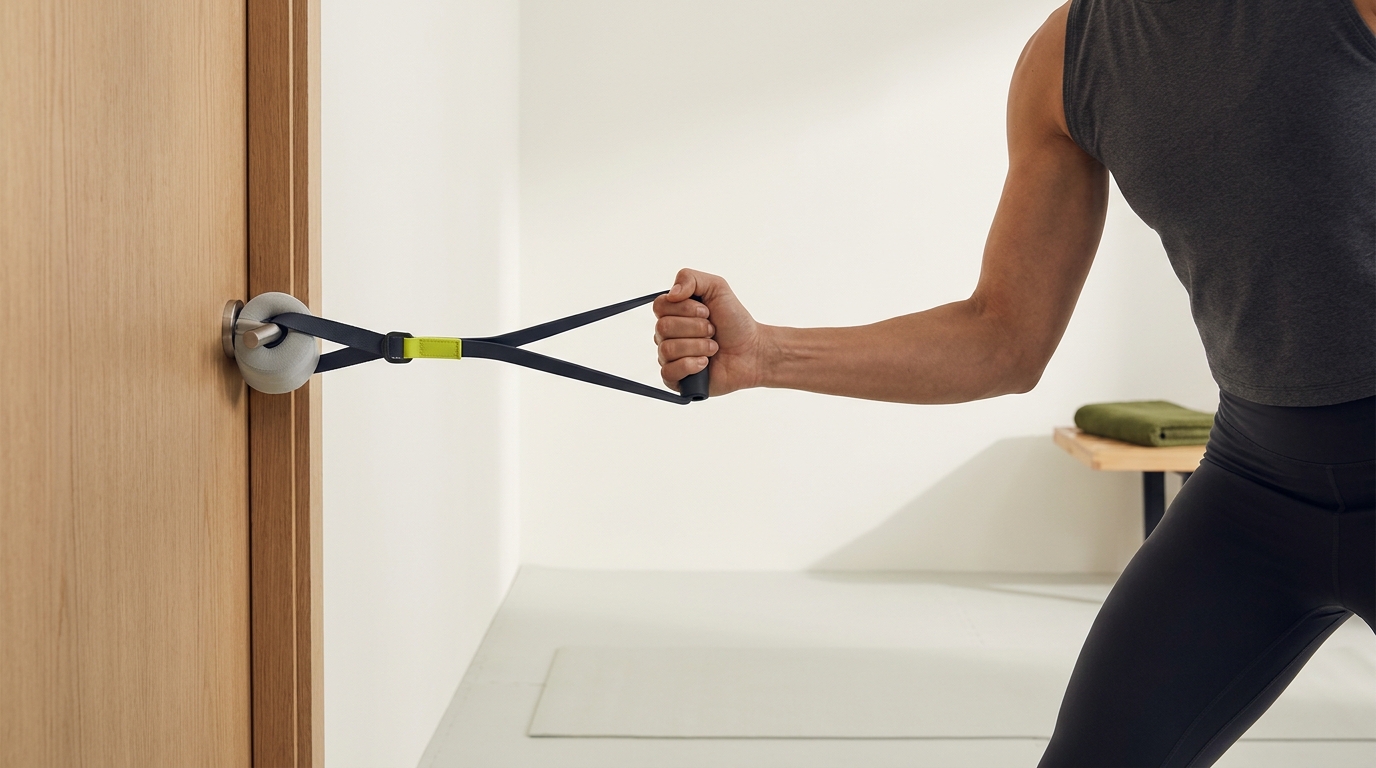
Short answer: they can. Door anchors may scratch finishes or strain a weak door or frame, but you can reduce avoidable risks by following the exact anchor instructions, using a suitable door, and checking the attachment before training (THERABAND: accessory setup and safety; FitBeast: Can Resistance Bands Damage Doors?).
A general guide cannot confirm that your particular door is suitable or promise a damage-free result. Follow the anchor maker’s door requirements, placement and load limits. If the door, frame or anchor is unsuitable or moves under a gentle check, do not use that setup.
When door anchors do cause damage
The most common issues are surface scuffs, dents where the stopper or strap rubs, and stress to a loose frame or hinges. Higher band tension, frequent use on a poor door, or an anchor that shifts under load all increase risk (FitBeast: Can Resistance Bands Damage Doors?).
How to lower the risk right away
Pick the right side of the door
Set up on the side where pulling the band presses the closed door more firmly into its frame, not on the side where your pull would try to open it. This reduces reliance on the latch and keeps the stopper properly retained on the far side (THERABAND: accessory setup and safety; NestFit Gear: Are Resistance Bands Safe for Doors?).
Choose a suitable door and frame
Avoid hollow-core or damaged doors, glass-panel doors, loose hinges, warped frames, and poor latching. Prefer solid or solid-core doors that close fully and fit snugly in the frame (THERABAND: accessory setup and safety; FitBeast: Can Resistance Bands Break Doors?).
Use a purpose-built door anchor and control the door
A proper anchor distributes load and cushions contact better than improvised loops. Fully close and latch the door, restrict access so no one opens it mid‑set, and keep the recoil path away from your face (THERABAND: accessory setup and safety).
Run a low‑tension test every session
Stand out of the direct line of pull and apply light, gradual tension while you watch the stopper, strap, hinges, and frame. Stop if anything creeps, creaks, rubs, or shifts (NestFit Gear: Are Resistance Bands Safe for Doors?; THERABAND: accessory setup and safety).
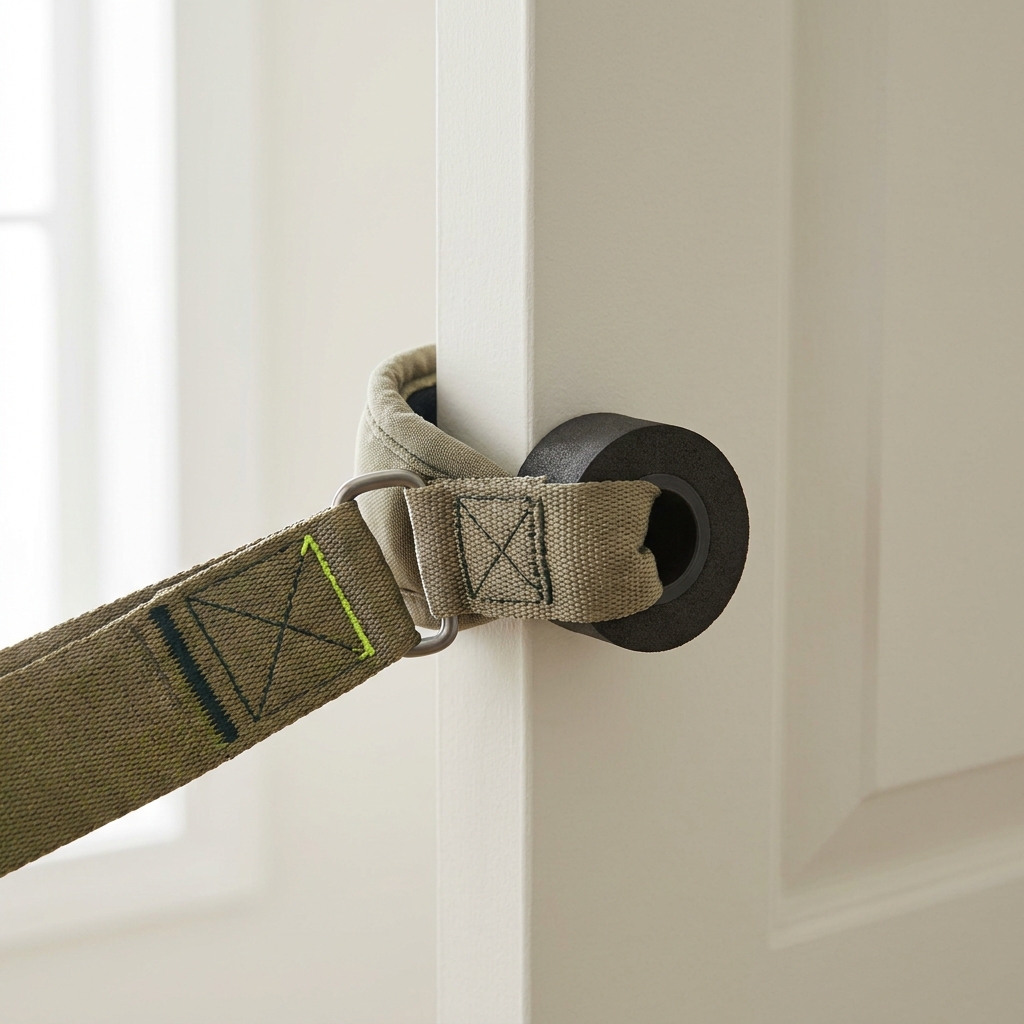
Step-by-step setup
- Inspect the door, frame, hinges, latch, and trim. Skip any door with looseness, cracks, or glass.
- Place the anchor so its stopper sits on the far side of the closed door, exactly as the product’s instructions permit.
- Close and latch the door fully. Choose the exercising side where your pull presses the door into its frame.
- Attach the band as the anchor and band manuals specify. Keep straps flat and clear of sharp edges.
- Clear the area, then perform a low‑tension pull test from a safe position before your first rep.
Door-anchor pre-use checklist
Common mistakes and when to stop
Frequent errors
- Anchoring on the side where your pull tries to open the door.
- Using hollow-core or damaged doors; relying on a loose latch.
- Improvising anchors that concentrate force or rub finishes.
- Starting with maximal band tension or skipping the test pull.
If the door shifts, the latch slips, new creaks appear, or you see rubbing or marks starting, stop and relocate to a sturdier door or another anchor method (FitBeast: Can Resistance Bands Damage Doors?; NestFit Gear: Are Resistance Bands Safe for Doors?).
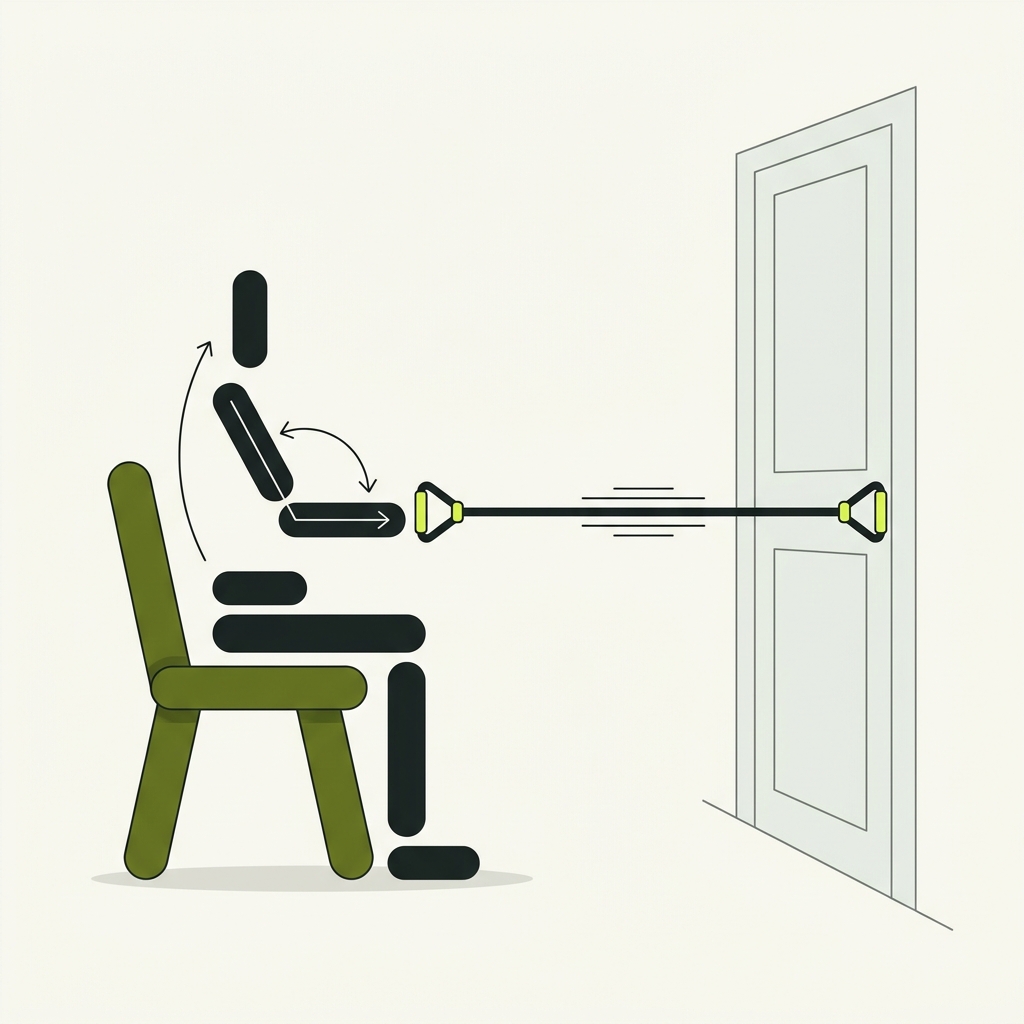
If your doors aren’t suitable
Consider wall-mounted anchors installed into appropriate structure, freestanding band stations, or band exercises that do not rely on a door (FitBeast: Can Resistance Bands Damage Doors?).
Related reading
FAQs
Will a padded door anchor scratch paint?
It can if the strap or stopper moves under load or rubs a delicate finish. A snug, manufacturer-approved setup reduces rubbing, but stop at the first signs of marks and adjust or relocate (FitBeast: Can Resistance Bands Damage Doors?).
Is it safer to anchor at the top, side, or bottom?
Any approved height can work if the door is solid, the stopper is fully retained, and your pull presses the door closed. Match placement to the anchor’s instructions and re-test after each height change (THERABAND: accessory setup and safety).
Should I lock the door?
Yes, when safe and allowed. Prevent anyone from opening the door during sets so the anchor cannot release unexpectedly (THERABAND: accessory setup and safety).
Bottom line: a good door, correct side selection, a purpose-built anchor, and a quick test pull go a long way toward protecting both your door and your training.

Related guides
Product options for this topic
As an Amazon Associate I earn from qualifying purchases. These are researched options, not hands-on test results. Check the exact size or model, current price and availability on Amazon.
| Product option | Fit and limits to check | Retailer |
|---|---|---|
| Fit Simplify resistance loop bands, set of five | Short loop bands for suitable resistance exercises. Check the material for allergies, inspect for damage and keep stretched bands away from the face. | View on Amazon |