The journal
Where to place resistance band anchors
Clear placements for door and wall anchors: how to set a door anchor on the correct side of a closed door, and practical wall heights for a low-mid-high layout.
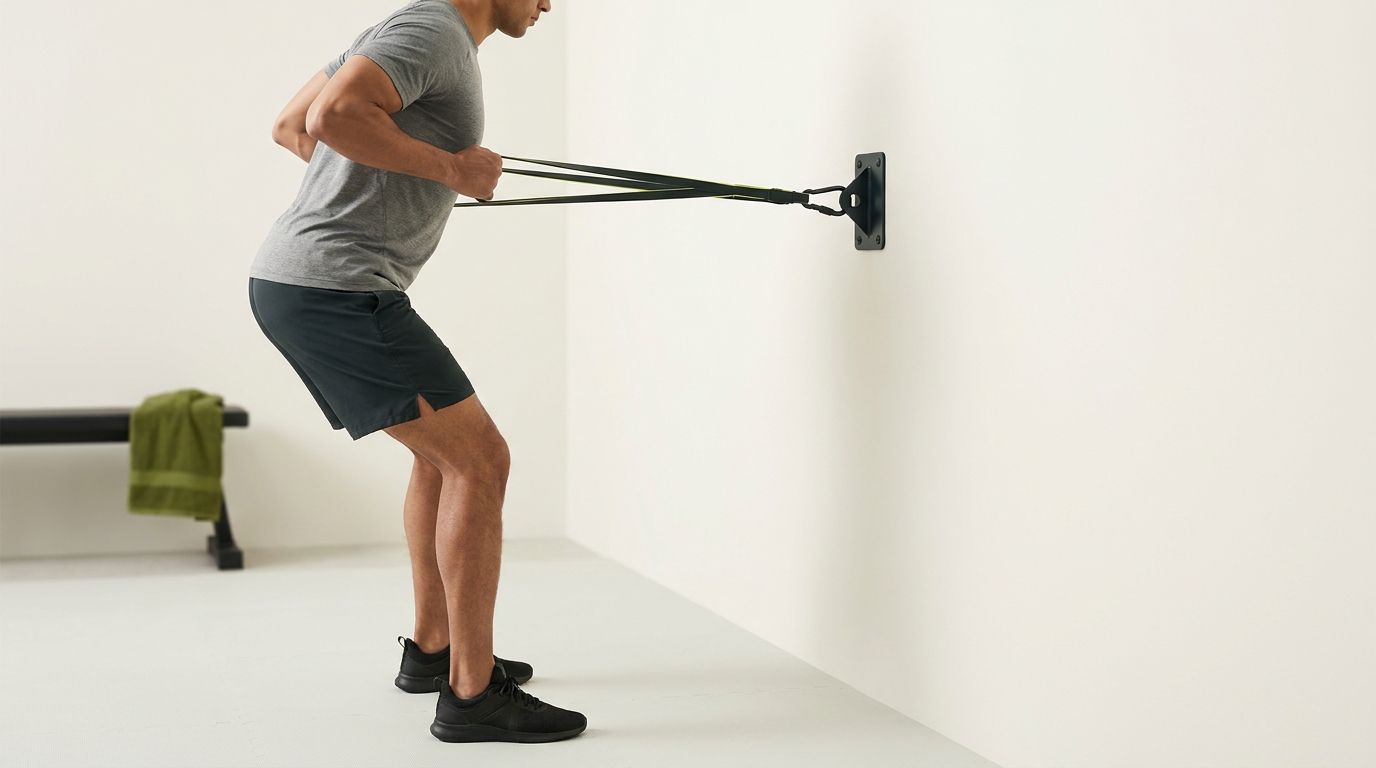
Place a purpose-built door anchor with its padded stopper on the opposite side of a fully closed, latched door, and work from the side where your pull presses the door more firmly into its frame. For permanent setups, use a low (about 18-24 inches), mid (about 42-48 inches), and optional high (about 72-80 inches) wall layout mounted into studs or masonry, then test each point with light tension before full reps (Balego door anchor setup; DHgate door‑anchor safety guide; Homestyler wall anchor installation).
Door placements that stay put
Which side of the door?
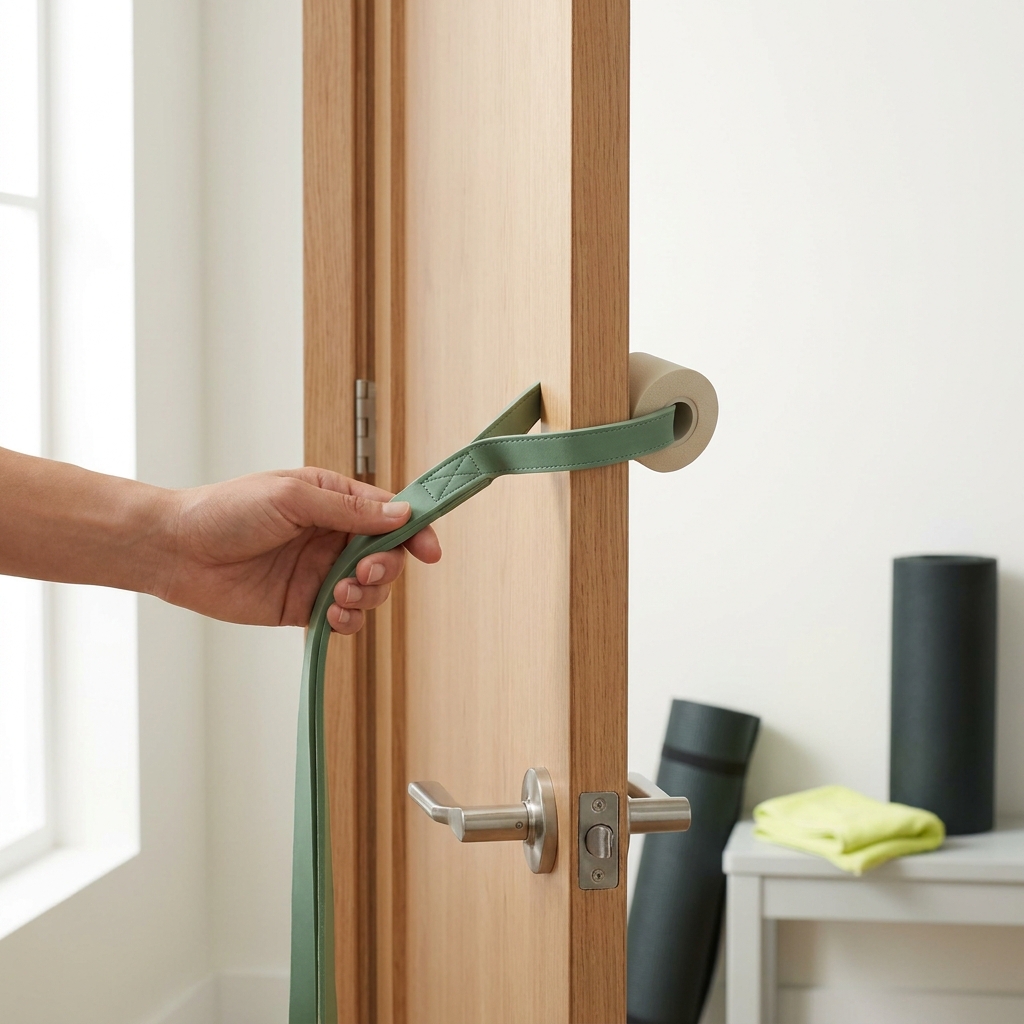
Set the stopper on the far side of the door, close and latch the door completely, and stand on the side from which the door would open away from you. That way, your pull helps keep the door seated rather than tugging it open (Balego door anchor setup; DHgate door‑anchor safety guide).
Height in the doorway
Use high, middle, or low positions only as allowed by the anchor’s instructions, then preload gently to confirm nothing shifts before you start. Balego’s guidance highlights inspecting the door and hardware, placing the stopper on the opposite side, and performing a light pre‑load test after placement (Balego door anchor setup).
Before each session, inspect your bands and anchor. If you need a cadence for checks, see our quick guide: How often should resistance bands be checked?
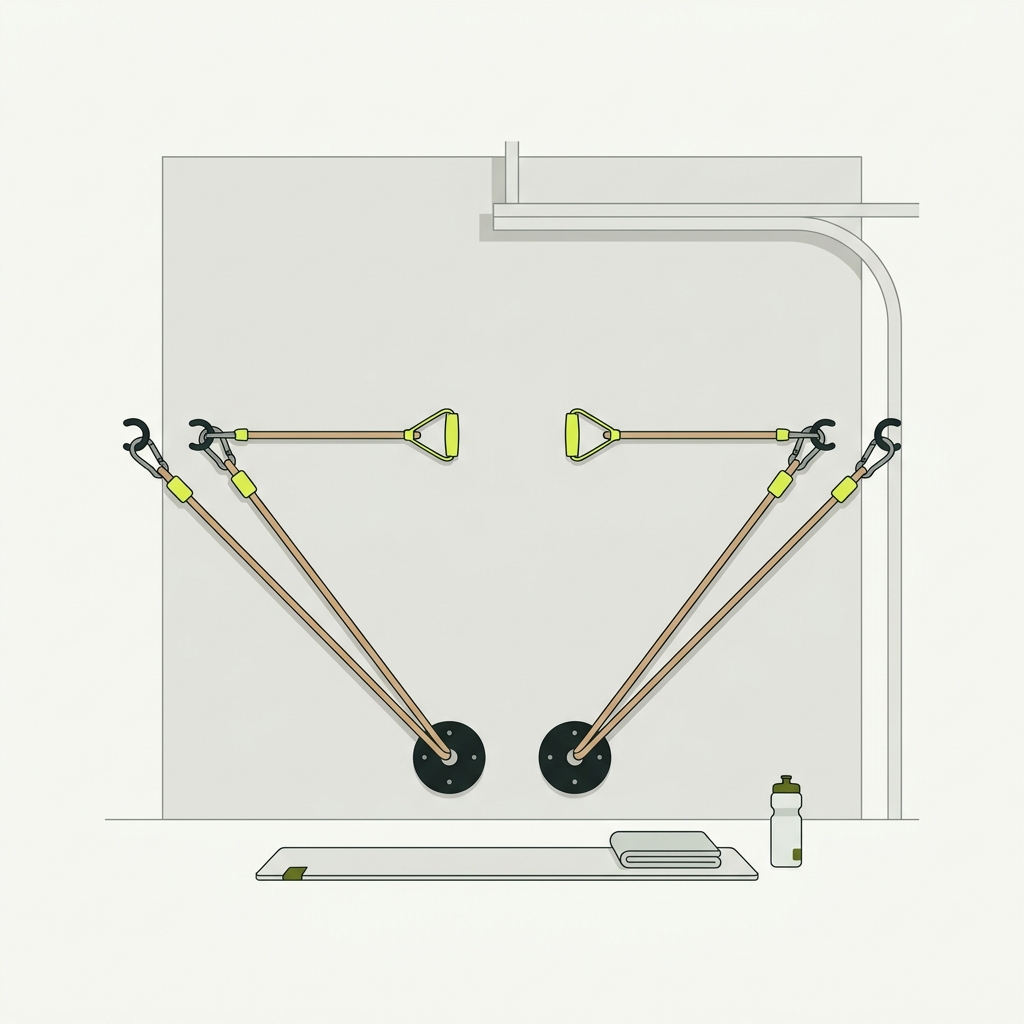
Fixed wall anchors: practical heights and layout
Low, mid and high points most people use
A three-point layout covers most pulls and presses:
- Low: about 18-24 inches from the floor
- Mid: about 42-48 inches
- High: about 72-80 inches
These placements provide useful lines of pull for lower-body patterns (low), rows and chest-height work (mid), and overhead or downward lines (high). Mount into studs or masonry (not drywall alone), and leave 5-6 feet of clear space in front. After installation, begin with light resistance to confirm stability (Homestyler wall anchor installation).
If you can install only one height, a mid anchor around 42-48 inches suits many rows and presses for average users (Homestyler wall anchor installation).
If your door or wall doesn’t qualify
Choose another approved anchoring method or a different door/wall rather than improvising. Balego advises purpose-built anchors over unknown straps and reiterates a light pre‑use pull test to verify the setup before loading (Balego door anchor setup).
Where not to place anchors
- Do not mount wall anchors into drywall without stud or masonry support (Homestyler wall anchor installation).
- Do not put a door anchor’s stopper on your side of the door or exercise from the side where your pull would open the door toward you (DHgate door‑anchor safety guide; Balego door anchor setup).
- Do not continue if any component shifts under a gentle preload; re‑check placement and hardware first (Balego door anchor setup).
Quick placement checklist for band anchors
FAQs
Can I anchor at the top or bottom of a door?
Many purpose-built door anchors allow high, middle, or low placement, but you must follow the specific anchor’s instructions and confirm the door closes fully without damaging the strap. Always finish with a gentle pre‑load test (Balego door anchor setup).
If I can install only one wall height, which should I pick?
A mid anchor around 42-48 inches is a versatile single point for many rows and presses (Homestyler wall anchor installation).
Need help matching band strength to your setup? See How to choose resistance band strength, then return to the checklist above to place your anchors confidently.

Related guides
Product options for this topic
As an Amazon Associate I earn from qualifying purchases. These are researched options, not hands-on test results. Check the exact size or model, current price and availability on Amazon.
| Product option | Fit and limits to check | Retailer |
|---|---|---|
| Fit Simplify resistance loop bands, set of five | Short loop bands for suitable resistance exercises. Check the material for allergies, inspect for damage and keep stretched bands away from the face. | View on Amazon |