The journal
What size exercise ball should I buy?
A clear, quick way to pick the right diameter for your height, confirm the fit with a 90-degree sit test, and avoid common sizing mistakes.
Quick answer
Start with a height-to-diameter match, then confirm with a simple sit test:
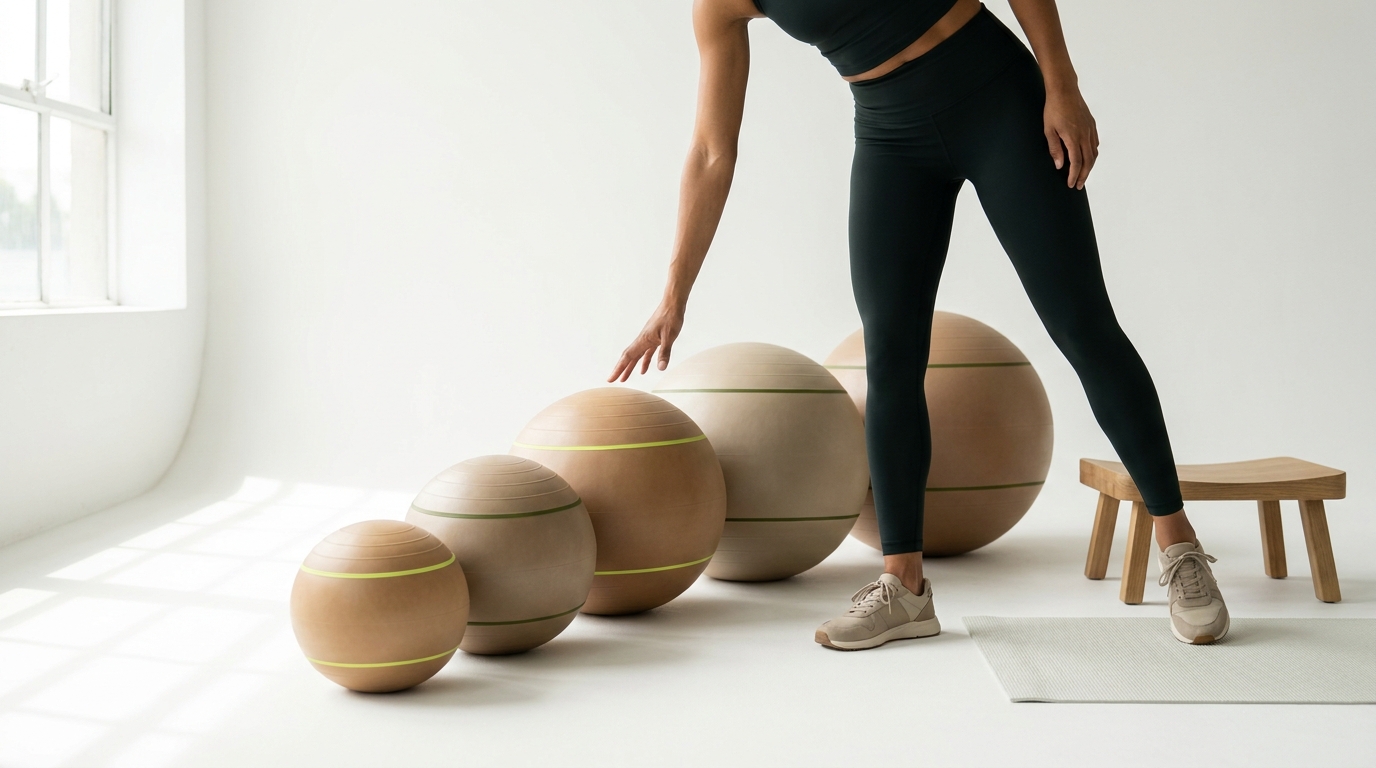
- Under 5 ft: 45 cm
- 5 ft 1 in to 5 ft 8 in: 55 cm
- 5 ft 9 in to 6 ft 2 in: 65 cm
- 6 ft 3 in to 6 ft 7 in: 75 cm
- 6 ft 8 in and taller: 85 cm (where available)
These ranges come from clinical guidance that also recommends choosing the ball that lets you sit with hips level with knees and knees near 90 degrees, and adjusting inflation slightly to dial in height (Spine-health: Choosing the Right Exercise Ball). Charts can vary a bit by brand; the American College of Sports Medicine ranges reported by Wirecutter are similar, and the key is that 90-degree sit rule (Wirecutter: Best Exercise Ball).
How to confirm the fit at home
The 60-second sit test
- Inflate the ball close to the maker’s recommended diameter.
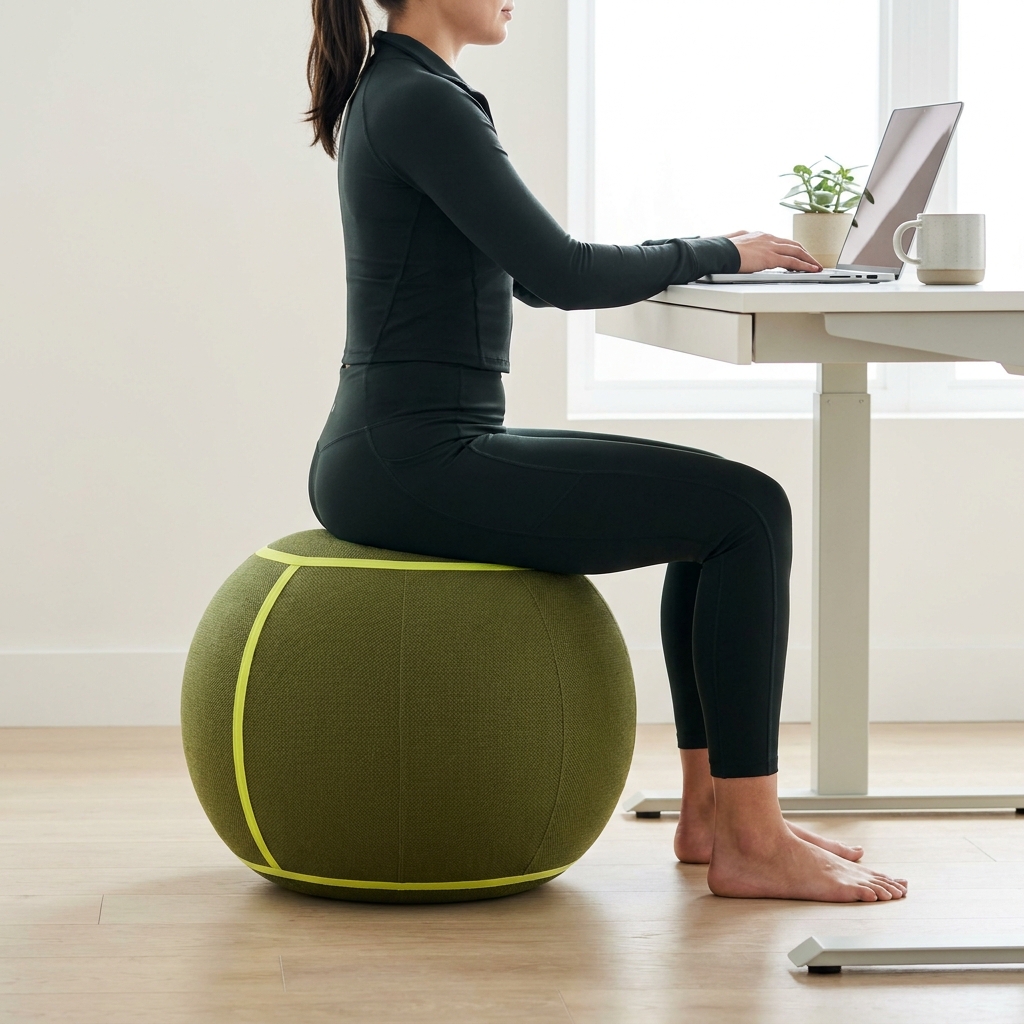
- Sit on it with both feet flat. Your hips should be level with or just above your knees, making about a 90-degree angle at hips and knees. Thighs roughly parallel to the floor.
- If hips are lower than knees, add a bit of air or try the next size up. If your feet don’t rest easily on the floor, release a bit of air or try the next size down.
This posture check is the standard recommendation from rehab-focused guidance, and you can fine-tune by adding or releasing air within the product’s limits (Spine-health).
Pick by primary use
Desk or seated use
- Choose the chart size that gives you the 90-degree sit position at your desk. A 65 cm ball is commonly used for alternative seating, but measure your desk clearance and floor mat height before deciding (Wirecutter).
General fitness and rehab
- Use the chart size, then fine-tune with inflation. A firmer ball increases balance demand; letting out a little air makes it flatter and more stable for early rehab or if balance is limited (Spine-health).
Taller users, longer legs, or higher body weight
- If you have relatively long legs for your height, or your weight compresses the ball more, consider the next size up to maintain that hips-level-with-knees position (Spine-health).
Between two sizes? Use these rules
- If you’re near a boundary and want easier seated stability or have long legs, try the larger size (Spine-health).
- If you’re training balance and want more challenge, you can often stay with the chart size and increase firmness rather than sizing down, as a firmer ball is harder to stabilize (Spine-health).
- When in doubt, test the sit position. Charts are a starting point; your joint angles decide the fit (Wirecutter).
Safety and specs that affect size choice
- Check the model’s stated weight capacity and burst-resistance. Ratings vary by brand and can influence which size feels secure for you. Most balls are marketed as anti-burst, but build and capacities differ; inspect the ball regularly and use it indoors on a cleared area (Wirecutter) (Trideer: How to Choose the Right Exercise Ball).
- Remember you can fine-tune feel by adding or releasing air within the maker’s limits. Firmer = more balance challenge; slightly softer = more contact area and stability (Spine-health).
Size your exercise ball in 5 minutes
Short FAQ
What size should I buy if I’m 5 ft 6 in?
Most people around 5 ft 6 in start with a 55 cm ball, then confirm with the 90-degree sit test and adjust inflation as needed (Spine-health).
Can inflation change the effective size?
Yes, within limits. Adding air raises your sitting height and increases balance demand; letting out a little air lowers you and adds stability. Stay within the manufacturer’s instructions (Spine-health).
Why do charts differ?
Brands size slightly differently, but they converge on the same goal: when seated, hips level with knees near 90 degrees. Use the sit test to confirm your choice (Wirecutter).
Keep going