Start with a repeatable week and a small number of manageable movements. Progress is something you build, not something you have to prove in the first session.
Choose the week before the workout
Open your calendar before choosing a training split. Mark two days that usually have enough breathing room. A session you can return to is more useful than a demanding routine you continually have to rearrange.
Our two-day template is one starting option. The three-day version adds another session; the four-day version divides upper and lower work. Neither extra days nor a more complicated name automatically make a plan better for your situation.
Learn a small set of movements
Choose a squat or split squat, a hip movement, a push, a pull and a simple trunk exercise. Use the exercise atlas to read the main cue and an easier option before you begin.
Warm up with easy movement and light practice repetitions. Start at a level that leaves several controlled repetitions available. If a variation is uncomfortable, try the easier version rather than forcing the intended depth or load.
Make the log boring enough to keep
Write the movement, load, repetitions and sets. You do not need a motivational essay after every workout. A few consistent entries make it easier to see whether you repeated the same task more comfortably.
- Week 1: find comfortable movements and loads.
- Week 2: repeat; notice what felt easier or harder.
- Week 3: add a little only where control is consistent.
- Week 4: review your log and keep the useful parts.
Keep the rest of your activity in view
CDC guidance includes aerobic activity as well as muscle-strengthening activity. Strength sessions do not have to replace walking, cycling or other activity you enjoy. Build gradually from your current level.
These are general adult examples. Persistent pain, a relevant health condition or uncertainty about movement technique calls for individual help rather than a harder template.
Bring one useful question to the next session
Choose two realistic days. Learn the selected variations. Record completed work. Keep the guide beside your own record so you can see which part of the decision still needs information.
The worked example below is hypothetical. Replace its inputs with the quantities or circumstances you actually know; do not turn an illustration into a personal training or nutrition prescription.
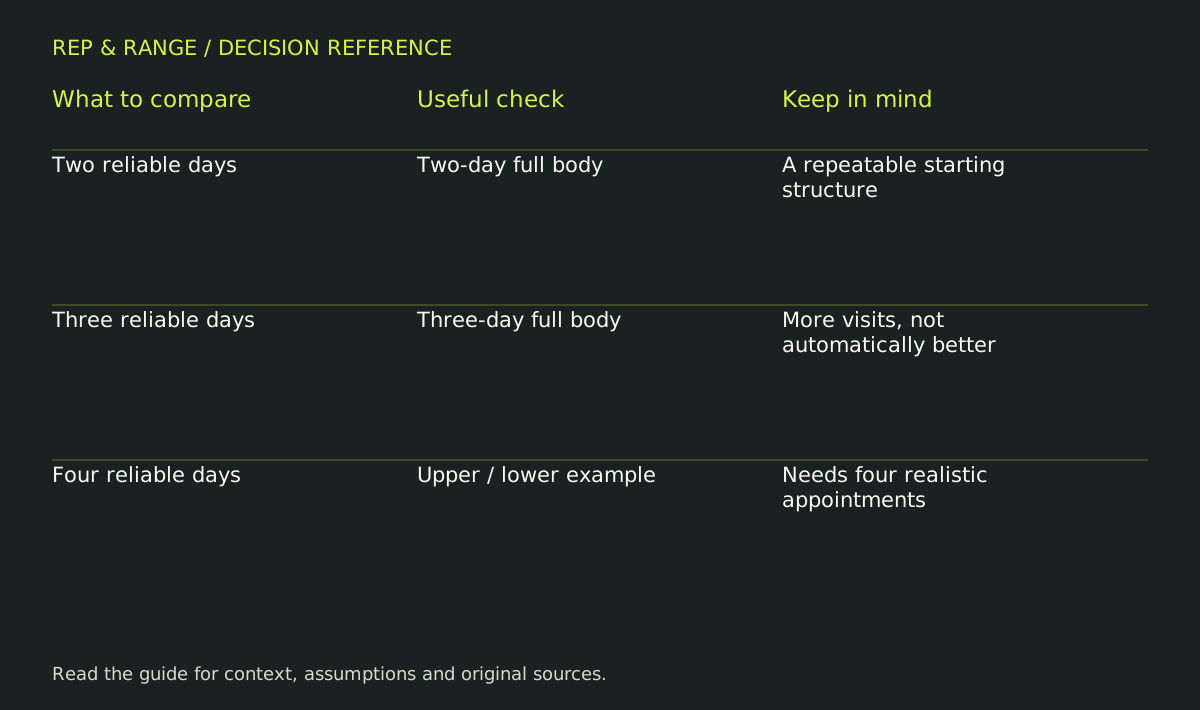
Compare the decision.
| What to compare | Useful check | Keep in mind |
|---|---|---|
| Two reliable days | Two-day full body | A repeatable starting structure |
| Three reliable days | Three-day full body | More visits, not automatically better |
| Four reliable days | Upper / lower example | Needs four realistic appointments |
AN ILLUSTRATIVE EXAMPLE
A week with two appointments
A hypothetical reader has time on Monday and Thursday. Booking those two sessions is the first decision; the particular exercise loads remain individual. If Thursday is missed, the log records the missing visit instead of pretending the planned work was done.
Take this with you.
- Choose two realistic days
- Learn the selected variations
- Record completed work
Your questions, answered.
Is two days of strength training enough to start?
Yes. Two well-spaced sessions are a practical start, and adult activity guidance includes muscle-strengthening activity on at least two days per week. Your longer-term routine depends on goals and recovery.
Do I need a gym?
No. Our planner offers home and gym options. Bodyweight-only training has limited pulling resistance, so be honest about what your setup can provide.
How can I put this guide into practice?
Choose two realistic days. Then use the related tool with the assumptions and limits described in the guide.