The journal
The proper seat position on a recumbent bike: a simple setup
A clear, step-by-step way to set your recumbent bike seat: slight knee bend at maximum reach, back supported, smooth pedaling, and quick dynamic checks.
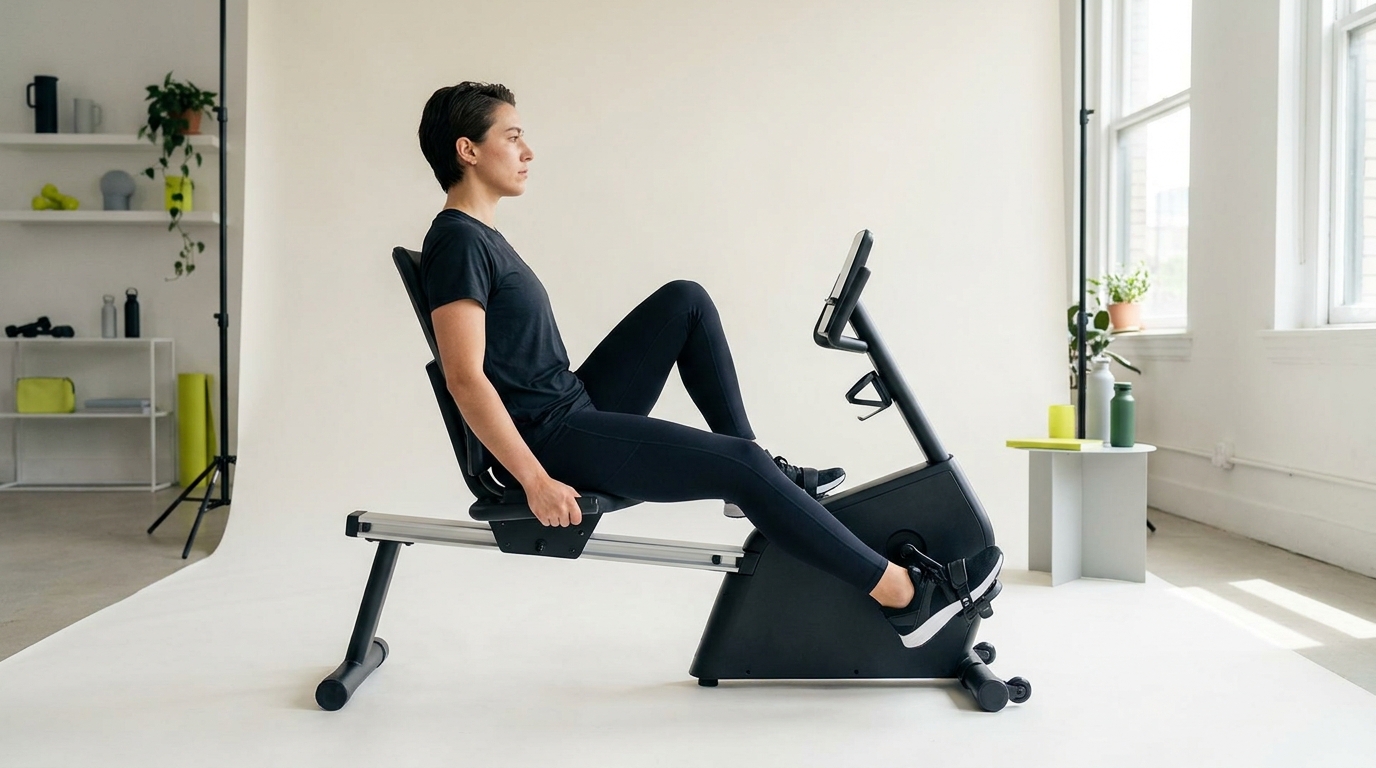
Direct answer
Set a recumbent bike seat by sliding it fore and aft until, at the farthest pedal position, your knee is almost straight but still shows a small, comfortable bend. Recumbent seats typically adjust along a rail; use distance, not height, to get this fit, and keep your back supported by the backrest while you test the position (https://rbr.info/support/guides/176-how-to-ride-a-recumbent-bike.html, https://www.vanswefitness.com/blogs/garage-gym/recumbent-bike-position?srsltid=AYCX9vJ96w49W1O8MoCU-ITRByFS4Ps2nLlTdNHbAUX8FLSXWbk_3J2_).
How to set your seat: step-by-step
1) Prepare to adjust
Stop the pedals and lower resistance. Sit all the way back so your pelvis rests against the rear of the seat and the backrest supports you (https://www.vanswefitness.com/blogs/garage-gym/recumbent-bike-position?srsltid=AYCX9vJ96w49W1O8MoCU-ITRByFS4Ps2nLlTdNHbAUX8FLSXWbk_3J2_).
2) Set leg reach
Place one pedal at the farthest point. Slide the seat along its rail until your extended leg keeps a visible, comfortable knee bend without locking. This is the primary cue for proper distance on recumbents, which are designed to adjust fore-aft (https://rbr.info/support/guides/176-how-to-ride-a-recumbent-bike.html, https://www.treadmillpartszone.com/exercise-equipment-repair-and-maintenance-blog/my-recumbent-bike-seat-is-no-comfortable-/?srsltid=AYCX9vJg573oPhiTtJsnGkDseJAFg1PgjTR2pzWEzehsFYwKJn2Eroka).
3) Check the closest point
Rotate the crank toward you. Your knee should not feel crowded into your torso and should track in a controlled line. If it feels jammed, move the seat slightly farther away and recheck (https://www.vanswefitness.com/blogs/garage-gym/recumbent-bike-position?srsltid=AYCX9vJ96w49W1O8MoCU-ITRByFS4Ps2nLlTdNHbAUX8FLSXWbk_3J2_).
4) Lock and test dynamically
Lock the seat securely. Pedal for several minutes at light resistance to confirm that your knee never locks, hips stay level, feet stay in contact without toe-reaching, and your back remains supported (https://www.vanswefitness.com/blogs/garage-gym/recumbent-bike-position?srsltid=AYCX9vJ96w49W1O8MoCU-ITRByFS4Ps2nLlTdNHbAUX8FLSXWbk_3J2_).
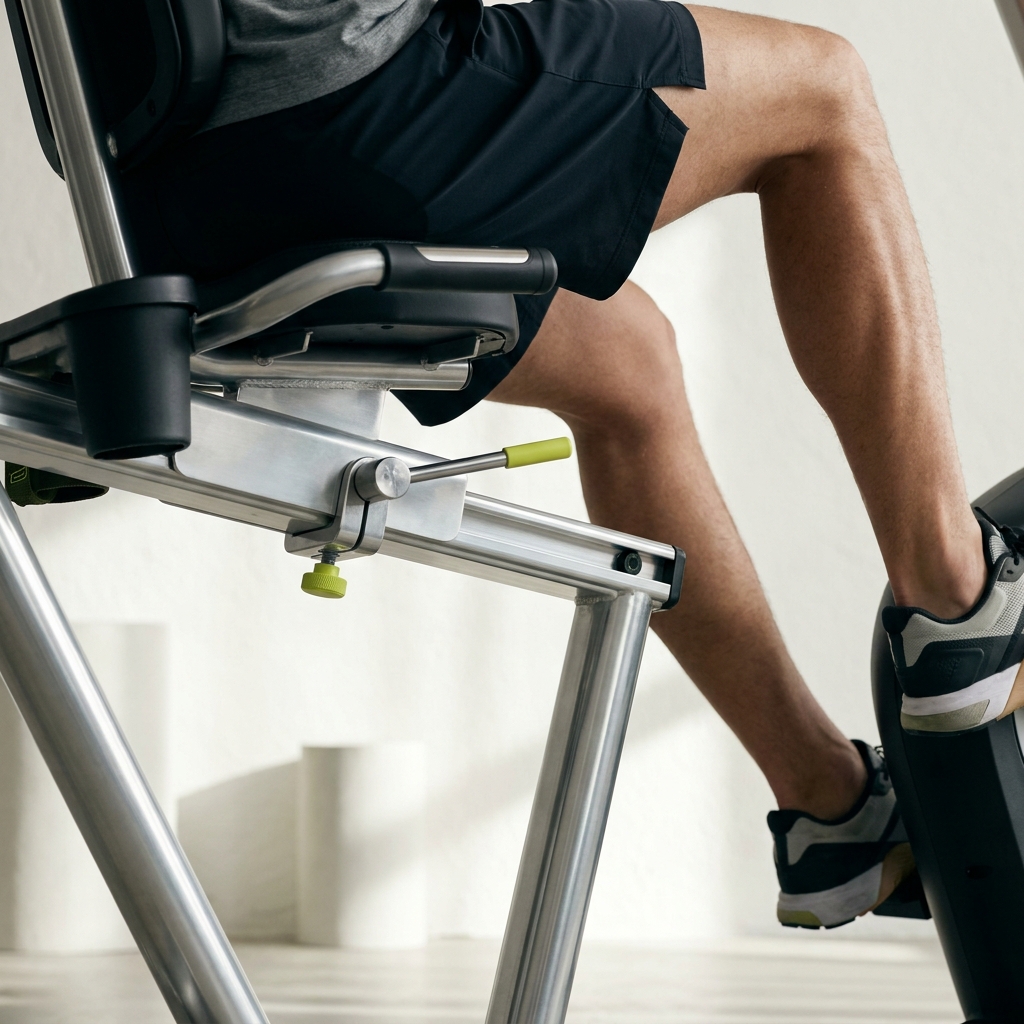
Backrest, foot placement and reach
Support your torso
Adjust the backrest so your lower back feels supported without forcing you upright or slumped. Maintain light hands on the grips rather than pulling yourself forward (https://www.vanswefitness.com/blogs/garage-gym/recumbent-bike-position?srsltid=AYCX9vJ96w49W1O8MoCU-ITRByFS4Ps2nLlTdNHbAUX8FLSXWbk_3J2_).
Place your feet for control
Center the ball of each foot over the pedal and secure straps so contact is firm but not compressed. This helps maintain consistent knee tracking with a relaxed ankle rather than exaggerated toe-pointing to reach the pedal (https://www.motrike.com/recumbent-exercise-bike-seat-position-tips/).
Common mistakes and quick fixes
- Seat too far: You may overreach, point your toes, or feel pulling behind the knee. Move one setting closer and retest at light resistance (source).
- Seat too close: Your knee stays deeply bent and may crowd your torso at the top. Move one setting farther and retest (source).
- Back not supported: If you slide forward or grip the handles hard, reduce resistance and readjust the backrest so you can stay against it comfortably (source).
Recumbent seat quick-fit checklist
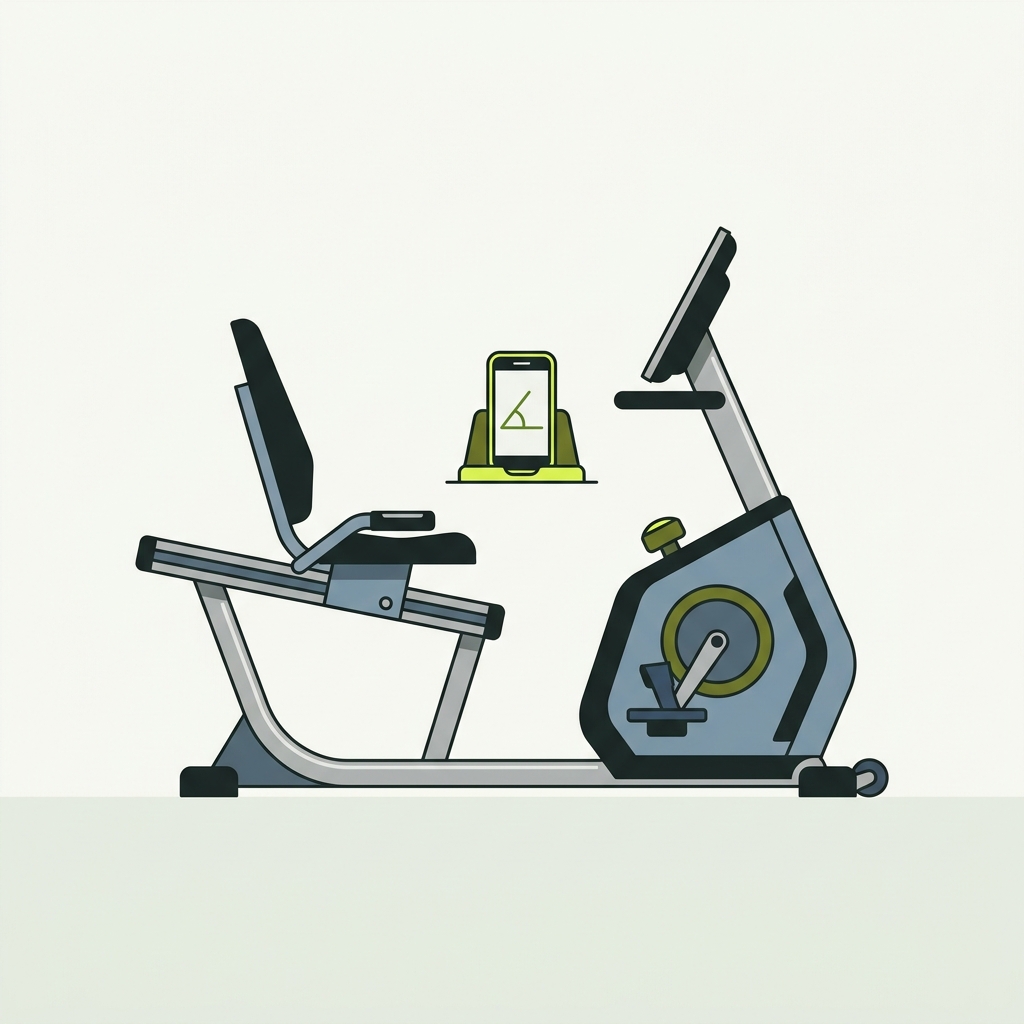
Useful context on knee angle
Cycling research often cites about 25-30 degrees of knee flexion near maximum extension as a starting range, but recumbent geometry and measurement methods vary. Use it as context, not a rigid target; visible bend, pelvic stability, and a comfortable dynamic test matter most (https://www.vanswefitness.com/blogs/garage-gym/recumbent-bike-position?srsltid=AYCX9vJ96w49W1O8MoCU-ITRByFS4Ps2nLlTdNHbAUX8FLSXWbk_3J2_, https://www.motrike.com/recumbent-exercise-bike-seat-position-tips/).
When to stop and get advice
Stop and seek appropriate clinical guidance if you notice sharp pain, new numbness, dizziness, chest symptoms, or pain that persists after simple fit changes. Do not adjust the seat while pedaling unless the manual explicitly allows it, and always confirm the lock before riding (https://www.vanswefitness.com/blogs/garage-gym/recumbent-bike-position?srsltid=AYCX9vJ96w49W1O8MoCU-ITRByFS4Ps2nLlTdNHbAUX8FLSXWbk_3J2_).
Next steps
- Warm up briefly before testing your fit to reduce stiffness: What are some good 5-minute warm-ups to do before lifting weights?
- Progress resistance and duration gradually once your position feels stable: How long does it take to see progressive overload?
Short FAQ
How much knee bend should I aim for?
Keep a visible, comfortable bend at maximum reach so the knee never locks. Angle ranges like 25-30 degrees can be a starting context, but prioritize a stable pelvis and smooth pedaling over chasing an exact number (source, source).
Where should my feet sit on the pedals?
Place the ball of each foot over the pedal’s center and secure straps so the feet stay in contact without being compressed (https://www.motrike.com/recumbent-exercise-bike-seat-position-tips/).
Can I adjust seat height to fit?
On most recumbents, you adjust fore-aft distance along a rail rather than “height.” Aim for the small knee bend at maximum reach with back support against the seat (https://rbr.info/support/guides/176-how-to-ride-a-recumbent-bike.html).