The journal
What are some good 5-minute warm-ups to do before lifting weights?
Practical, evidence-backed 5-minute warm-ups for weightlifting that raise heart rate, mobilize joints and activate muscles to prepare you for lifting.

Quick answer: Can a 5-minute warm-up prepare you to lift?
how to warm up before lifting weights
Short verdict: a focused five-minute routine that raises heart rate, moves your target joints through range, and activates the prime movers can prepare most people for low-to-moderate lifting sessions when it is done with intention and appropriate intensity, according to public guidance on warming up NHS guidance on warming up.
For heavier days or near-maximal sets you will usually need extra time for technical rehearsal and progressive ramp sets, since specific warm-up sets with the lift improve readiness and technique better than no specific warm-up research on warm-up influence for resistance training.
What are efficient, evidence-backed warm-ups I can do when short on time?
Use a five-minute sequence that follows Raise, Activate or Mobilize, and Potentiate: elevate heart rate briefly, perform targeted mobility and activation drills for the lift, then do 2 to 4 brief rehearsal reps with low load to prime technique. Add ramp sets for heavy sessions.
To know if a quick routine is enough, use simple readiness checks: movement quality free of pain, steady breathing, and feeling adequately warm in the target muscles and joints, which aligns with standard public advice on safe exercise preparation CDC warm-up and cool-down guidance.
Core principles: what evidence says about warm-ups and the RAMP framework
Why dynamic movement is preferred to long static holds before lifting
Evidence and consensus guidance favor dynamic, movement-specific warm-ups over long static holds before resistance training because prolonged static stretching immediately before maximal efforts can reduce peak strength and power, while dynamic movement tends to be neutral or slightly beneficial for performance systematic review on stretching effects.
In practice that means prioritizing short, active movements that repeat the pattern, speed, or joint angles of the planned lifts rather than holding long passive stretches for the same muscle groups, especially when you plan heavy sets sports medicine review on warm-up strategies.
Overview of the RAMP steps and how to apply them in five minutes
RAMP, a widely used warm-up structure, stands for Raise, Activate or Mobilize, and Potentiate; it organizes the goals of a warm-up into a short progression that is easy to compress into five focused minutes RAMP method description.
Raise means briefly elevating heart rate and muscle temperature with light cardio or movement; Activate or Mobilize uses targeted drills to get key joints and muscles moving in the patterns you will use; Potentiate is a short, slightly higher-intensity rehearsal to prime the nervous system for the work ahead. All three steps can be represented in compact micro-circuits with bodyweight, band work, or light implements to fit a five-minute window overview of warm-up mechanisms and outcomes.
simple 5-minute timer and step tracker
Physiologically the goal is straightforward: raise local muscle temperature enough to improve tissue compliance and contraction speed, mobilize the joints you will load, and activate the neural pathways and prime movers so the first working sets are technically clean; agency guidance emphasizes these same aims when describing an effective warm-up CDC warm-up and cool-down guidance.
Keep any static stretching brief before a lift if you include it at all; longer-duration static holds are better after training or in separate mobility sessions to avoid the small acute reductions in maximal force production that have been reported with long pre-exercise stretching review of stretching effects.
Three practical 5-minute warm-ups you can do right now
Below are three timed, coach-style 5-minute routines you can follow exactly. Each routine is laid out minute-by-minute with simple cues so you can perform the sequence without extra thought. Use the lower-body sequence for squat and deadlift days, the upper-body sequence before presses and rows, and the full-body option for general maintenance or light sessions. These routines reflect the core goals of raising heart rate, mobilizing joints, and activating prime movers described in public guidance NHS warm-up guidance. See sample 5-minute routines from Women's Health, Men's Health, and Therapeutic Associates.
Lower-body strength focus (squat, deadlift)
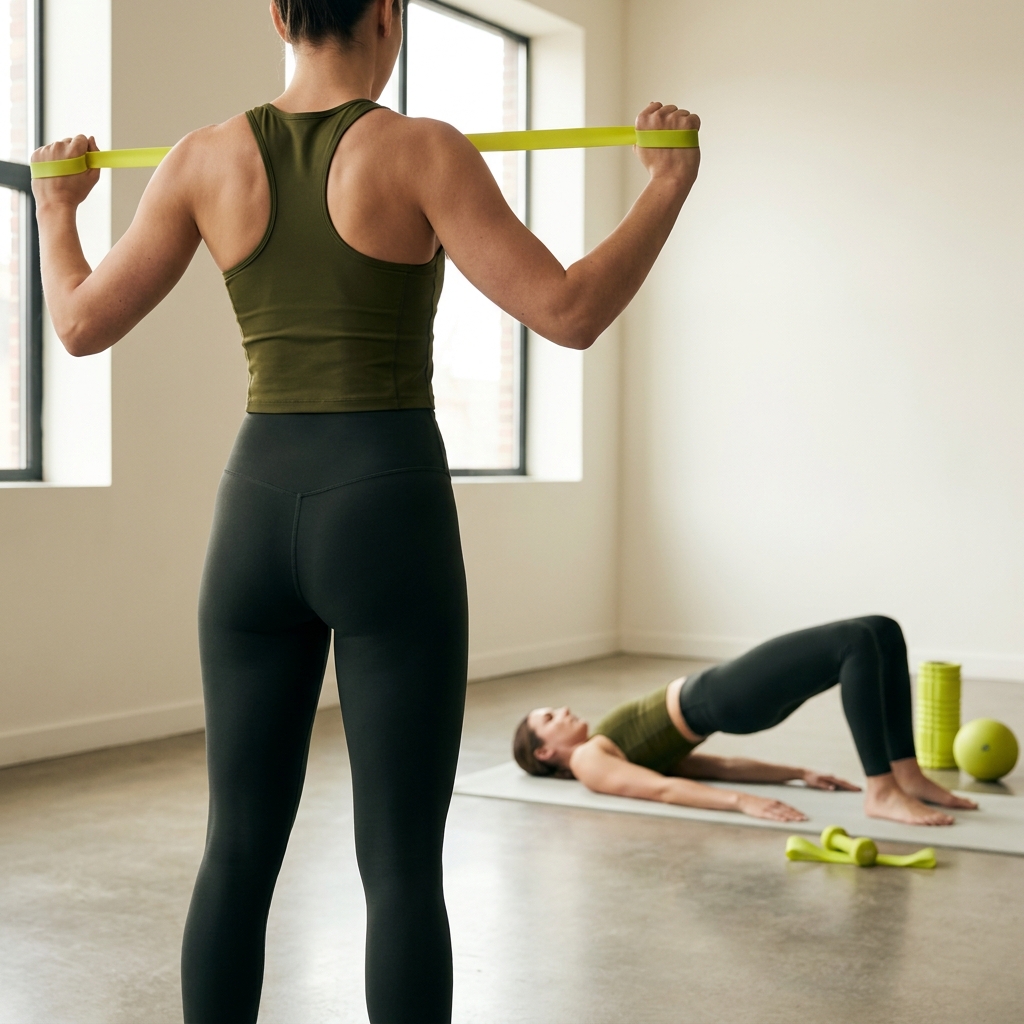
Minute 1:00-2:00, Mobilize hips and ankles - 30 seconds of leg swings each side (front-to-back) followed by 30 seconds of ankle pumps or controlled knee circles. Aim for fluid range without forceful bouncing and keep breathing steady.
Minute 2:00-3:00, Activate glutes and posterior chain - 30 seconds of glute bridges focusing on firm hip drive, then 30 seconds of slow single-leg Romanian deadlift pattern with no load or a light band to emphasize hip hinge and balance.
Minute 3:00-4:00, Movement pattern rehearsal - 1 set of 6 to 8 bodyweight squats or slow tempo kettlebell deadlift pattern using only an unloaded bar, broomstick, or light band to rehearse depth and position. Use this time to check movement quality and breathing.
Minute 4:00-5:00, Potentiate - 2 to 4 short double-effort reps at a slightly faster tempo with low load: for squats perform 2 to 3 empty-bar reps or 3 explosive bodyweight squats; for deadlifts do 2 controlled reps at 30 to 40 percent of your working weight if you have the bar. These brief, specific repetitions prime the nervous system and technique before work sets research on warm-up influence in resistance training.
Upper-body strength focus (presses, rows)
Minute 0:00-1:00, Raise - Arm circles, brisk marching with exaggerated arm swing, or light banded rows for 60 seconds to increase circulation to shoulders and upper back. Keep movement controlled and breathe smoothly NHS warm-up guidance.
Minute 1:00-2:00, Mobilize scapula and thoracic spine - 30 seconds of cat-cow or thoracic rotations and 30 seconds of band pull-aparts at slow tempo to reestablish scapular motion and posture.
Minute 2:00-3:00, Activate rotator cuff and upper-back - 30 seconds of external-rotation band work (lying or standing) and 30 seconds of face pulls or prone T raises with no load to cue scapular retraction and posterior chain of the shoulder.
Minute 3:00-4:00, Rehearse pressing or rowing pattern - 6 to 8 slow empty-bar or band-assisted reps of the target movement, focusing on setup, stable breathing, and full range of motion. Check that the shoulder feels steady and movement patterns are smooth.
Minute 4:00-5:00, Potentiate - 2 to 4 heavier but low-rep rehearsals: for a bench press session perform 2 to 3 sets of 1 to 3 reps at an easy load to reinforce groove, or for rows do 3 quick, controlled reps with a slightly increased band tension or light plate. Specific rehearsal readies technique before the first work set influence of warm-up on resistance performance.

Full-body maintenance or light session
Minute 0:00-1:00, Raise - 60 seconds of dynamic movement such as inchworms into a slow jog on the spot, or jumping jacks done at low intensity to increase heart rate and breathing gently.
Minute 1:00-2:00, Mobilize - 30 seconds of leg swings and 30 seconds of arm swings to open hips and shoulders, offering quick joint preparation across the body.
Minute 2:00-3:00, Activate - 30 seconds of banded lateral walks for glute activation and 30 seconds of band pull-aparts for upper-back engagement.
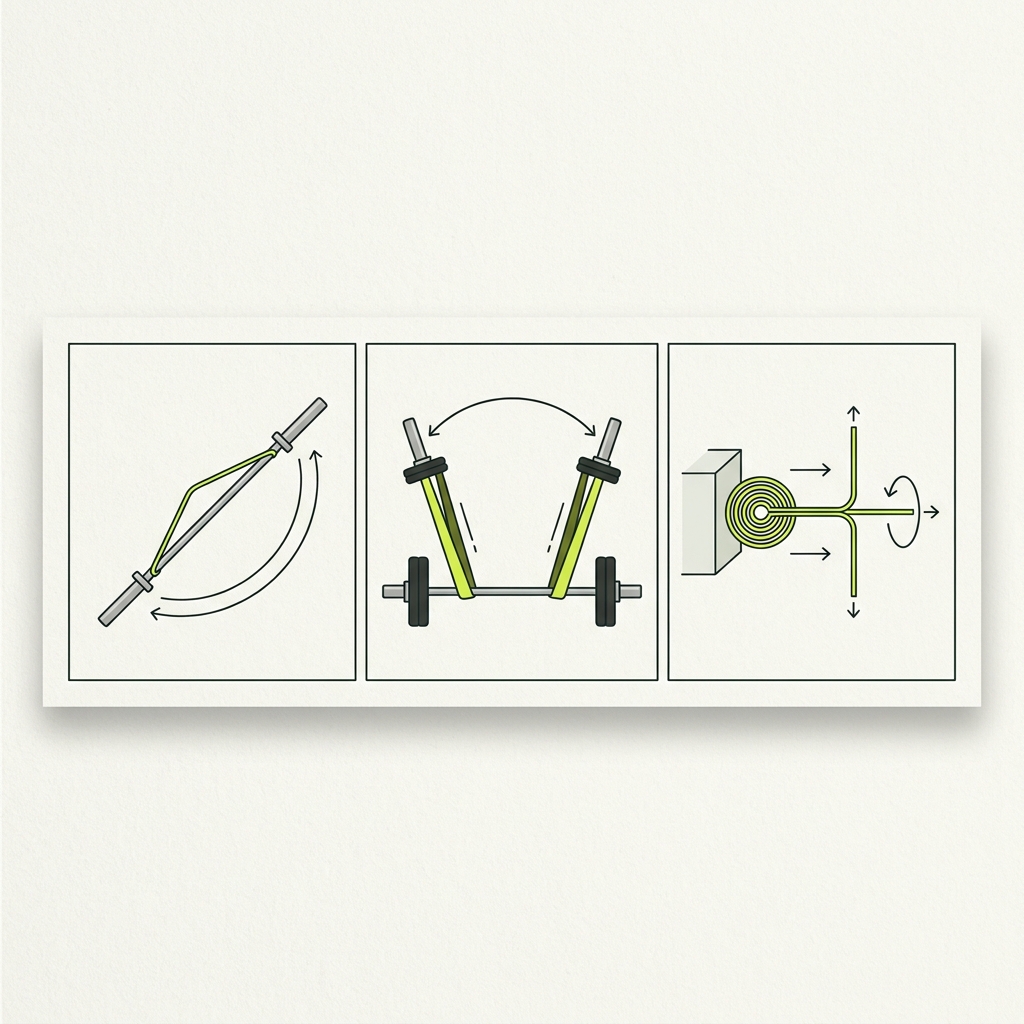
Minute 3:00-4:00, Movement rehearsal - perform 6 to 8 slow bodyweight squats or push-ups focusing on alignment and breathing, depending on the main session goals.
Minute 4:00-5:00, Potentiate - choose 2 to 4 brief reps that mirror the main work: a couple of explosive squats, a few controlled push-ups, or a single heavier band row to cue force production without creating fatigue CDC guidance on warm-up and cool-down.
If you have very limited space or no equipment, use bodyweight progressions, tempo changes, and unilateral movements to increase neural demand. If you have a band or an empty bar, use those tools for mobility and rehearsal as appropriate. Scale intensity up slightly on days when you plan heavier loads and add ramp sets per the next section sports medicine review.
Specific rehearsal and activation: ramp sets, activation choices and brief potentiation
Why include ramp sets. Specific warm-up sets of the target lift with light-to-moderate loads improve technical readiness and confidence compared with skipping a specific rehearsal, which is especially important for complex compound lifts research on warm-up influence.
Practical progression example. For a compound lift such as the barbell back squat use a short sequence of 2 to 5 ramp sets that progressively approach the working set weight while keeping reps low. A common, efficient pattern is empty bar for 6 to 8 reps, a moderate set at about 40 percent of working weight for 3 to 5 reps, and a follow-up at 60 to 70 percent for 1 to 3 reps, with brief rest periods for setup and assessment between sets. Adjust the load steps and number of sets by experience and how heavy the day will be study on warm-up progressions.
Activation choices that translate to better mechanics. Choose activation drills that match the primary weaknesses or technical cues of the lift: glute bridges and banded monster walks for hip drive, bird dogs and dead-bug variations for core tension, and scapular retractions, band pull-aparts, and light external rotation for pressing stability. Keep each activation drill short, about 20 to 40 seconds, enough to cue the pattern without fatigue sports medicine review.
Timing and efficiency. The ramp sequence above plus the brief activation work can fit into a ten-minute window if you extend beyond five minutes, or the most essential elements can be integrated into a tight five-minute plan by shortening each activation and limiting ramp sets to two key rehearsals before the first working set. Heavier efforts usually justify more ramp sets and slightly longer rests to maintain bar speed and technical quality research on ramping and performance.
Decision checks, common mistakes and a quick post-warm-up checklist
When to extend the warm-up. Add time or extra ramp sets if you notice persistent joint stiffness, poor movement patterning during rehearsal, or if the session includes near-maximal lifts; these signs indicate you need more specific rehearsal for safety and performance, consistent with public guidance on exercise preparation NHS guidance on warming up.
Frequent errors to avoid. Common mistakes include: spending long periods in static stretching immediately before heavy lifting, which can blunt peak force production; skipping specific rehearsal sets and beginning heavy work cold; rushing activation drills so they do not effectively cue the desired muscle pattern; and holding breath or using erratic breathing during setup. Correct each by shortening pre-lift stretches, planning at least one rehearsal set, and cueing steady diaphragmatic breathing during warm-up and the first work sets review on stretching and performance.
Quick post-warm-up checklist. Before your first working set run this short checklist: breathing steady, no sharp pain on the movement, target joints moving through expected range, prime movers feel engaged, and you can perform a rehearsal repetition with good form. If any item fails, pause and add extra mobility, activation, or another rehearsal set to correct the issue CDC warm-up guidance.
Use judgment and adapt. Individual responses vary. Novice lifters may need more technical rehearsal and coaching cues even when loads are light, while experienced lifters preparing for heavy sets will usually benefit from more systematic ramping. Keep the five-minute option for low-to-moderate sessions and treat ramping as a non-negotiable for heavy days sports medicine review.
Frequently asked questions
Can a 5-minute warm-up be enough before lifting?
Yes, for low-to-moderate lifting a focused 5-minute warm-up that raises heart rate, mobilizes target joints, and activates prime movers can be sufficient; heavier or near-maximal sessions usually need added ramp sets.
Should I stretch before heavy lifting?
Long static stretching immediately before heavy lifting can reduce maximal strength; keep pre-lift stretching brief or save longer static holds for after training or separate sessions.
What if I have only a band or no equipment?
Use bodyweight drills and a resistance band for mobilization and activation; tempo changes and specific rehearsal patterns still prepare technique and nervous system.
A tight, purposeful warm-up saves time and reduces the chance of poor technique on early sets. Use the routines and checklists here as starting points, adjust intensity to your session goals, and add more ramp sets on heavy days. Consistency with a simple pattern will make your lifts feel safer and smoother.
References
- https://www.nhs.uk/live-well/exercise/how-to-warm-up-before-exercising/
- https://pubmed.ncbi.nlm.nih.gov/21088681/
- https://www.cdc.gov/physical-activity-basics/getting-started/warm-up-cool-down.html
- https://pubmed.ncbi.nlm.nih.gov/26642915/
- https://pubmed.ncbi.nlm.nih.gov/26400696/
- https://journals.lww.com/nsca-scj/Abstract/2007/08000/Warm_Up_Revisited__The_RAMP_Method_of_Optimizing.5.aspx
- https://www.womenshealthmag.com/fitness/a29001793/dynamic-warm-up/
- https://www.menshealth.com/fitness/a42938882/static-stretch-warmup-alternatives/
- https://www.therapeuticassociates.com/dynamic-warm-ups-to-boost-performance/
- https://repandrange.com/workouts/exercise-atlas/hip-bridge
- https://repandrange.com/workouts/exercise-atlas/romanian-deadlift
- https://repandrange.com/workouts/exercise-atlas/dead-bug
- https://repandrange.com/workouts
Product options for this topic
As an Amazon Associate I earn from qualifying purchases. These are researched options, not hands-on test results. Check the exact size or model, current price and availability on Amazon.
| Product option | Fit and limits to check | Retailer |
|---|---|---|
| Fit Simplify resistance loop bands, set of five | Short loop bands for suitable resistance exercises. Check the material for allergies, inspect for damage and keep stretched bands away from the face. | View on Amazon |