The journal
How high should the seat be on a workout bike? A simple setup that works
Set your exercise bike seat so your knee has a slight bend at the bottom of the stroke. Start at hipbone height and fine-tune to roughly 25–35 degrees for most riders.
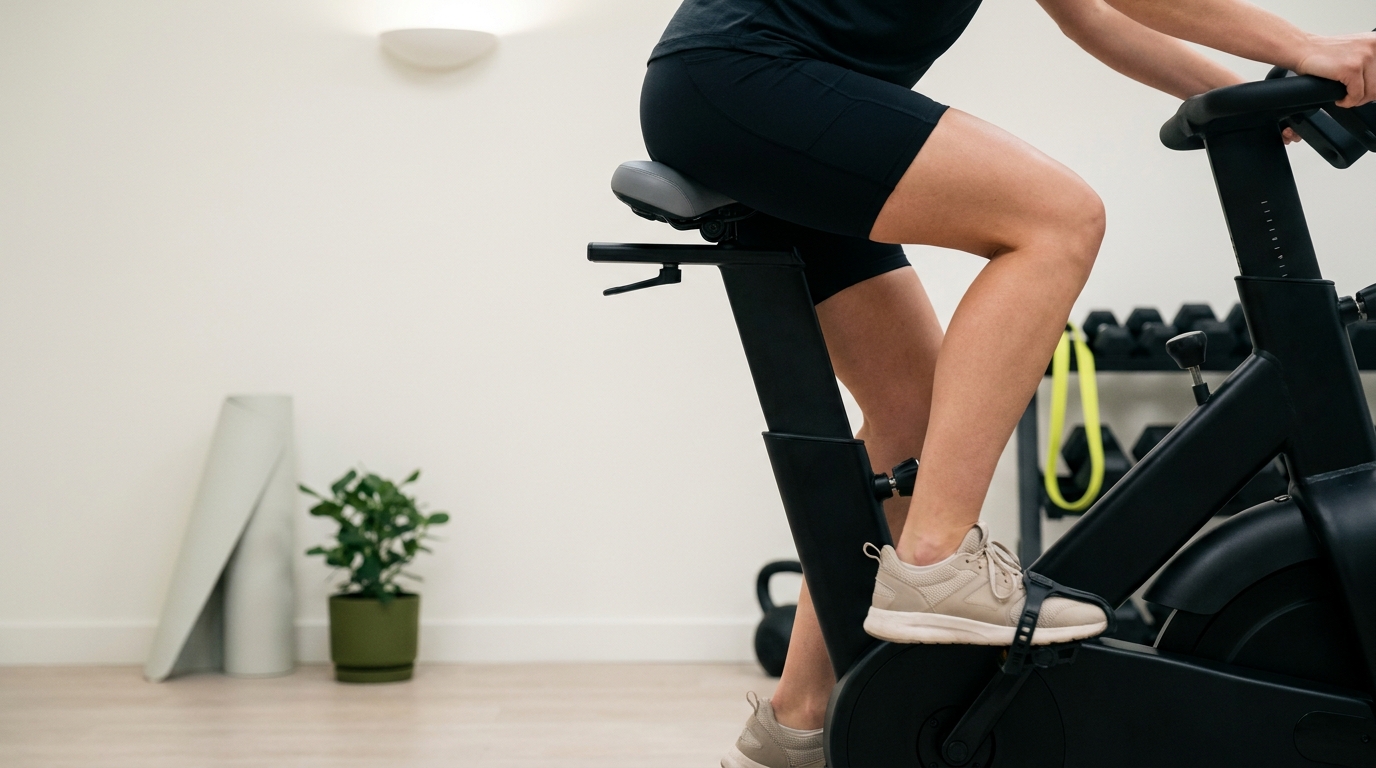
Direct answer: Set your exercise bike seat so your knee has a slight bend at the bottom of the pedal stroke. For most riders this works out to roughly 25-35 degrees of knee bend when pedaling normally. A quick way to get there is to start with the saddle about level with your hipbone, do the heel-on-pedal check, then fine-tune on the bike (https://www.hss.edu/health-library/move-better/set-up-exercise-bike, https://www.myvelofit.com/fit-academy/saddle-height-101-a-comprehensive-guide-to-setting-your-saddle-height/).
Fast starting point you can do in seconds
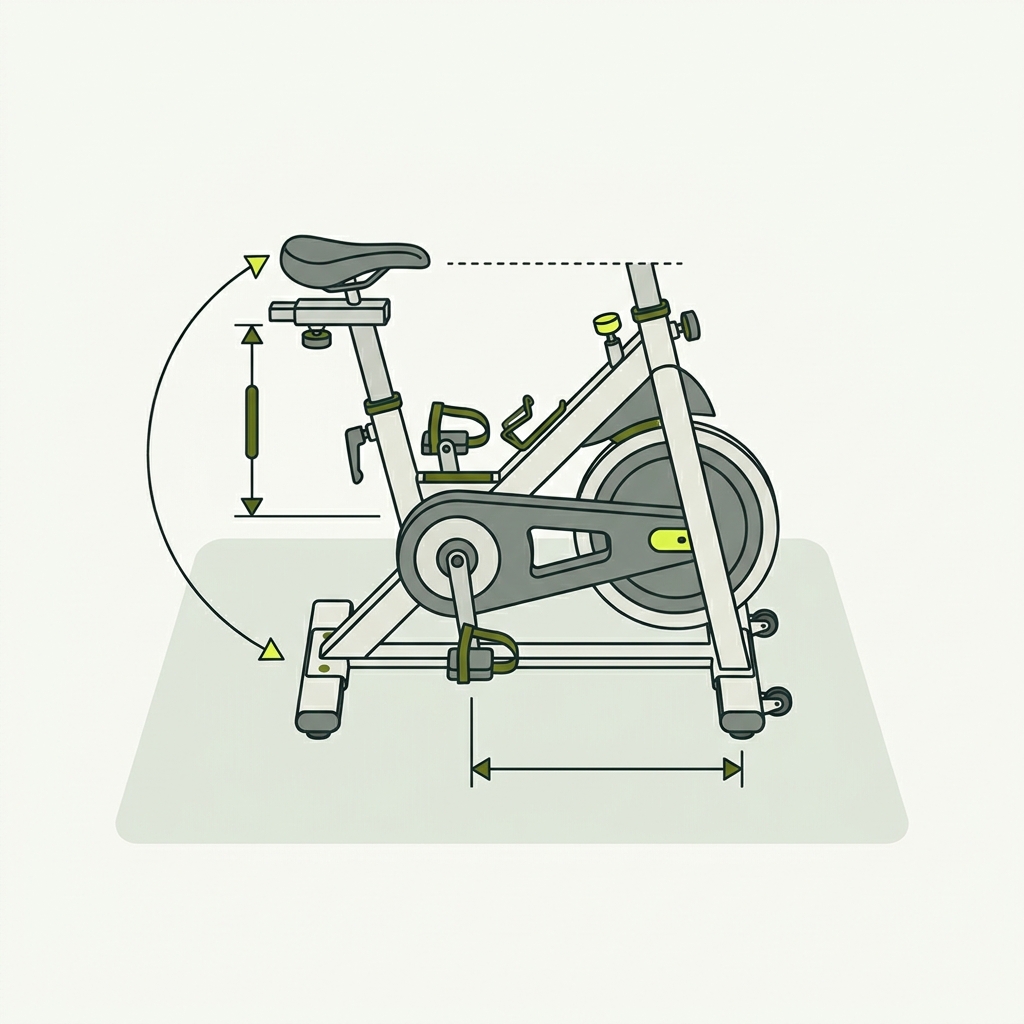
- Stand next to the bike and set the seat roughly level with the top of your hipbone (iliac crest). This is just a baseline height to start pedaling from (https://www.hss.edu/health-library/move-better/set-up-exercise-bike).
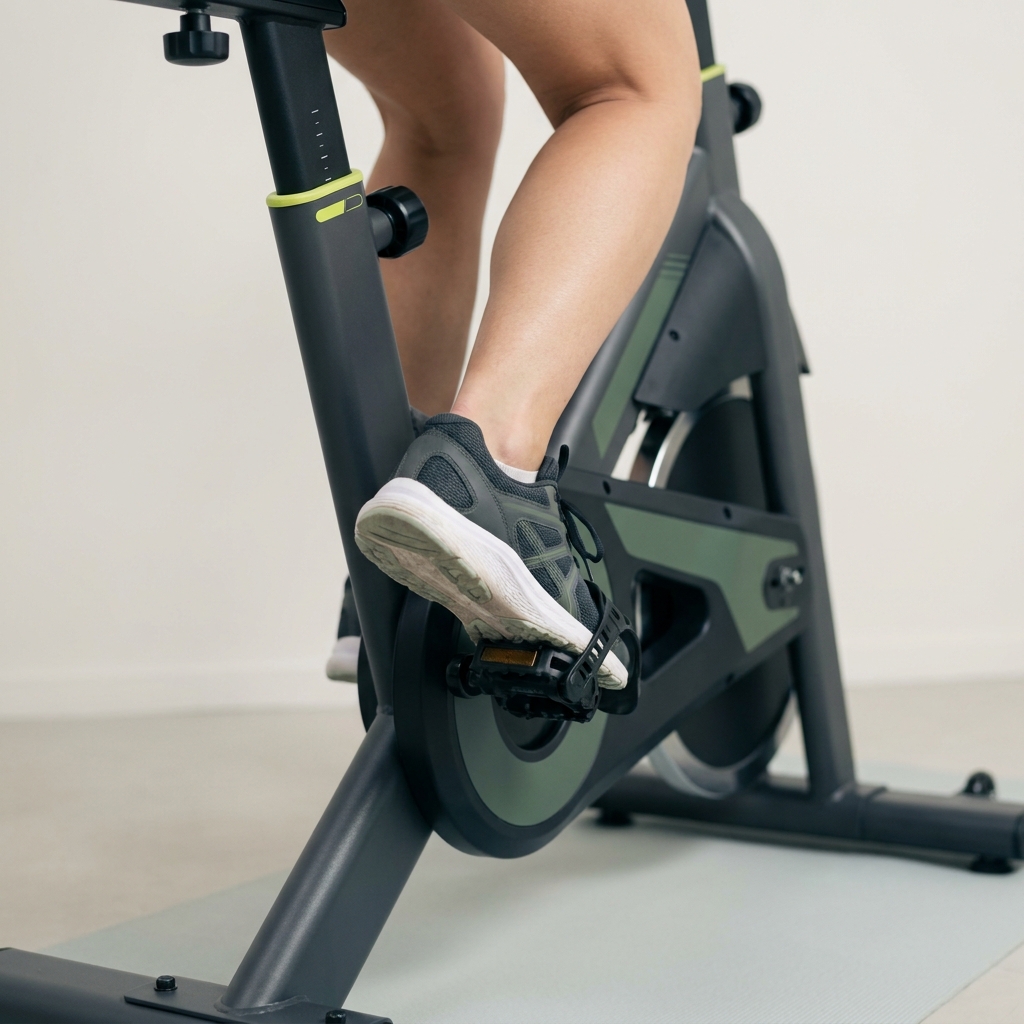
- Sit on the bike and place your heel on the pedal at the very bottom (6 o'clock). Your knee should be straight here; when you move your foot to normal pedaling on the ball of the foot, that creates the slight bend you want (https://www.hss.edu/health-library/move-better/set-up-exercise-bike).
Aim for this knee angle, and how to re-check it
When pedaling normally (ball of the foot over the pedal), many fitting methods target about 25-35 degrees of knee bend at the bottom of the stroke. This range is commonly used in bike fitting to balance comfort and efficiency (https://www.myvelofit.com/fit-academy/saddle-height-101-a-comprehensive-guide-to-setting-your-saddle-height/).
Two simple ways to check:
- Pause at the bottom of the stroke and look for a slight bend without hip rocking. If it’s very bent, raise the seat a little; if you’re reaching or pointing your toes, lower it slightly (https://www.hss.edu/health-library/move-better/set-up-exercise-bike).
- Record a short side-on video and measure the knee angle at the bottom; adjust until you’re roughly in that 25-35 degree window (https://www.myvelofit.com/fit-academy/saddle-height-101-a-comprehensive-guide-to-setting-your-saddle-height/).
Three practical methods that work
1) Heel-on-pedal check (fast and reliable)
With your heel on the pedal at the bottom of the stroke, your knee should be straight. Switch to normal foot position and you should see a slight bend. If your hips rock to reach the bottom, lower the saddle; if the knee stays very bent at the bottom, raise it a little (https://www.hss.edu/health-library/move-better/set-up-exercise-bike).
2) 109% inseam baseline (measurement starting point)
Multiply your inseam by about 1.09 to estimate a starting saddle height, then fine-tune on the bike to land in that slight-bend range. This “Hamley” style formula is a baseline, not a final answer, so always adjust by feel and knee angle on the bike (https://www.myvelofit.com/fit-academy/saddle-height-101-a-comprehensive-guide-to-setting-your-saddle-height/).
3) Hip-height shortcut
Set the saddle roughly even with your hipbone when standing beside the bike, then pedal and fine-tune until you have a slight bend at the bottom with smooth motion and no hip rocking (https://www.hss.edu/health-library/move-better/set-up-exercise-bike, https://www.self.com/story/essential-tips-for-adjusting-your-indoor-bike-seat).
Fine-tune while riding: what to change and why
Signs the seat is too high
- Hips rock side to side to reach the bottom.
- You point your toes or feel like you’re “reaching” at the bottom.
If you notice these, lower the saddle a little and retest (https://www.nordictrack.com/blog/bike-seat-adjustments?srsltid=AYCX9vJhRJrUTYhnWn3PKVl-4_d4ceEIO3E3M6frzpK-Wreqsbe4v-5r).
Signs the seat is too low
- Knee stays noticeably bent at the bottom of the stroke.
- Cadence feels cramped or you sense extra knee load.
Raise the saddle in small steps and re-check your knee bend (https://www.nordictrack.com/blog/bike-seat-adjustments?srsltid=AYCX9vJhRJrUTYhnWn3PKVl-4_d4ceEIO3E3M6frzpK-Wreqsbe4v-5r).
Don’t skip fore-aft
With the cranks at 3 and 9 o’clock, your front knee should line up roughly over the center of the pedal (ball of the foot). Slide the saddle forward or back to achieve this; it helps distribute load and supports a smooth pedal stroke (https://www.hss.edu/health-library/move-better/set-up-exercise-bike, https://www.self.com/story/essential-tips-for-adjusting-your-indoor-bike-seat).
Recumbent note: on a recumbent bike, adjust the seat so the knee has a slight bend when the pedal is farthest away; about 25-30 degrees is a useful target (https://www.nordictrack.com/blog/bike-seat-adjustments?srsltid=AYCX9vJhRJrUTYhnWn3PKVl-4_d4ceEIO3E3M6frzpK-Wreqsbe4v-5r).
When to stop and get help
If you feel sharp pain or discomfort that doesn’t ease after a couple of sessions, stop and ask an instructor or clinician to check your setup. Persistent or worsening pain is a reason to consult a healthcare professional (https://www.self.com/story/essential-tips-for-adjusting-your-indoor-bike-seat).
Quick setup checklist for the gym floor
FAQs
How high should my handlebars be? Choose a height that lets you keep a neutral spine with a slight bend at the elbows, without feeling bunched up or overreaching. If your back rounds, raise the bars; if you feel scrunched, bring them closer or lower within comfort (https://www.hss.edu/health-library/move-better/set-up-exercise-bike).
Do I need to recheck height if I change shoes or pedals? Yes. Shoe and pedal stack height and cleat position change your effective leg length, so recheck and fine-tune your saddle if you change footwear, pedals, or cleats (https://www.myvelofit.com/fit-academy/saddle-height-101-a-comprehensive-guide-to-setting-your-saddle-height/).
Related reads from Rep & Range: What are some good 5-minute warm-ups to do before lifting weights? · Evening workouts: timing, caffeine and winding down