Read the quantities and conditions, not just the claim on the front. “FDA approved” is not an appropriate shortcut for a dietary supplement.
Start with the serving size
Check how many capsules, scoops or grams make a serving. Then read each ingredient amount on that basis. If the label lists only a blend total, you may not be able to tell how much of each ingredient is present.
Compare the number of servings in the container with the amount you expect to use. Keep units visible: milligrams and grams are not interchangeable.
Check claims against the relevant source
The FDA does not approve dietary supplements for safety and effectiveness before they are marketed. A product page suggesting otherwise should prompt a closer look.
Independent testing can answer specified quality questions. It is not the same thing as evidence that the product improves your particular workout or is suitable with your medicines.
Look across everything you take
Ingredients may appear in more than one product. A stimulant in a pre-workout, an energy drink and coffee can add up. Read each label rather than treating separate products as independent decisions.
Keep the exact product name and label available when discussing a supplement with a pharmacist or clinician. This site does not check drug interactions or certify the contents of a product.
Bring one useful question to the next session
Read serving size and units. Look across combined products. Verify a badge at its source. Keep the guide beside your own record so you can see which part of the decision still needs information.
The worked example below is hypothetical. Replace its inputs with the quantities or circumstances you actually know; do not turn an illustration into a personal training or nutrition prescription.
Compare the decision.
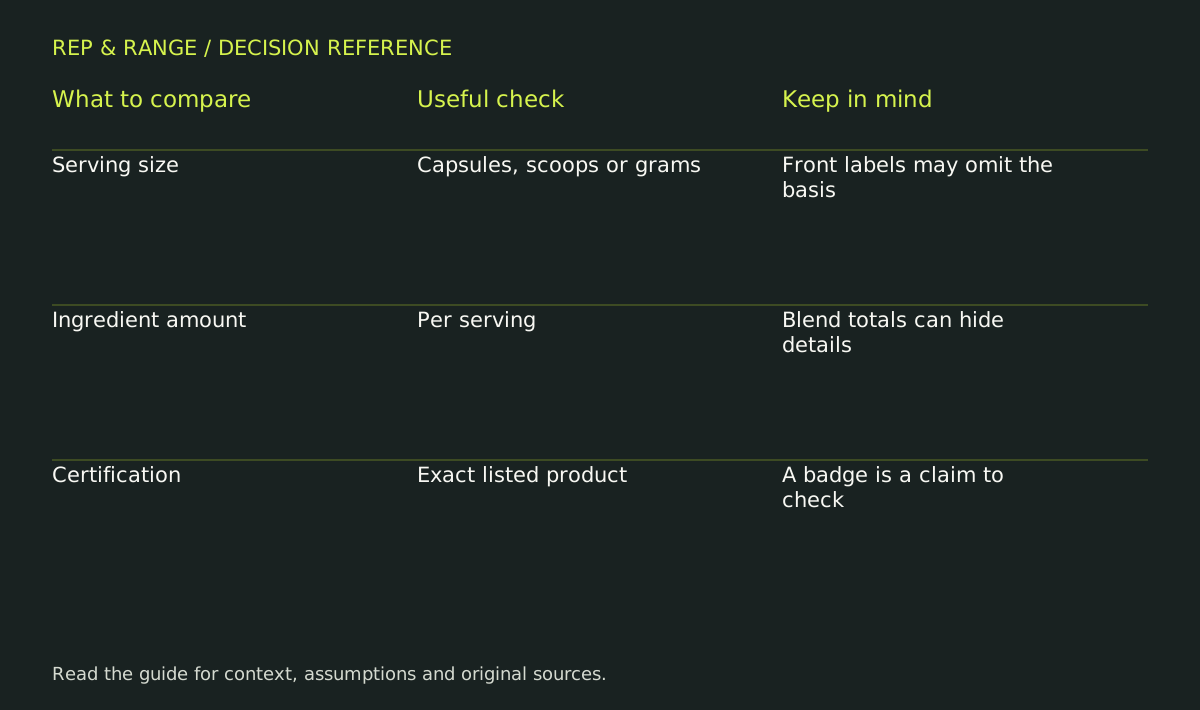
| What to compare | Useful check | Keep in mind |
|---|---|---|
| Serving size | Capsules, scoops or grams | Front labels may omit the basis |
| Ingredient amount | Per serving | Blend totals can hide details |
| Certification | Exact listed product | A badge is a claim to check |
AN ILLUSTRATIVE EXAMPLE
A capsule is not always a serving
If a hypothetical label gives amounts per two capsules, one capsule represents half that listed serving. It is still necessary to read the instructions and suitability information; this arithmetic is not a dosing recommendation.
Take this with you.
- Read serving size and units
- Look across combined products
- Verify a badge at its source
Your questions, answered.
What are red flags when buying supplements?
Unclear quantities, untraceable certification and claims of guaranteed outcomes deserve scrutiny. A claim of FDA approval for a dietary supplement is particularly misleading.
Does a third-party badge mean the supplement works?
No. Testing and certification have defined scopes. They do not establish that a product is effective or appropriate for every person.
How can I put this guide into practice?
Read serving size and units. Then use the related tool with the assumptions and limits described in the guide.