A powder is a convenient food ingredient. Start with your overall meals before deciding whether one is useful.
Give the product a job
A portable snack, an ingredient for a meal or an easy option on a busy day is a more useful starting brief than “the best powder.” Define the practical gap you want to fill.
The NIH review discusses protein needs in sports nutrition, but it does not imply that everyone who trains needs powder. Our food calculator lets you compare ordinary foods and a package label on the same basis.
Compare like with like
Write down the price, package weight, serving weight, protein per serving and number of servings. Comparing price per tub alone can hide different package sizes and ingredient concentrations.
Check allergens and the full ingredient list. If a product does not suit your preferences or tolerance, a different food or product may fit better. Avoid assuming that a marketing term establishes a medical benefit.
Check a certification at its source
If a product claims independent certification, search the programme’s own directory and match the exact product and relevant listing. A badge on a shop page is only a starting point for verification.
NSF Certified for Sport addresses defined testing and certification requirements. It does not prove that a product is necessary for you or guarantee a particular training outcome.
Bring one useful question to the next session
Identify the practical food gap. Compare serving and protein amounts. Verify allergens and certification. Keep the guide beside your own record so you can see which part of the decision still needs information.
The worked example below is hypothetical. Replace its inputs with the quantities or circumstances you actually know; do not turn an illustration into a personal training or nutrition prescription.
Compare the decision.
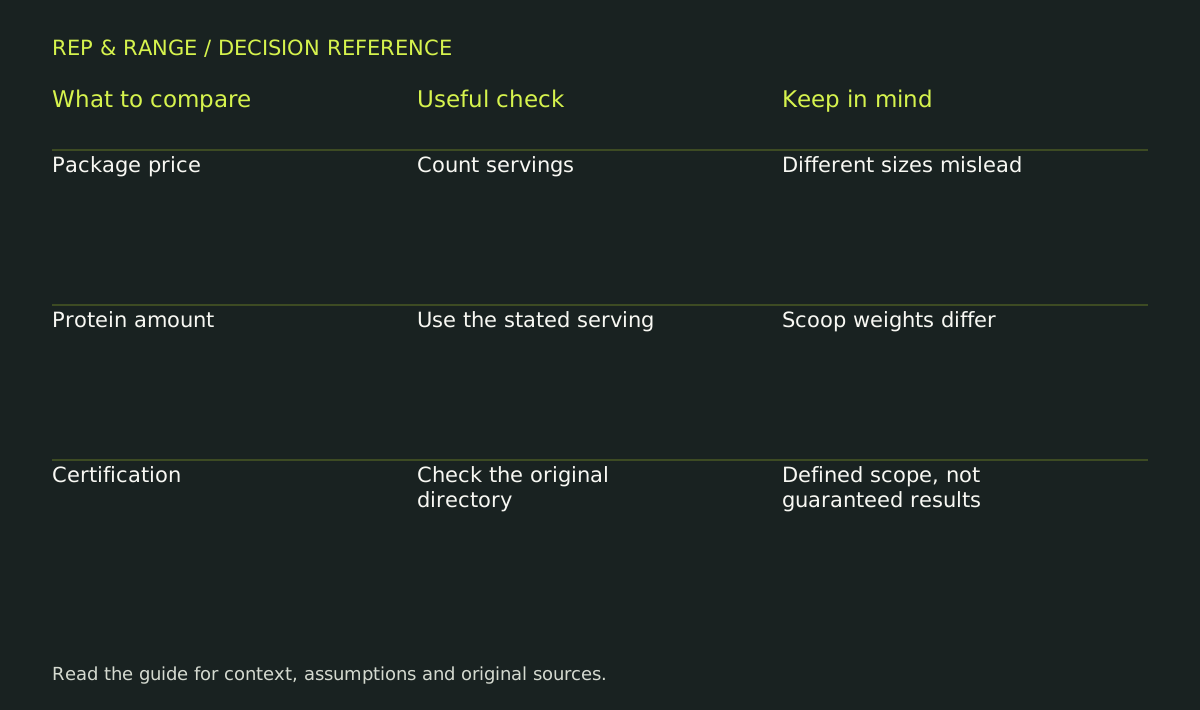
| What to compare | Useful check | Keep in mind |
|---|---|---|
| Package price | Count servings | Different sizes mislead |
| Protein amount | Use the stated serving | Scoop weights differ |
| Certification | Check the original directory | Defined scope, not guaranteed results |
AN ILLUSTRATIVE EXAMPLE
A comparable price unit
Illustrative powder A costs 30 currency units for 20 servings containing 25 g protein each. It provides 500 g protein in total, so its cost per 25 g protein is 1.50. This comparison says nothing about allergens, tolerance or necessity.
Take this with you.
- Identify the practical food gap
- Compare serving and protein amounts
- Verify allergens and certification
Your questions, answered.
What is the cleanest protein powder?
“Clean” has no single useful definition here. Compare ingredients, allergens, label clarity and verifiable testing rather than treating that word as a safety standard.
Can food provide the protein instead?
Yes. The need is for an appropriate overall diet; a supplement is one possible convenience, not an obligatory training step.
How can I put this guide into practice?
Identify the practical food gap. Then use the related tool with the assumptions and limits described in the guide.