Caffeine is optional. Consider the whole day’s intake and how you respond, especially when training late.

Add the sources before adding another serving
Coffee, tea, energy drinks and supplements may all contribute caffeine. Quantities vary, so use available label information and avoid assuming every coffee or scoop has the same amount.
The FDA cites 400 mg per day as an amount not generally associated with negative effects for most adults. That is not a target, and individual sensitivity varies.
Pay attention to the trade-off
A product that makes a late session feel easier may still leave you feeling restless afterward. Sleep, anxiety, palpitations and other effects belong in the decision, not outside it.
Our site does not calculate a personalised stimulant dose. People who are pregnant, breastfeeding, trying to conceive, taking medicines or managing a condition should discuss suitable limits with their health care provider.
Keep concentrated products out of casual measuring
Highly concentrated or pure powdered caffeine is not a kitchen ingredient to estimate with a spoon. The FDA warns about serious risks from small measuring errors.
You can complete every workout plan here without using caffeine. If you choose to use a product, read its label and avoid stacking multiple stimulant products.
Bring one useful question to the next session
Count the complete day. Read each product label. Include sleep and sensitivity. Keep the guide beside your own record so you can see which part of the decision still needs information.
The worked example below is hypothetical. Replace its inputs with the quantities or circumstances you actually know; do not turn an illustration into a personal training or nutrition prescription.
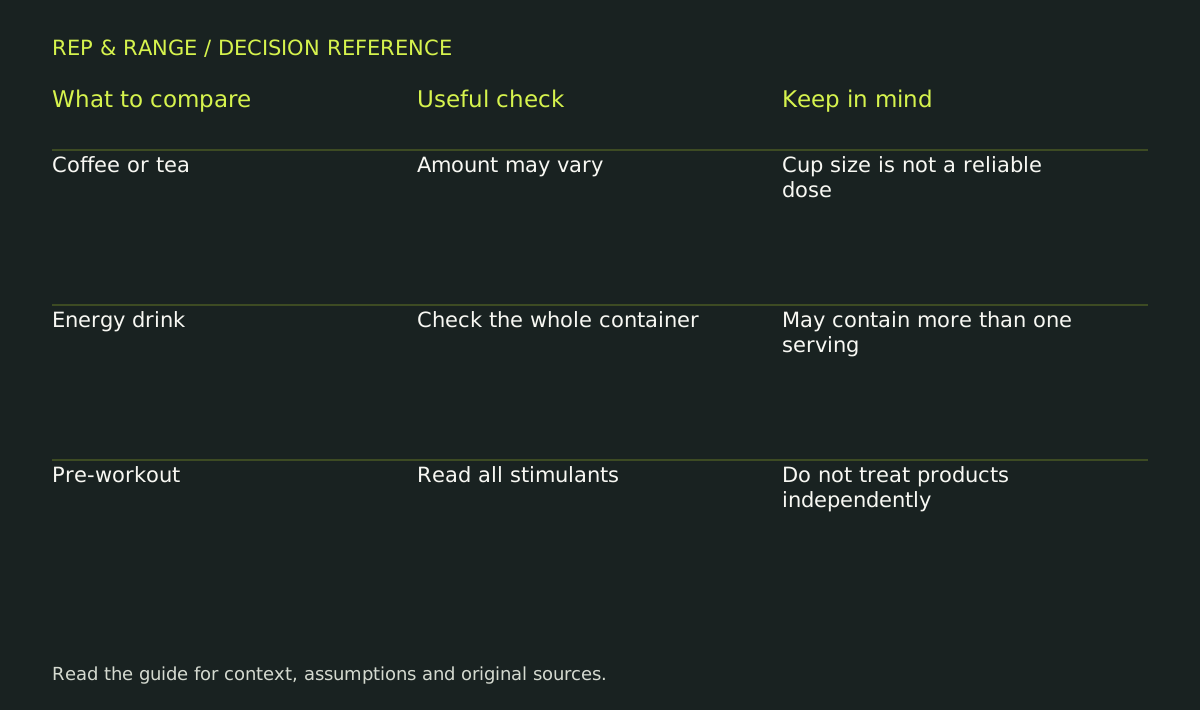
Compare the decision.
| What to compare | Useful check | Keep in mind |
|---|---|---|
| Coffee or tea | Amount may vary | Cup size is not a reliable dose |
| Energy drink | Check the whole container | May contain more than one serving |
| Pre-workout | Read all stimulants | Do not treat products independently |
AN ILLUSTRATIVE EXAMPLE
Two products share one total
Hypothetical labelled drinks containing 80 mg and 120 mg caffeine contribute 200 mg together. A further 150 mg product would bring that subtotal to 350 mg. The total is not a recommended amount or a guarantee of tolerance.
Take this with you.
- Count the complete day
- Read each product label
- Include sleep and sensitivity
Your questions, answered.
Is 400 mg a recommended amount to take?
No. It is a general FDA reference for most adults, not a performance target or a guarantee of tolerance.
Does this site recommend a pre-workout stack?
No. We provide label-reading and evidence context rather than personalised combinations.
How can I put this guide into practice?
Count the complete day. Then use the related tool with the assumptions and limits described in the guide.