Rest should support the intended next set. A fixed countdown is useful for consistency, but it cannot assess whether you are ready to repeat the movement.
Understand what the pause is for
The interval allows you to prepare for another bout of work. A short pause and a longer pause can produce different repetition counts with the same load. That means the rest period belongs in the comparison when you review a training log.
Research on strength adaptations and rest duration does not establish one interval for every exercise, training history and goal. Separate what a study tested from a universal instruction.
Use a repeatable reference
A clock can help keep sessions comparable. Note the approximate rest convention beside the exercise and give yourself additional time when needed to set up safely and regain control. Do not start a set solely because an alarm sounds.
Heavy or technically demanding work may ask more of the next set than a lighter accessory movement. Pairing unrelated exercises changes how the session is organised, but it does not make all recovery needs disappear.
Watch the whole sequence
If repetitions drop sharply across sets, look at load, previous work, rest and execution together. Reducing the interval is not automatically an improvement if the planned movement or repetitions are no longer achievable.
If time is limited, a shorter planned session may be more useful than compressing every rest period. Decide the priority before the visit rather than racing the last exercises.
Keep effort separate from warning signs
Normal exertion is not the same as dizziness, chest discomfort or a sudden concerning symptom. Stop when something is wrong and seek appropriate help; a generic timer is not a medical readiness test.
Keep water, equipment adjustments and logging practical. The pause should make the next set easier to organise, not become another task that distracts from it.
Bring one useful question to the next session
Set a repeatable reference. Prepare the next set safely. Adjust when the work needs it. Keep the guide beside your own record so you can see which part of the decision still needs information.
The worked example below is hypothetical. Replace its inputs with the quantities or circumstances you actually know; do not turn an illustration into a personal training or nutrition prescription.
Compare the decision.
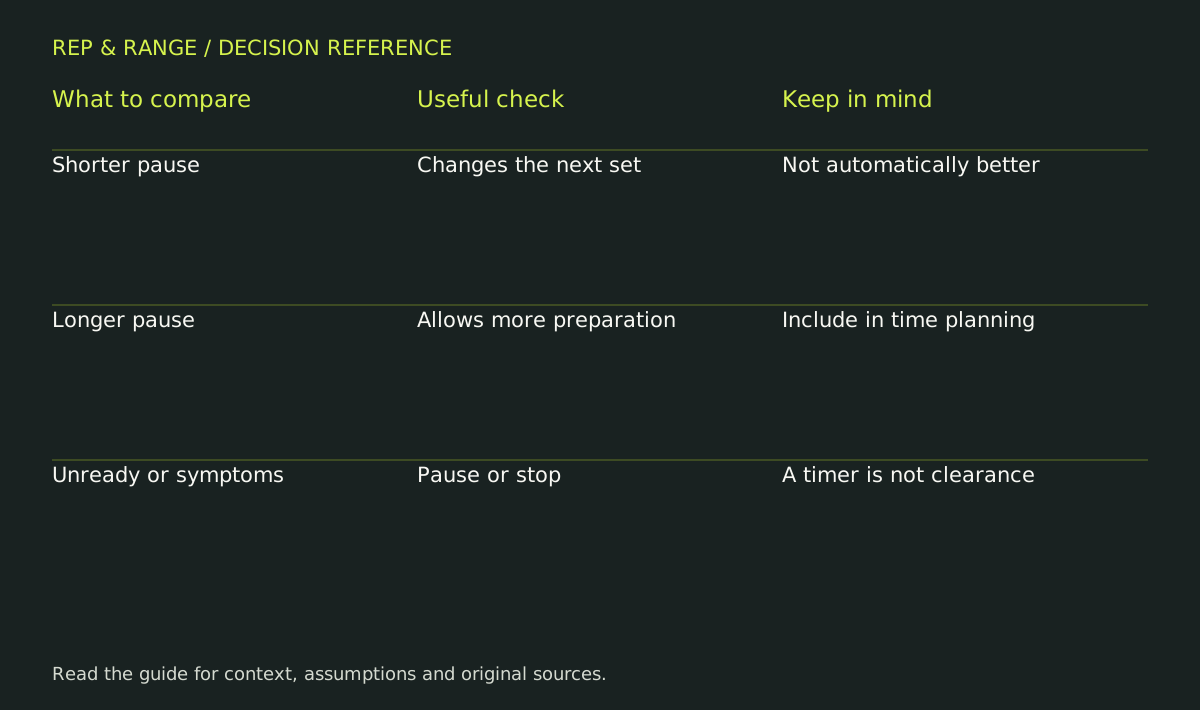
| What to compare | Useful check | Keep in mind |
|---|---|---|
| Shorter pause | Changes the next set | Not automatically better |
| Longer pause | Allows more preparation | Include in time planning |
| Unready or symptoms | Pause or stop | A timer is not clearance |
AN ILLUSTRATIVE EXAMPLE
Budget the pauses as well as the sets
Three working sets have two pauses between them. At an illustrative two minutes per pause, that is four minutes before transitions, warm-up and the work itself. This is session arithmetic, not a universal rest prescription.
Take this with you.
- Set a repeatable reference
- Prepare the next set safely
- Adjust when the work needs it
Your questions, answered.
Is sixty seconds always enough?
No. Readiness depends on the work and the person. Use the interval as a planning reference and allow enough time to repeat the intended movement.
Does shorter rest automatically make a workout better?
No. It changes the task and may reduce the work you can complete. Judge it against your training aim.
Should I log rest time?
If you are comparing performance closely, a consistent rest convention helps explain the result.