Choose the split around the sessions you can reliably attend. Both can organise a useful training week.

Think in sessions you can actually attend
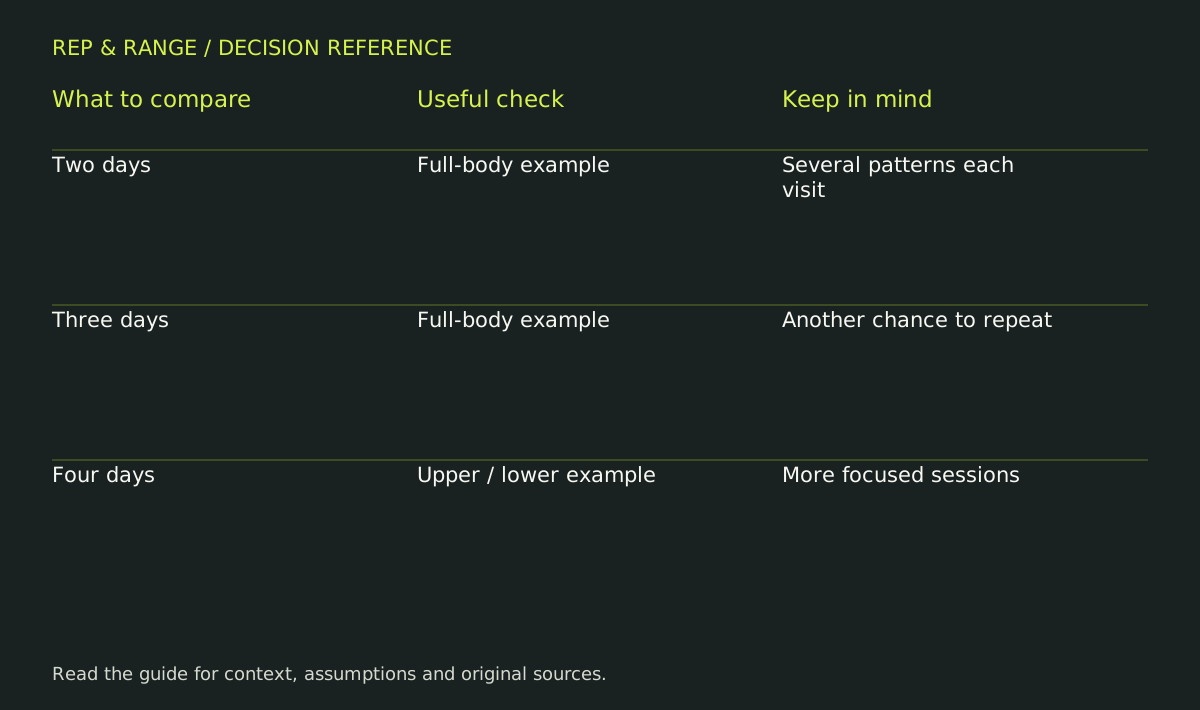
A full-body session revisits several major movement patterns in one visit. It suits a two- or three-day week and gives you another opportunity to train those patterns if one day is disrupted.
An upper/lower split separates much of that work across different sessions. In our four-day example, you return to upper and lower training twice during the week. This can make each visit more focused, but it also asks for more visits.
Compare the whole week
The name of a split does not tell you the amount of work, the quality of movement or the load being used. Compare exercises and working sets across the week before deciding one routine is more demanding.
Our planner begins with conservative working-set defaults. Those defaults are a starting example; they are not matched-volume research protocols or a guarantee that two schedules produce identical results.
Use disruption as a design test
Ask what happens if you miss Wednesday. Can you simply pick up the next session, or does the rest of the week become a scramble? A routine that tolerates ordinary life is easier to keep.
After several weeks, review attendance and your log. If four days consistently become two, a planned two-day routine may fit better than an unfinished four-day one.
Bring one useful question to the next session
Count realistic sessions. Compare the complete week. Check missed-day handling. Keep the guide beside your own record so you can see which part of the decision still needs information.
The worked example below is hypothetical. Replace its inputs with the quantities or circumstances you actually know; do not turn an illustration into a personal training or nutrition prescription.
Compare the decision.
| What to compare | Useful check | Keep in mind |
|---|---|---|
| Two days | Full-body example | Several patterns each visit |
| Three days | Full-body example | Another chance to repeat |
| Four days | Upper / lower example | More focused sessions |
AN ILLUSTRATIVE EXAMPLE
Plan for the week you actually attend
A hypothetical four-day plan is completed twice in each of three weeks. That record suggests comparing a deliberate two-day schedule with the incomplete four-day version. It does not prove either split creates a better physiological result.
Take this with you.
- Count realistic sessions
- Compare the complete week
- Check missed-day handling
Your questions, answered.
Which split builds the most muscle?
A split name alone cannot answer that. Total training, effort, progression, recovery and individual response matter. Choose a manageable structure first, then adjust the work within it.
Is a three-day full-body plan for beginners only?
No. Experience changes the work within a session, not the meaning of a weekday. Our particular templates are general starting examples.
How can I put this guide into practice?
Count realistic sessions. Then use the related tool with the assumptions and limits described in the guide.