Match the weighed food to the same preparation state in the database. A cooked weight belongs with a cooked record, not the dry ingredient entry.
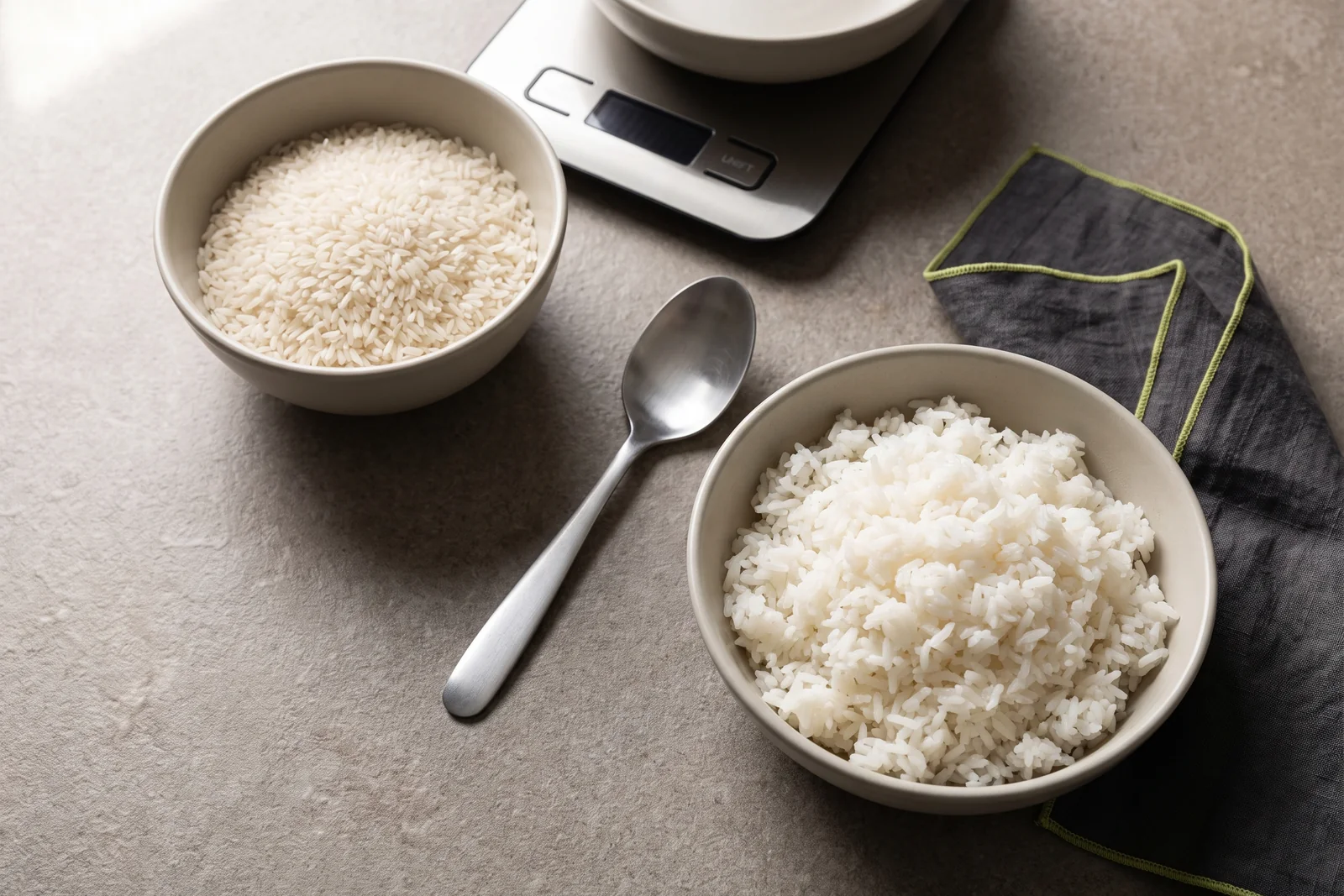
Read the preparation state first
The name of the food is only part of the record. Dry, boiled, roasted, drained and prepared with added fat can describe different entries. Water gain or loss changes how much of the original ingredient is present in a given weighed portion.
In our food calculator, the preparation state appears beside each curated item. If it does not match your ingredient or brand, use a more appropriate reference or the actual package label.
Keep a batch on one basis
One approach is to total the ingredients used in a batch, including oil or other additions, then divide that total among the portions. Weighing the complete finished batch helps you calculate a portion’s share.
If you use a cooked-food database record instead, apply it directly to the matching cooked portion. Do not add the dry ingredient total a second time.
Use your own yield
Rice, pasta and other foods do not always end up at one universal cooked-to-dry ratio. The method, water and final drainage affect yield. A generic multiplier can be useful for a rough plan but should not be presented as your measured result.
Keep the container weight separate using the scale’s tare function. A bowl’s mass is not part of the food entry.
Know what the arithmetic leaves out
Dividing a recipe total assumes the ingredients are distributed in a way that makes the share meaningful. Uneven portions, leftover cooking liquid and ingredients discarded during preparation can change the result.
Our calculator estimates selected nutrients. A correct arithmetic total does not establish that a meal or whole diet meets every nutritional need.
Bring one useful question to the next session
Match the preparation state. Tare the container. Use your batch yield. Keep the guide beside your own record so you can see which part of the decision still needs information.
The worked example below is hypothetical. Replace its inputs with the quantities or circumstances you actually know; do not turn an illustration into a personal training or nutrition prescription.
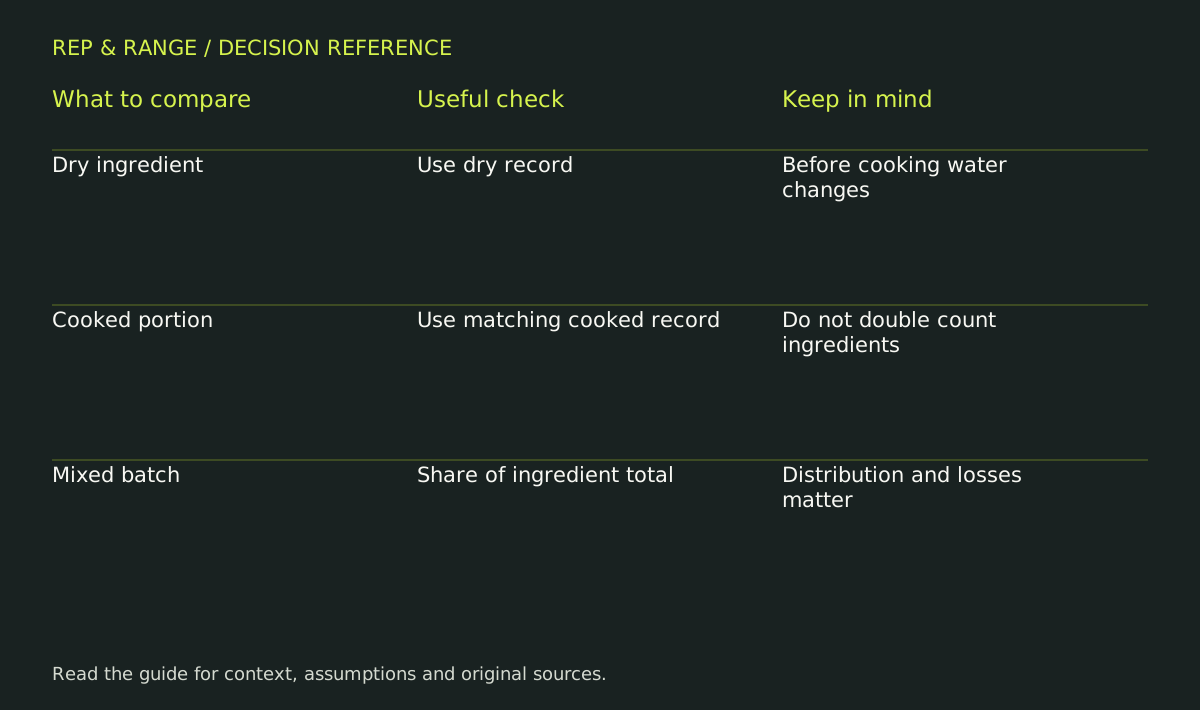
Compare the decision.
| What to compare | Useful check | Keep in mind |
|---|---|---|
| Dry ingredient | Use dry record | Before cooking water changes |
| Cooked portion | Use matching cooked record | Do not double count ingredients |
| Mixed batch | Share of ingredient total | Distribution and losses matter |
AN ILLUSTRATIVE EXAMPLE
Use the fraction of your measured batch
If a hypothetical finished batch weighs 900 g, a 225 g portion is 25% of the batch. Use one quarter of the ingredient totals when that share is appropriate. The example does not assume a universal dry-to-cooked ratio.
Take this with you.
- Match the preparation state
- Tare the container
- Use your batch yield
Your questions, answered.
Can I enter 150 g cooked rice as 150 g dry rice?
No. Use a record matching the preparation state, or calculate your own cooked batch from its ingredients and yield.
Should I include the bowl weight?
No. Tare the container or subtract its weight before entering the food amount.
Is there one cooked-to-raw conversion for every food?
No. Preparation and water gain or loss vary. Use the actual batch yield when a measured conversion is needed.