Plant-based meal planning involves more than swapping one protein source. Variety and reliable sources of key nutrients matter across the whole diet.
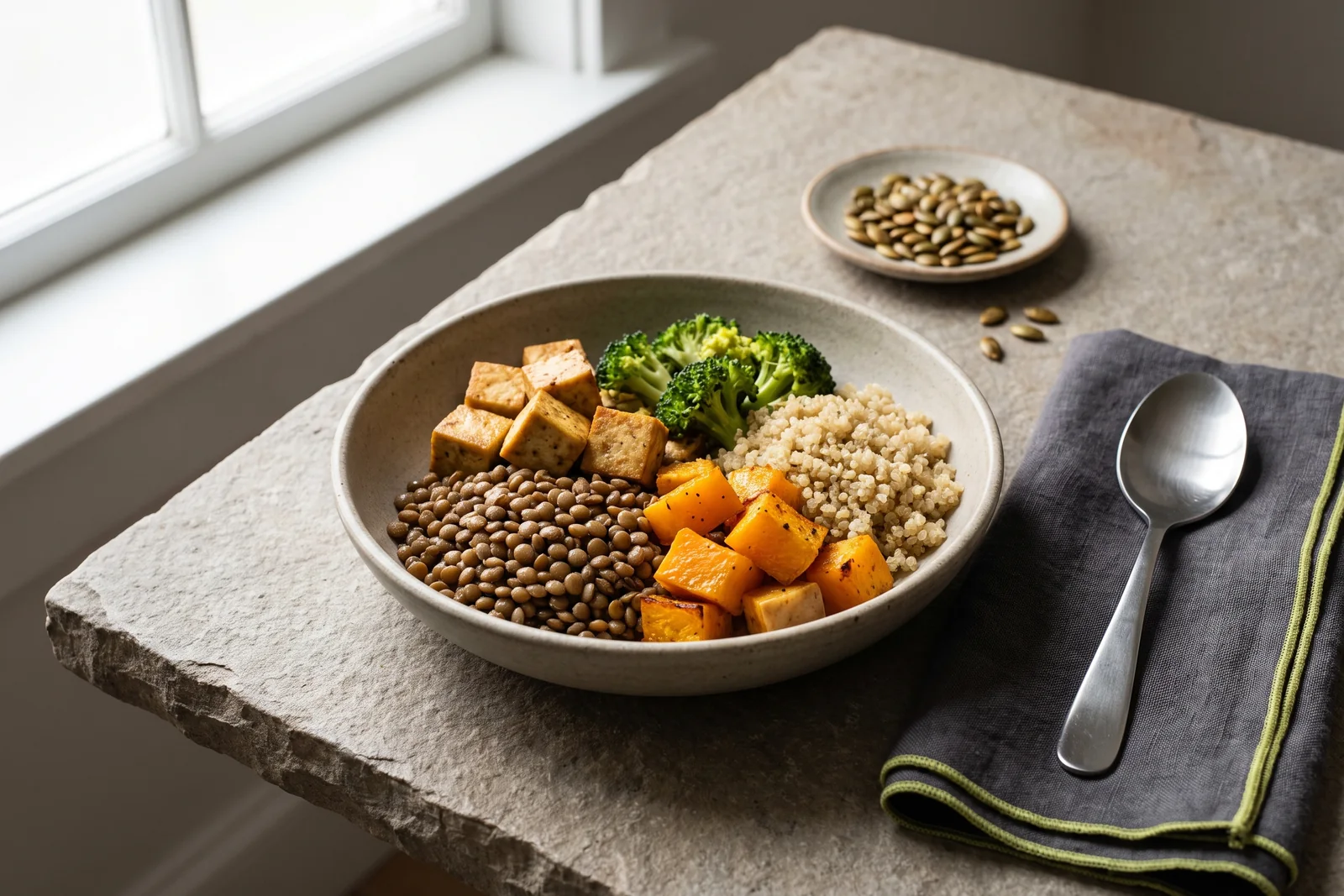
Start with foods you can cook and enjoy
Our plant-based examples use tofu, lentils, chickpeas, grains, nuts, fruit and fortified soymilk. Repeating some ingredients makes the first three days easier to organise, but it is not a recommendation to eat the same few foods indefinitely.
Choose flavours and textures you enjoy. The example food list uses preparation-state weights, so cooked lentils in the list are not the same as the amount of dry lentils you need to buy. Check yield information on your package.
Look beyond protein
The NHS advises planning vegan diets carefully, including reliable vitamin B12 and attention to nutrients such as calcium, iodine, iron, selenium and vitamin D. Fortification varies between drinks and brands; the word “plant-based” is not a guarantee of the same nutrients as dairy.
Our macro totals do not measure this coverage. A calorie or protein total should never be used as proof that an entire diet is complete.
Use swaps with their own label values
Firm tofu, silken tofu and different meat alternatives can have very different compositions. If your food differs from our reference item, enter its actual package label in the calculator.
A dietitian can help adapt food choices to substantial training demands, allergies, medical needs or a major dietary change. General menu examples are not a substitute for that individual assessment.
Bring one useful question to the next session
Use foods you enjoy. Check fortification labels. Consider nutrients beyond macros. Keep the guide beside your own record so you can see which part of the decision still needs information.
The worked example below is hypothetical. Replace its inputs with the quantities or circumstances you actually know; do not turn an illustration into a personal training or nutrition prescription.
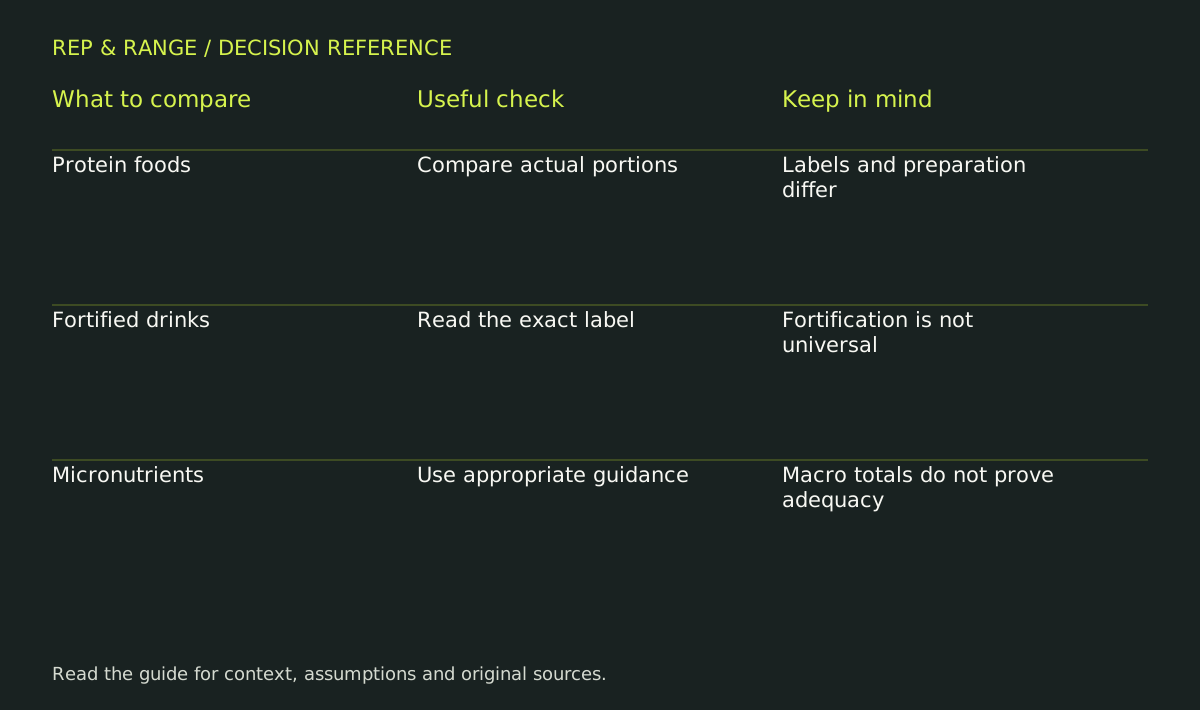
Compare the decision.
| What to compare | Useful check | Keep in mind |
|---|---|---|
| Protein foods | Compare actual portions | Labels and preparation differ |
| Fortified drinks | Read the exact label | Fortification is not universal |
| Micronutrients | Use appropriate guidance | Macro totals do not prove adequacy |
AN ILLUSTRATIVE EXAMPLE
Same serving, a different label
Two hypothetical plant drinks list different nutrients per 100 mL. Using the same 250 mL glass does not make their composition equivalent. Multiply each drink’s own label by 2.5 instead of reusing the other record.
Take this with you.
- Use foods you enjoy
- Check fortification labels
- Consider nutrients beyond macros
Your questions, answered.
Can vegetarian meals include useful amounts of protein?
Yes. Legumes, tofu, dairy, eggs, nuts and grains can contribute, depending on the pattern. Explore the actual quantities in the sample menus instead of assuming a single food must do all the work.
Does the vegan plan cover B12?
The calculator does not assess vitamin B12 adequacy. Make sure your real diet has a reliable source of B12 and follow appropriate professional guidance.
How can I put this guide into practice?
Use foods you enjoy. Then use the related tool with the assumptions and limits described in the guide.