Start with regular meals you enjoy. Use the calculator to understand quantities, not to turn every meal into a pass-or-fail test.
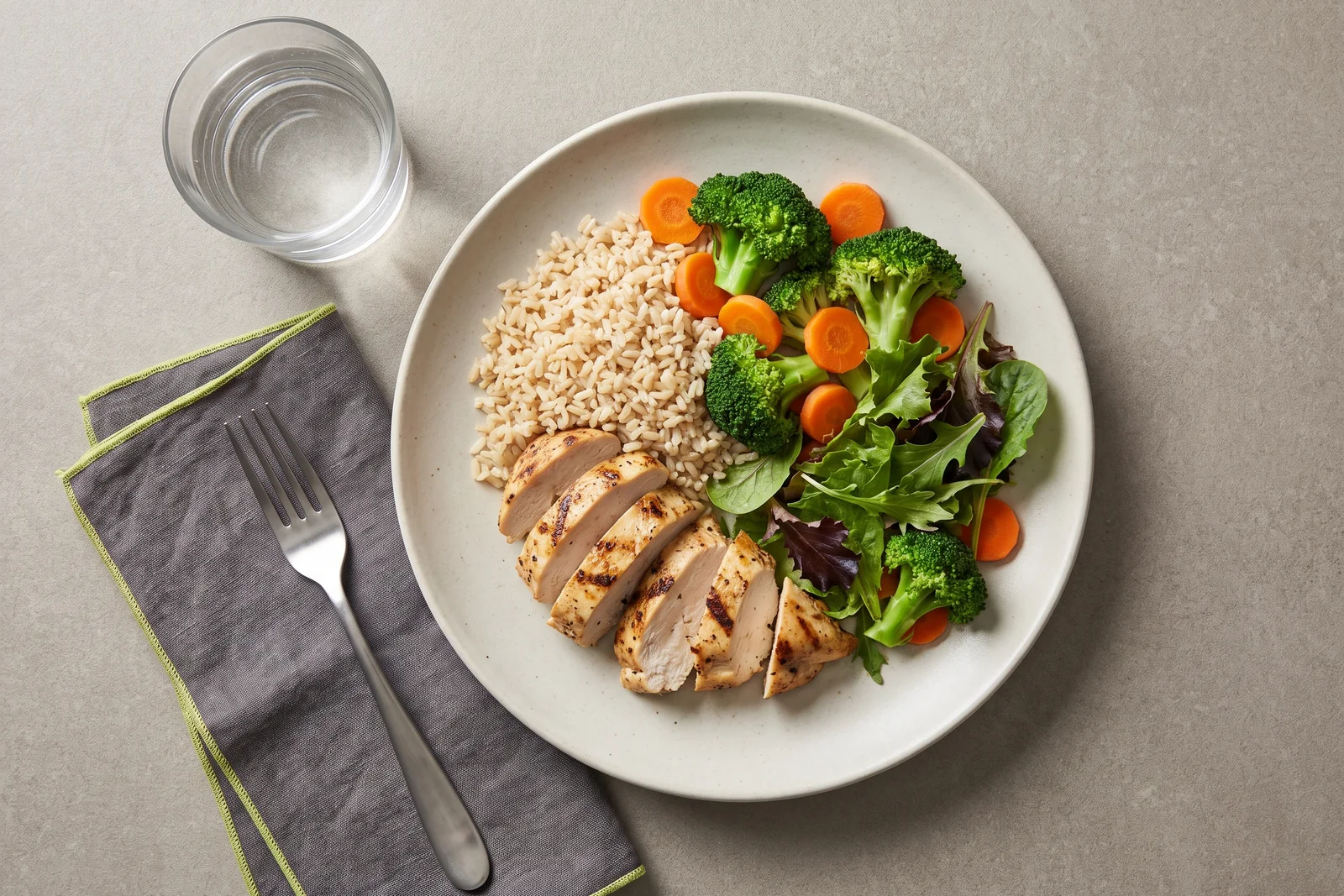
Build around the meal you already recognise
A rice bowl, a sandwich, a warm lentil plate or oats with fruit can all be starting points. Put a protein food, a carbohydrate food and some fruit or vegetables into the conversation, then consider fats, sauces and the rest of your day.
The exact mix depends on appetite, preferences and what is available. Our sample menus show one way to arrange ingredients; they do not establish what everyone should eat.
Keep the preparation state consistent
A gram of dry rice and a gram of cooked rice are not interchangeable in a food database. Cooking changes water content and therefore the amount of energy in a given weighed portion.
Read the selected food label in our calculator before entering the weight. We list dry oats, cooked rice, cooked chicken, and other states explicitly. Oils and sauces are separate entries so that you can see their contribution.
Let the numbers answer a specific question
You might want to compare two breakfast portions, divide a batch into servings or see where protein is coming from. Those are narrow questions a food calculator can help answer.
It cannot tell you whether you have eaten enough for your medical needs or whether a day meets every vitamin and mineral requirement. If tracking creates distress or takes over meals, step away from the numbers and seek appropriate support.
Bring one useful question to the next session
Choose a familiar meal. Match preparation states. Include additions separately. Keep the guide beside your own record so you can see which part of the decision still needs information.
The worked example below is hypothetical. Replace its inputs with the quantities or circumstances you actually know; do not turn an illustration into a personal training or nutrition prescription.
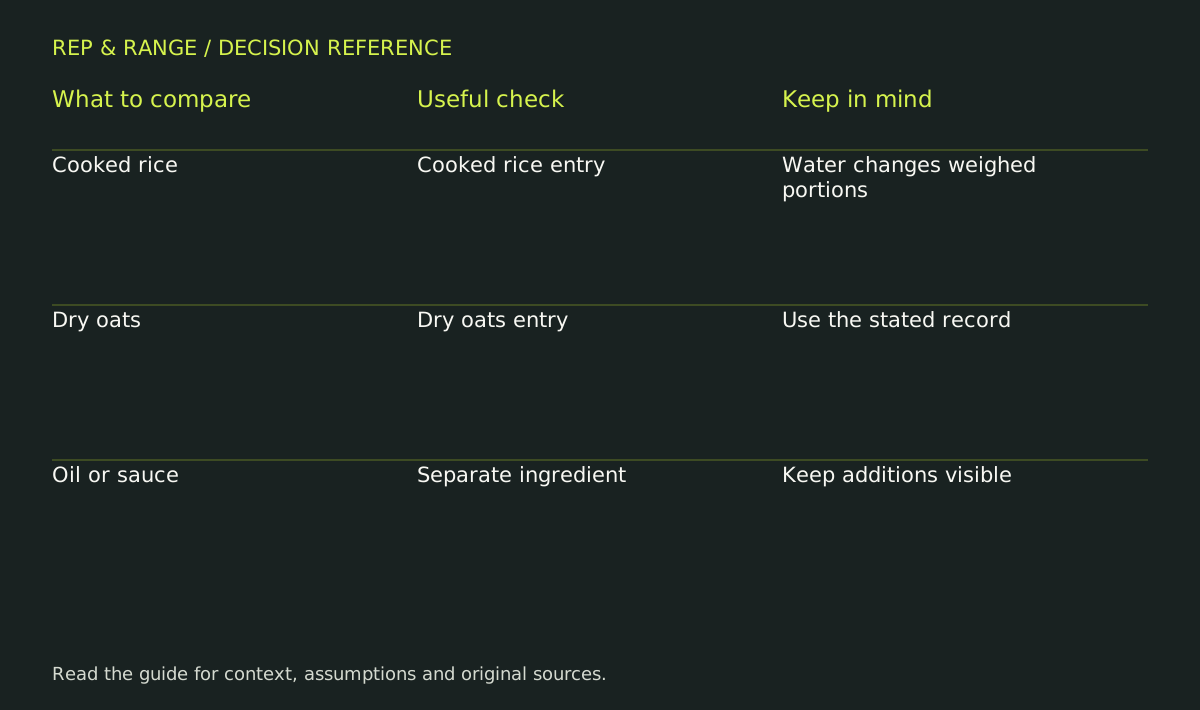
Compare the decision.
| What to compare | Useful check | Keep in mind |
|---|---|---|
| Cooked rice | Cooked rice entry | Water changes weighed portions |
| Dry oats | Dry oats entry | Use the stated record |
| Oil or sauce | Separate ingredient | Keep additions visible |
AN ILLUSTRATIVE EXAMPLE
Divide one batch consistently
A hypothetical batch weighs 800 g after preparation. A 200 g portion is one quarter of that batch. Dividing the ingredient totals by four estimates that portion only if the mixture is reasonably evenly distributed.
Take this with you.
- Choose a familiar meal
- Match preparation states
- Include additions separately
Your questions, answered.
Are the sample meal plans weight-loss diets?
No. They show example quantities and their calculated totals. They do not set a weight-loss target or apply a calorie deficit.
Can I use an EU nutrition label?
Yes. The custom-food entry uses total carbohydrate including fibre. Add the label’s separate fibre value to its carbohydrate value before entering it, and use the serving weight in grams.
How can I put this guide into practice?
Choose a familiar meal. Then use the related tool with the assumptions and limits described in the guide.