An equation estimates a population relationship. It does not measure your metabolism or observe the day you actually lived.
Separate resting energy from a full day
Our calculator first uses Mifflin–St Jeor to estimate resting energy expenditure from weight, height, age and a study-based coefficient. It then applies an activity multiplier to explore a daily total.
Those are different steps. A resting estimate is not an eating target, and a daily maintenance estimate is not automatically a recommended weight-loss intake.
Change the assumption and watch the result
Choose the activity factor closest to your usual routine, then compare it with a neighbouring factor. A substantial change in the result shows how much the estimate depends on a judgement call.
A few gym visits do not describe an entire week. Work, walking, physical tasks and time spent seated all shape the context. The calculator cannot directly measure those activities.
Avoid false precision
A result ending in a precise-looking digit is still an estimate. Rounded outputs are easier to interpret, but rounding does not make them individually validated. “Show both” returns the two original equation coefficients; it is not an uncertainty interval.
Use general estimates as context alongside regular meals, appetite, training and longer-term experience. Clinical nutrition, pregnancy, breastfeeding and eating-disorder care need a more appropriate approach than this general-purpose tool.
Bring one useful question to the next session
Check the equation inputs. Compare activity assumptions. Treat the result as an estimate. Keep the guide beside your own record so you can see which part of the decision still needs information.
The worked example below is hypothetical. Replace its inputs with the quantities or circumstances you actually know; do not turn an illustration into a personal training or nutrition prescription.
Compare the decision.
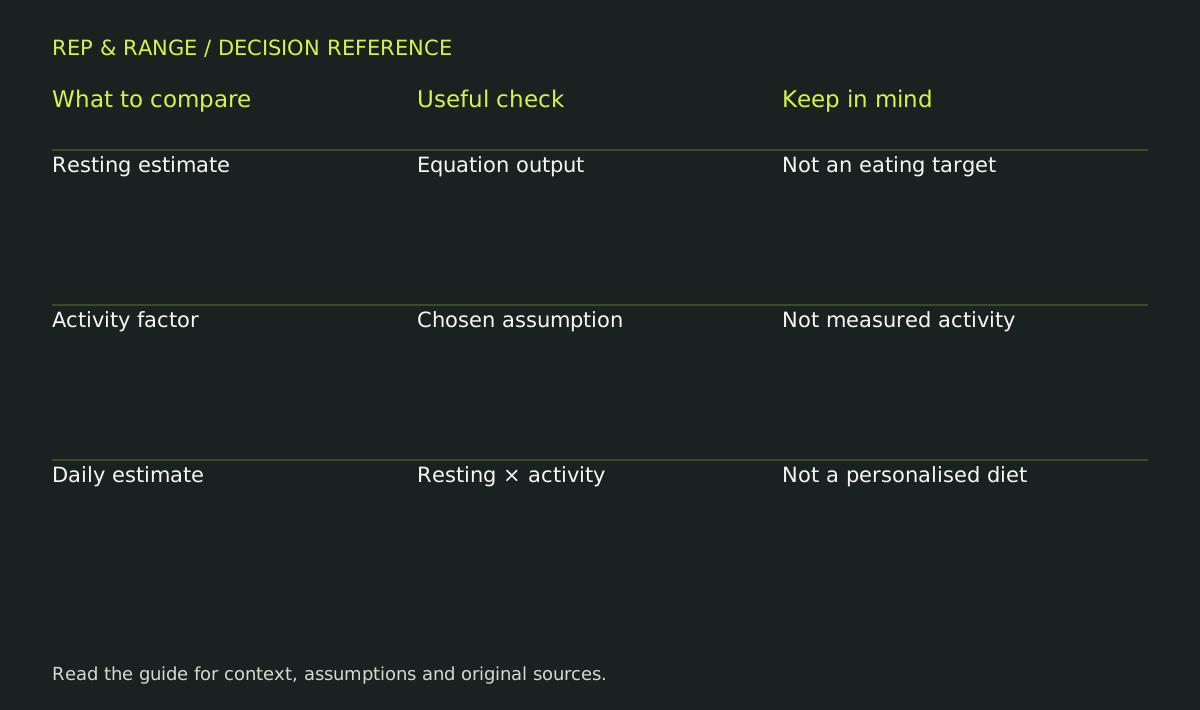
| What to compare | Useful check | Keep in mind |
|---|---|---|
| Resting estimate | Equation output | Not an eating target |
| Activity factor | Chosen assumption | Not measured activity |
| Daily estimate | Resting × activity | Not a personalised diet |
AN ILLUSTRATIVE EXAMPLE
One assumption can move the result
With an illustrative resting estimate of 1,600 kcal, a factor of 1.4 gives 2,240 kcal and 1.6 gives 2,560 kcal. The 320 kcal difference comes entirely from the activity assumption. Neither result is a prescribed intake.
Take this with you.
- Check the equation inputs
- Compare activity assumptions
- Treat the result as an estimate
Your questions, answered.
How do I calculate calorie intake?
Food intake and energy needs are different questions. Use the food calculator to total foods eaten; use the maintenance calculator for a rough estimate of daily expenditure.
Is 1,200 calories suitable for me?
A universal number cannot establish an appropriate intake for you. This site does not prescribe low-calorie diets; discuss an individual goal with a qualified dietitian when you need that guidance.
How can I put this guide into practice?
Check the equation inputs. Then use the related tool with the assumptions and limits described in the guide.