The journal
Best starting height for step-up exercises
Start on a step just below knee height so you can keep form and control. Increase only after you can do smooth reps without pushing off the back leg or the knee caving inward.
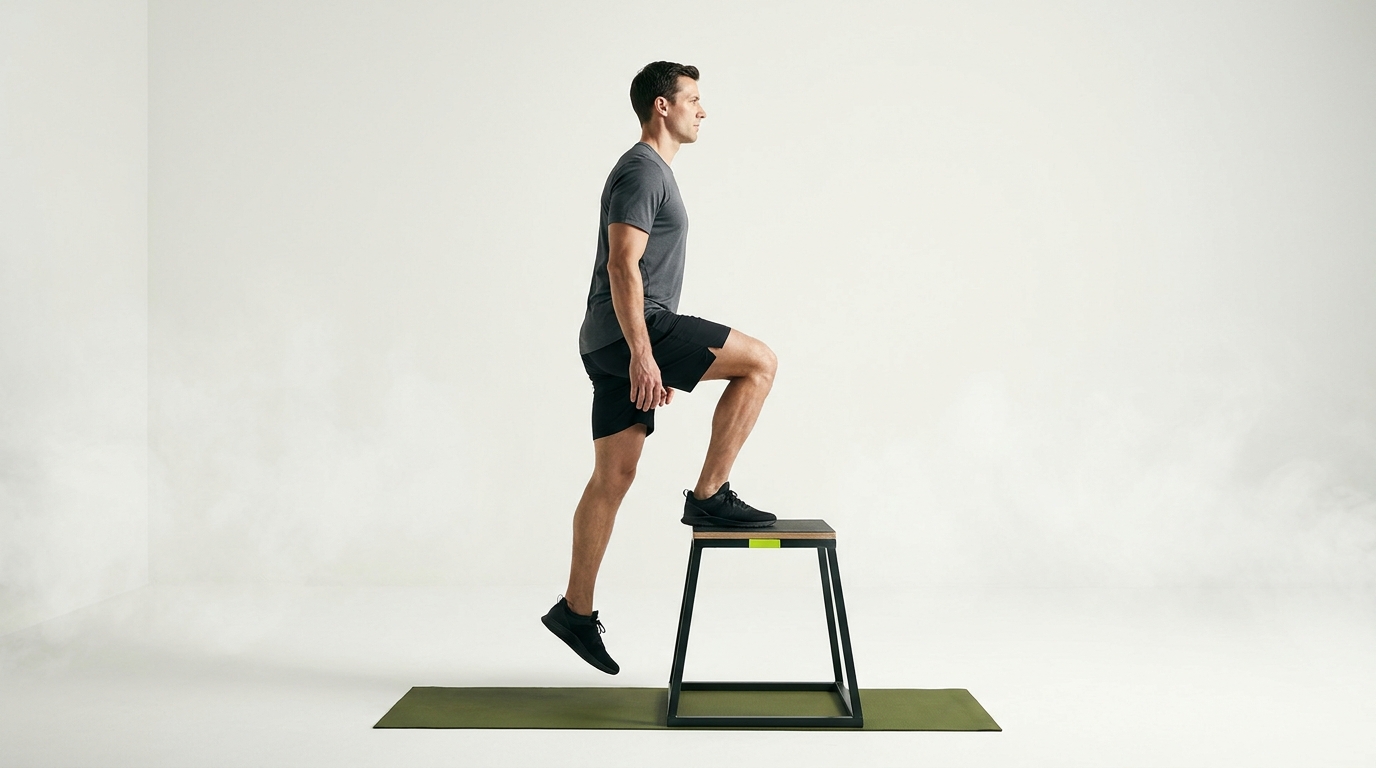
The best starting height for step-up exercises is a platform just below your knee. This height usually lets you keep your chest up, control the descent, and avoid pushing off the back leg. Only raise the step when you can maintain clean, repeatable form at the current height (https://wellhub.com/en-us/blog/fitness/step-ups/).
Why “just below knee” works
Beginning slightly below knee level limits how much you have to lean forward and helps you keep the working foot fully planted, which makes it easier to drive through the heel and control the way down. That aligns with guidance to avoid going too high too soon and to choose a height that allows good form throughout each rep (https://wellhub.com/en-us/blog/fitness/step-ups/).
A simple cross-check: your front knee should not bend deeper than about 90 degrees when you’re fully loaded on the step. This 90-degree knee-flexion limit is included in step-platform guidance cited by ACE and AFAA in a trainer forum discussion (https://cathe.com/forum/threads/correct-step-height.173990/). Treat it as a conservative ceiling, not a target.
How to set up and perform a safe step-up
Setup
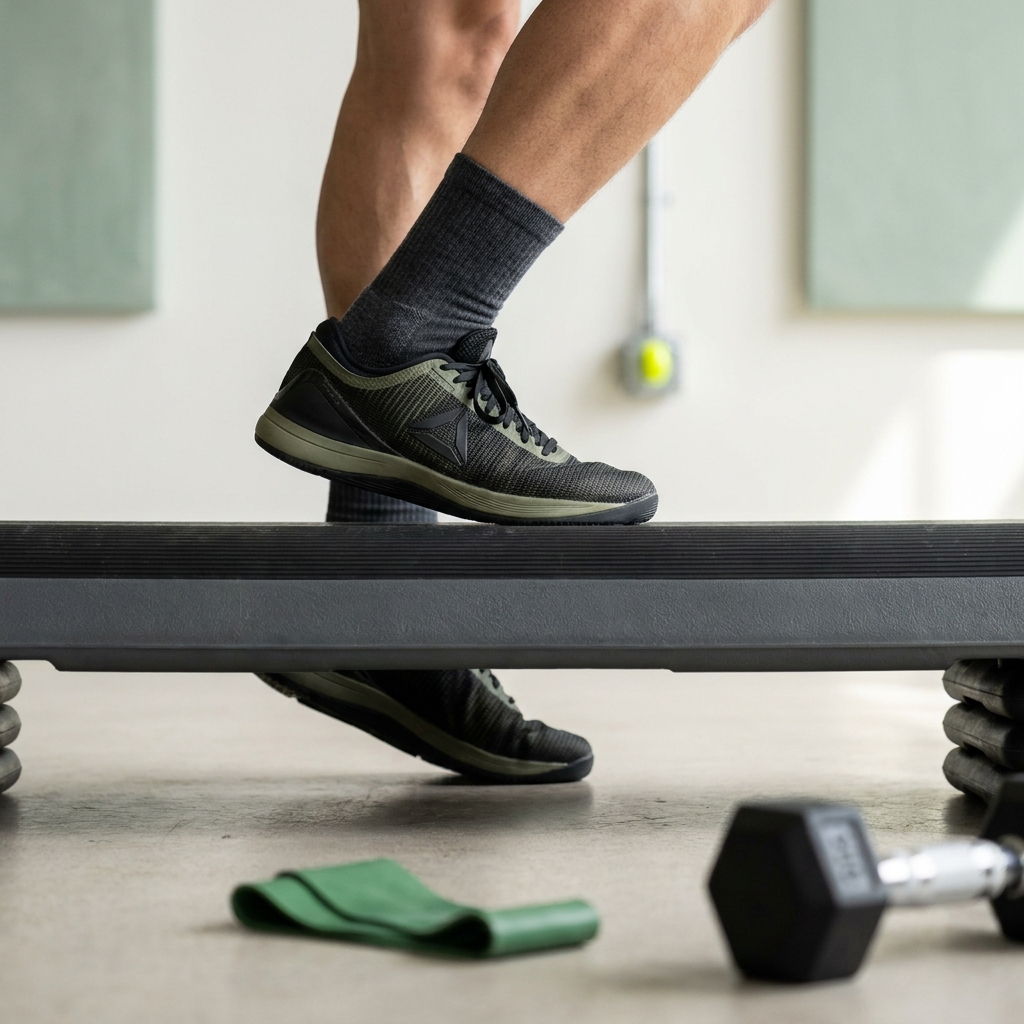
- Choose a sturdy, non-slip platform just below knee height.
- Place your entire lead foot on the step (no heel hanging off).
- Stand tall with chest up, shoulders back, and core braced.
Execution
- Press through the lead heel to stand up; avoid pushing off the back leg.
- Finish tall with hips fully extended.
- Step down under control, one foot at a time; don’t drop or bounce.
Common mistakes to watch for include pushing off the trailing leg, choosing a step that’s too high, and failing to control the descent. All increase injury risk and reduce training effect (https://wellhub.com/en-us/blog/fitness/step-ups/).
Warm up first to protect your knees and ankles. Try a simple 5-minute primer before you lift: easy marching, hip circles and a few slow step-ups. If you need ideas, see our short warm-ups guide: What are some good 5-minute warm-ups to do before lifting weights?
3-minute readiness check for step-ups
Progression: when and how to increase height
Increase the step height only after you can perform smooth, controlled sets with no visible compensations. Wellhub’s guidance is to start just below knee height and raise it gradually only if you can keep proper form (https://wellhub.com/en-us/blog/fitness/step-ups/).
- Add reps first (e.g., 6 to 8 to 10 per leg).
- Then add light load (dumbbells held at your sides).
- Then increase time under tension (slightly slower down-phase).
- Only then test a small height increase, and re-check form.
If a higher box forces you to lean forward, push off the back leg, or lose knee alignment, drop back to the previous height and progress via reps, load or tempo instead (https://wellhub.com/en-us/blog/fitness/step-ups/).
Common faults and quick fixes
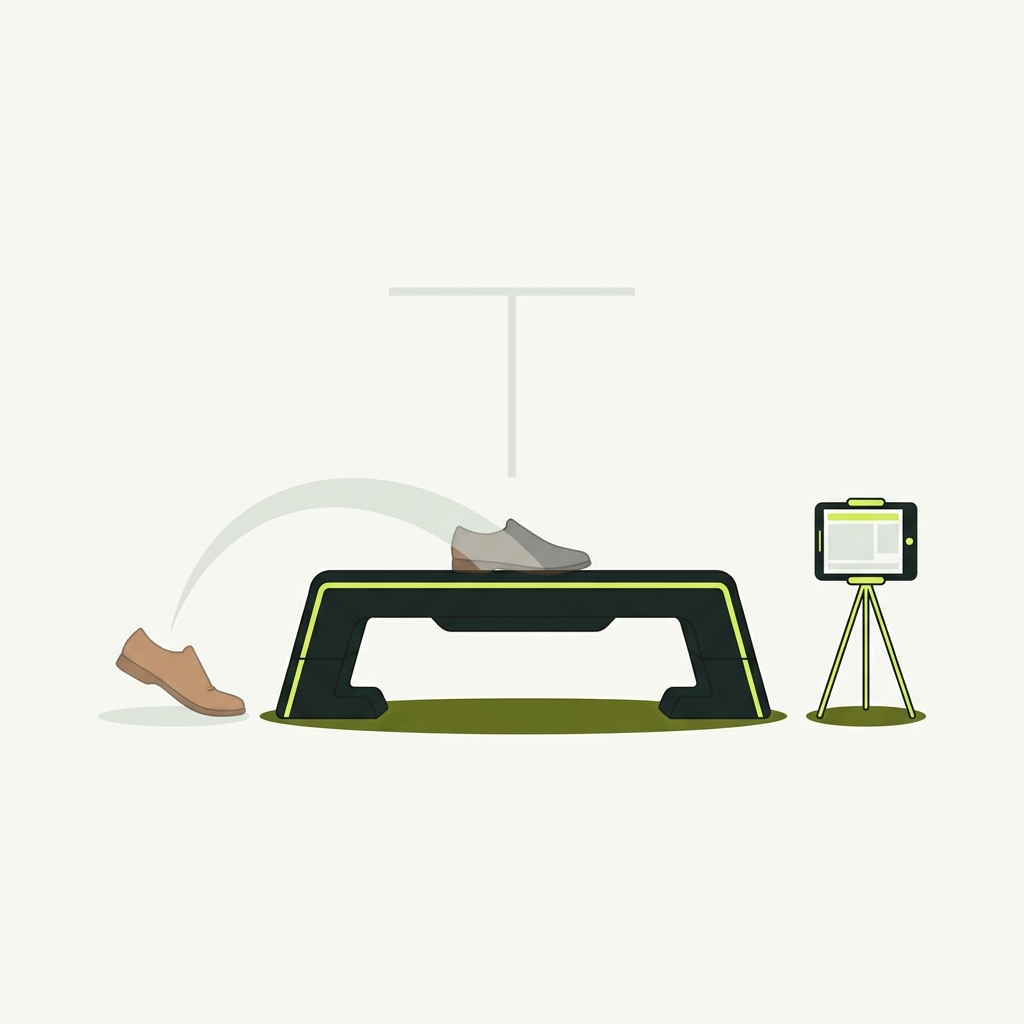
- Fault: Pushing off the back leg. Fix: Start the rep by pressing the front heel down and think “pull the platform toward me.” Use a light fingertip support on a rail while you learn control (https://wellhub.com/en-us/blog/fitness/step-ups/).
- Fault: Knee caves inward. Fix: Track the knee over the second toe; lower the height and slow the tempo until it’s consistent.
- Fault: Dropping off the step. Fix: Lower under control; think “quiet feet.”
- Fault: Step too high. Fix: Reduce to just-below-knee height or any level that keeps knee flexion near 90 degrees or less (https://cathe.com/forum/threads/correct-step-height.173990/).
Practical starting plan
- Beginner strength set: 3 sets of 6-8 controlled reps per leg at a just-below-knee step, resting 60-90 seconds between sets. Add a rep each session if all reps stay smooth and balanced.
- Conditioning option: 5 rounds of 30 seconds of steady step-ups, 60 seconds easy stepping or rest. Keep posture tall and land softly.
Need help timing your breaks? See our guide to rest periods: How long should I wait between sets for strength-training?
Stop immediately if you feel sharp or joint pain. Persistent pain, swelling, or giving-way sensations are reasons to consult a qualified professional.
FAQ
How do I measure “just below knee” at home?
Stand tall next to your step. The platform should sit slightly below the top of your kneecap. When you place your foot on it and shift your weight up, your knee should stay near 90 degrees of bend or less (https://cathe.com/forum/threads/correct-step-height.173990/).
Is cardio step height the same as strength step-ups?
Not necessarily. Cardio step classes commonly use about 6-8 inches and caution against knee flexion beyond 90 degrees, with 10 inches reserved for highly skilled steppers (forum summary of ACE/AFAA guidance: https://cathe.com/forum/threads/correct-step-height.173990/). For strength-focused step-ups, start just below knee height and adjust based on your controlled form (https://wellhub.com/en-us/blog/fitness/step-ups/).