The journal
How long should I wait between sets for strength-training? A practical guide
Rest between strength training sets: evidence-based rules for strength, hypertrophy, and endurance to plan smarter workouts.

What 'rest between strength training sets' means and why it matters
Inter-set rest, often called rest between strength training sets, is the pause you take between completed sets before starting the next set. It sits alongside load, repetitions, sets and tempo as a core programming variable that shapes how a session stresses the neuromuscular and metabolic systems. In simple terms, the rest you choose changes how much weight you can lift on the next set, how many repetitions you can complete, and therefore the stimulus that drives strength, size or endurance adaptations. A useful way to think about it is that rest governs recovery between efforts and is part of the same design decision as choosing a heavy single or a higher rep set.
Foundational position statements and reviews have examined how rest intervals change outcomes across training goals. For maximal strength work, authoritative guidance has long recommended longer rests because they improve performance in heavy compound lifts and support greater strength gains, compared with very short rests ACSM position stand.
How long should I rest between sets to reach my training goal?
Match rest length to the goal: two to five minutes for maximal strength, one to three minutes for most hypertrophy work, and 30 to 60 seconds for endurance or metabolic emphasis; then adjust using RPE, RIR or bar speed.
For hypertrophy and for sessions that emphasize metabolic stress or local muscular endurance, the evidence supports a broader range of rest lengths. Short rests are often chosen deliberately to increase metabolic demand, while moderate rests help preserve training volume on multi-joint lifts. The available literature on rest intervals remains anchored to core trials and reviews from the 2000s and 2010s, so apply those findings through the lens of your athlete or client and monitor progress over time. Recent systematic reviews also synthesize newer data systematic review.
Recommended rest times for maximal strength (1 to 5 reps)
When the primary goal is maximal strength on heavy compound lifts, rest between strength training sets should generally be longer, roughly two to five minutes. Randomized and controlled work shows that allowing two to five minutes between heavy sets improves subsequent set performance and supports better strength adaptations than keeping rest very short, especially when sets use loads in the one to five repetition range Journal of Strength and Conditioning Research study.
Mechanically and physiologically, longer rests help by allowing partial recovery of the high energy phosphate systems and reducing the buildup of transient fatigue that slows the bar. This helps keep bar speed closer to intended levels and preserves the ability to complete heavy planned reps at target loads. If you shorten rest too much for heavy sets you will often see falling bar speed, missed reps, and higher RPE from set to set.

Powerful, brief efforts rely heavily on the ATP-PC system. After a heavy set the ATP-PC stores need time to replenish to support comparable force and velocity on the next set. Extending rest into the two to five minute range reduces the gap between sets, letting you load the bar with heavier weight or hit the intended rep target without dropping velocity drastically. Evidence reviews note this as a consistent explanation for the superior performance seen with longer rests.
Why longer rests help bar performance and strength gains
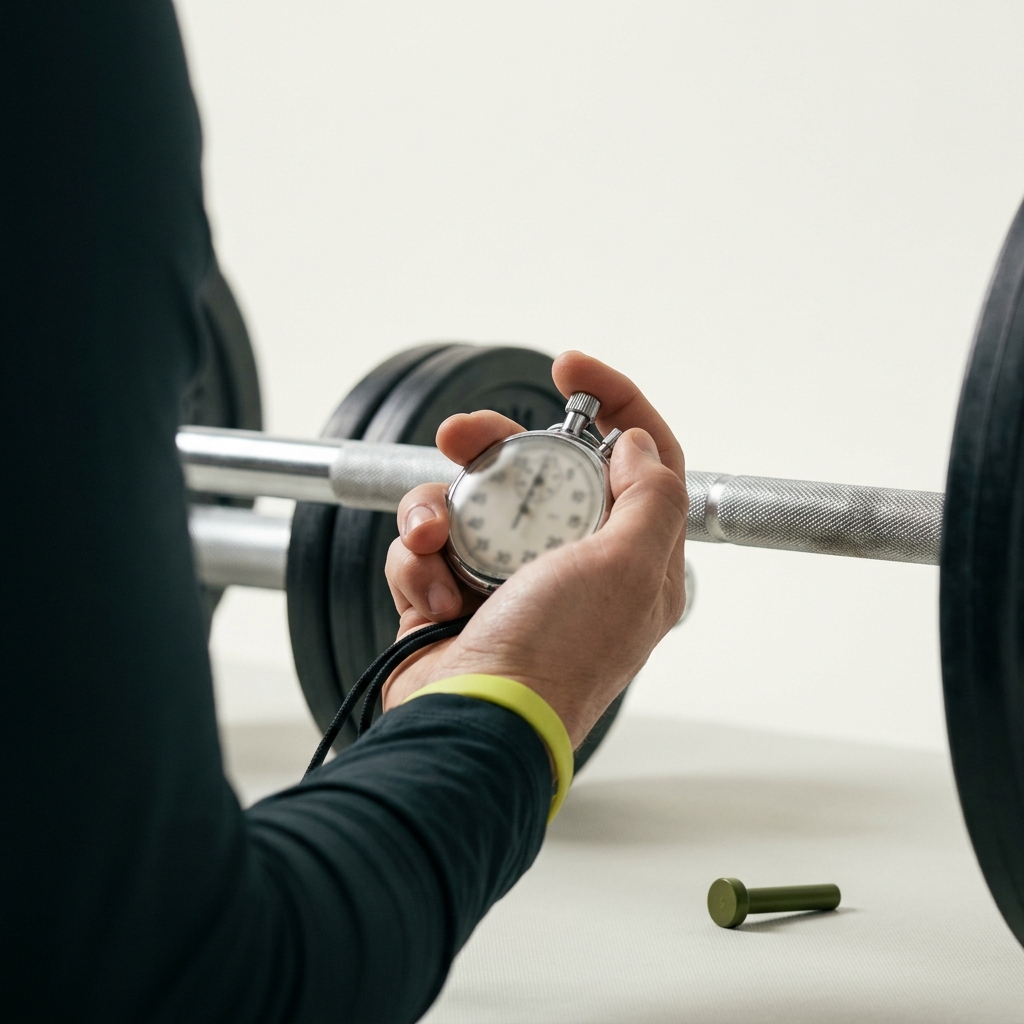
How to implement 2 to 5 minute rests in a real workout
Practical implementation is straightforward once you accept a slightly larger rest budget in exchange for higher quality work. Follow these numbered micro-steps.
1. Warm up with progressive sets: begin with lighter warm-up sets that ramp to your working weight, for example two to three sets of ascending load and decreasing reps.
2. Plan working sets with a rest window: for sets in the 1 to 5 rep range, schedule two to five minutes of rest. Use the longer side of the range for maximal singles or near maximal doubles and the shorter side for heavier triples or when doing more sets.
3. Monitor effort and bar speed: if a set is close to failure or bar speed slows markedly, extend rest toward the upper end of the window before the next set; if bar speed and RPE remain stable you can lean to the lower end.
4. Build total session rest into your program: heavy compound sessions naturally need more elapsed time. Expect each working set cycle to take more time than higher-rep work and plan the session length accordingly.
Rest recommendations for hypertrophy and muscle size
For hypertrophy-focused work the best-available evidence indicates a wider range of acceptable rest intervals, with roughly one to three minutes commonly supporting equal or greater muscle growth than very short rests. This is particularly true when the goal is to sustain sufficient training volume on multi-joint lifts where preserving load and rep quality matters Sports Medicine review. The available evidence also includes broader meta-analyses and reviews available evidence.
In practice that means choosing rest lengths based on the lift and the load. Heavier multi-joint lifts performed for hypertrophy often benefit from two to three minutes of rest so you can hit the planned reps and sets without systemic fatigue forcing big drops in load. Lighter or single-joint work done for metabolic stress can use shorter rests to emphasize time under tension and metabolite accumulation.
How load, reps, and exercise choice change rest needs
Heavy compound hypertrophy sets that sit in the six to twelve rep range will often require moderate rest to preserve volume. If those sets are taken very close to failure, shorter rests are more likely to reduce the number of reps you can complete on the next set. Conversely, sets with lighter loads and higher rep targets can tolerate or even benefit from shorter rest when the intention is to increase metabolic stress rather than to maintain top-end force output.
Balancing rest length with training volume on multi-joint lifts
Because hypertrophy depends in part on total work completed, one practical rule is to pick the rest that lets you complete your planned volume across the session. For a heavy hypertrophy squat session, starting with two to three minute rests for working sets helps keep reps and load consistent. For higher rep accessory work you can shorten rests to 60 to 90 seconds to increase density while accepting a lower per-set load.
Example hypertrophy templates
Template A, heavy hypertrophy lower body: 4 working sets of 6 to 8 reps on squats, rest 2 minutes 30 seconds between sets, plus accessory single-joint work with 60 to 90 seconds rest.
Template B, higher rep full body: compound sets of 10 to 12 reps, rest 90 seconds between sets, with shorter rest of 45 to 60 seconds for isolation exercises to maintain session density.
Short rests, endurance work, and alternative strategies when time is limited
Short rests of about 30 to 60 seconds are appropriate when the training goal is local muscular endurance or when you are deliberately targeting metabolic stress. These shorter pauses increase session density and metabolic stimulus, but they usually come at the cost of reduced load or fewer quality reps on heavy compound lifts compared with longer rests Journal of Strength and Conditioning Research review. For general practical guidance on rest and resistance training see guidance from university extension resources rest interval guidance.
When time is constrained you can still get meaningful work by accepting those trade-offs or by using alternative set structures. Two practical strategies are cluster sets and rest-redistribution schemes. Both aim to keep the same total work but break it into smaller clusters with short intra-cluster rests, which can preserve velocity and total repetitions better than back-to-back sets with very short rests. Evidence for these approaches is mixed and protocol-dependent, so treat them as tools to test with your athletes rather than guaranteed fixes.
Example metabolic conditioning block
AMRAP style or circuit layouts with 30 to 60 second rests, lighter loads and higher reps to emphasize local endurance and conditioning. Expect lower single-set peak force but greater systemic stress and density.
Example cluster-set layout for a constrained heavy lift
Cluster sets divide a planned set into smaller groups of repetitions with brief pauses inside the set. They change fatigue and session timing, so use a clearly defined programme rather than assuming a different arrangement gives equivalent work.
simple interval timer
How to choose rest times: decision rules and monitoring in practice
Choose rest by mapping your primary training goal to a starting rest range, then use monitoring cues to make small adjustments as you train. A basic decision rule is: for maximal strength use two to five minutes, for hypertrophy start at one to three minutes and adjust by lift, and for endurance or metabolic emphasis use about 30 to 60 seconds. These mappings reflect consistent findings in foundational reviews and trials longer interset rest study. For additional detail on reps and sets see reps and sets.
Now add monitoring rules so you can adapt mid-session. If a set was taken very close to failure, or if bar speed declines noticeably between sets, extend rest before the next effort. If you consistently complete planned reps with stable bar speed and similar RPE, you can shave rest down slightly to increase session density. If you want example workouts that use these rest rules, see our workouts collection.
Using RPE, RIR and bar speed to adjust rest
RPE and RIR are practical readiness cues. If RPE jumps by multiple points between sequential sets or RIR falls unexpectedly, that signals incomplete recovery. Bar speed is an objective cue when you have access to a sensor; a clear drop in velocity from one set to the next indicates you may need longer rest to keep the quality of the session high. These monitoring tools help preserve training volume, which is critical for both strength and size outcomes.
Adjusting by load, exercise, and proximity to failure
Adjust rest based on where you are in the set and session. Use the longer end of your chosen range for maximal attempts, for sets near failure, and for big multi-joint lifts. Use shorter rest when the session goal is density or when doing light accessory work where the intention is metabolic rather than maximal mechanical tension.
Common mistakes, three sample session templates, and final takeaways
Typical mistakes include using too-short rests for heavy strength work, not tracking rest consistently, and ignoring individual variation. Skipping a plan for rest often turns a potentially productive session into a series of incomplete sets that do not drive the intended adaptation.
Three ready-to-use session templates
1 Strength template: Squat 5 sets of 3 with 3 minutes rest, bench press 5 sets of 3 with 3 minutes rest, accessory work 3 sets of 8 with 90 to 120 seconds rest. This emphasizes maximal strength and uses longer rest to support load and bar speed strength interset rest findings.
2 Hypertrophy template: Deadlift 4 sets of 6 to 8 with 2 minutes rest, superset hamstring isolation with 60 seconds rest between pairs, accessory upper body 3 sets of 10 with 90 seconds rest. This balances load preservation on the main lift with density for accessories.
3 Endurance/metabolic template: Circuit of five movements, 3 rounds, 40 seconds work 20 seconds rest between exercises, 90 seconds rest between rounds. Use light to moderate load and accept lower per-set peak force to prioritize conditioning.
Dos and donts checklist
Do track your rest with a timer and log outcomes. Do pick longer rests for heavy compound strength work. Dont force very short rests when the goal is maximal strength. Dont treat one study as definitive; test and monitor how your body responds.
Final takeaways: Longer rests, about two to five minutes, are evidence-backed for maximal strength because they improve subsequent set performance and strength gains. For hypertrophy, rests of about one to three minutes usually preserve volume and support growth while very short rests are mainly for metabolic or endurance aims. When you must limit total session time, consider cluster sets or rest-redistribution but test these methods for your athletes because results vary across protocols.
Frequently asked questions
Will longer rests always make me stronger?
Longer rests generally help strength development for heavy compound lifts because they allow better recovery and preserve performance, but progress also depends on load, consistency and program design.
Can I grow muscle with short rests?
Yes, short rests can contribute to muscle growth when using lighter loads or focusing on metabolic stress, though moderate rests often preserve training volume on heavy multi-joint lifts.
How do I track the right rest length during a session?
Use a simple timer, monitor RPE or RIR, and watch bar speed or rep quality; extend rest if bar speed drops or RPE rises sharply between sets.
Use these rules of thumb as starting points and adjust them by watching rep quality, RPE and bar speed. Document how your chosen rest lengths affect training volume and make small changes over time to keep progress consistent. If you track outcomes and respect the main principles shown here, you can tailor rest to fit both your goals and your available training time.
References
- https://repandrange.com/guides/rest-between-sets
- https://pubmed.ncbi.nlm.nih.gov/19204579/
- https://pmc.ncbi.nlm.nih.gov/articles/PMC11349676/
- https://pubmed.ncbi.nlm.nih.gov/26605807/
- https://repandrange.com/workouts
- https://pubmed.ncbi.nlm.nih.gov/19691371/
- https://pubmed.ncbi.nlm.nih.gov/28641044/
- https://pubmed.ncbi.nlm.nih.gov/18076267/
- https://chhs.source.colostate.edu/rest-intervals-and-resistance-training/
- https://repandrange.com/guides/reps-and-sets