The journal
Evening workouts: timing, caffeine and winding down
How to plan an evening workout backwards from bedtime: when to finish, what to do about pre-workout caffeine and how to wind down afterwards.
Quick answer: is it bad to work out at night?
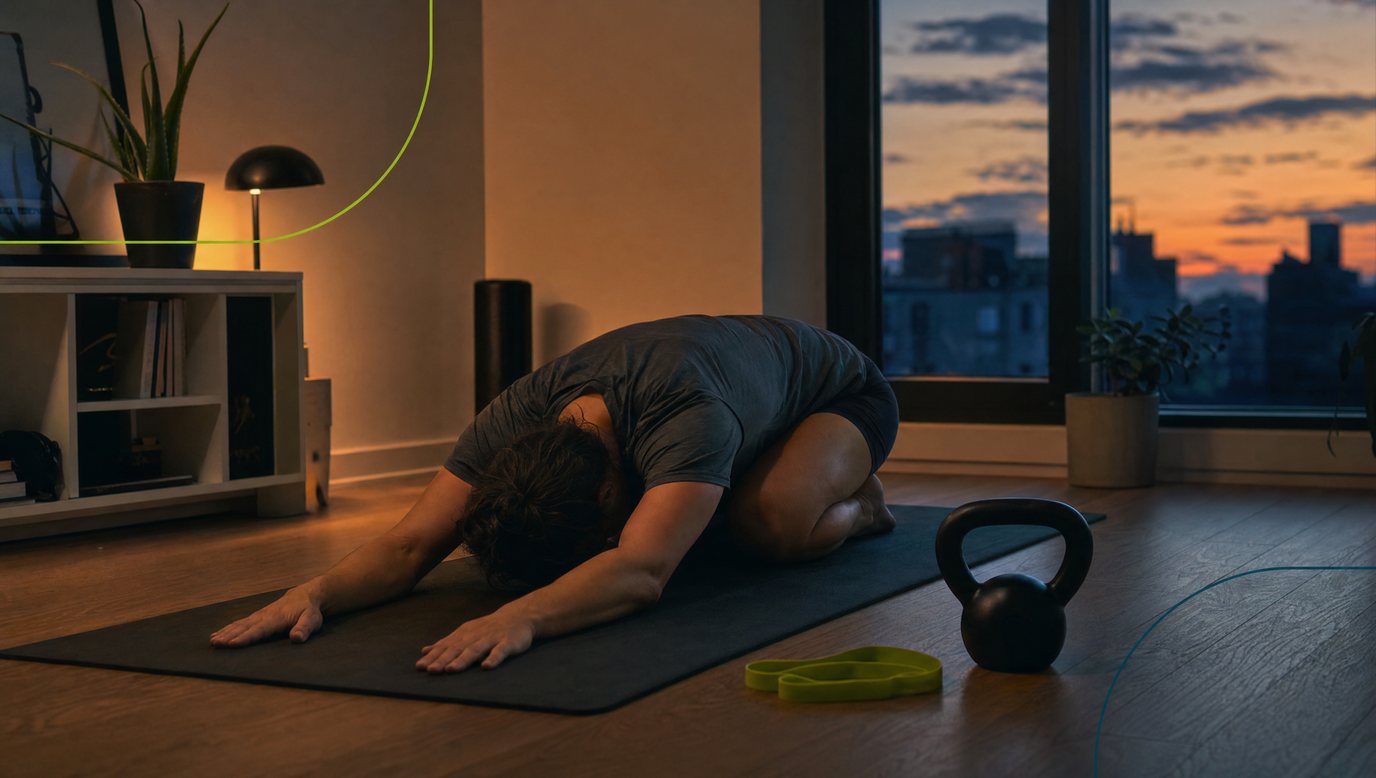
For most people, no. A systematic review of evening exercise studies found that it did not worsen sleep overall; the one caution was vigorous exercise ending within about an hour of bedtime, which could make it take longer to fall asleep (Stutz and colleagues, Sports Medicine, 2019). If the evening is the only time you can train, train in the evening, and leave some space between the last hard set and lights out.
Timing the session
A practical rule: finish the demanding part of the session at least an hour before you plan to sleep, and more if you notice you lie awake afterwards. Easier work, such as mobility, light technique practice or a walk, fits closer to bedtime. If you train late most days, a plan with shorter sessions can help; our guide to full body or upper/lower training shows how session length changes with the split.
Caffeine is the bigger question
Many pre-workout products contain a substantial amount of caffeine, and caffeine stays active for hours. In a controlled study, 400 mg of caffeine taken six hours before bedtime still reduced sleep compared with a placebo (Drake and colleagues, Journal of Clinical Sleep Medicine, 2013). For an evening session that means the stimulant, not the training, is often what keeps you up.
- Check the label for caffeine per serving, and count coffee, tea and energy drinks from the rest of the day. Our caffeine and training guide walks through the whole-day count.
- Consider a caffeine-free or half serving for late sessions, or none at all.
- Notice the pattern in your log: if late sessions line up with poor nights, try the same session without caffeine.
Winding down afterwards
A cool-down is also a transition. A few minutes of easy movement and slow breathing, a shower, food if you need it, and then lower lights and screens help separate training from bedtime. Gentle stretching fits here; TalkAboutSleep has a short routine of stretches before bed.
| Before bedtime | What fits |
|---|---|
| Six hours or more | Last caffeine, if you use it at all |
| Two to three hours | Main training session |
| About one hour | End of any hard work; cool-down and food |
| Last half hour | Easy stretching, low light, no screens |
Frequently asked questions
How late is too late to work out?
Hard, vigorous sessions ending within about an hour of bedtime are the ones most likely to delay sleep. Lighter exercise closer to bed is usually fine.
Should I skip pre-workout in the evening?
If you sleep poorly after late sessions, try it. Caffeine taken six hours before bed disrupted sleep in a controlled study.
Is morning training better for sleep?
Not necessarily. Regular training at a time you can keep matters more than the clock.