The journal
How to choose the right dumbbell weight for you
A practical way to pick dumbbell weights: test a set, make the last few reps challenging without breaking form, and adjust by exercise while progressing gradually.
Quick answer
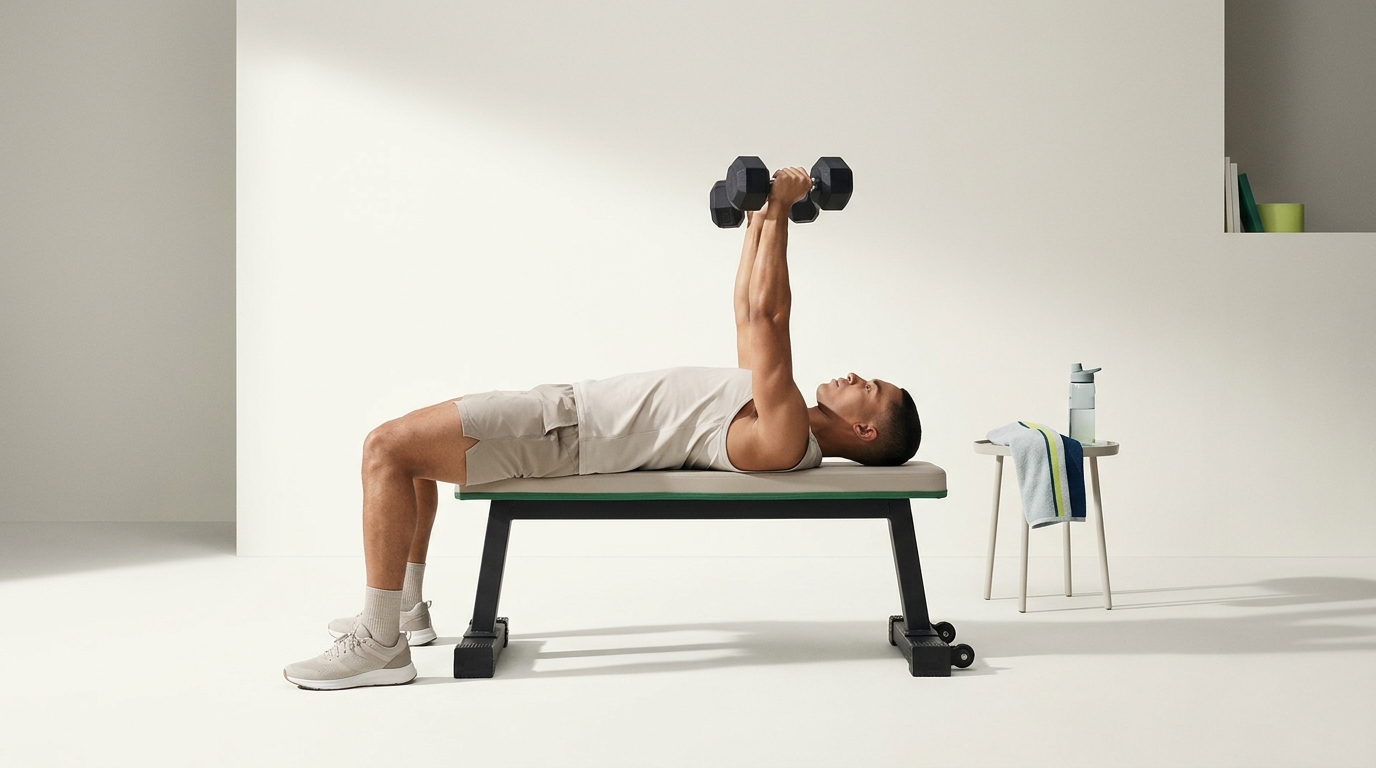
Pick a dumbbell that lets you move through the full range with steady control, where the last 2-3 reps of your set are tough but your technique stays solid. If it feels easy, go slightly heavier; if your form slips or you feel joint pain, go lighter. Choose weights per exercise, not one size for all, and progress in small, regular steps (Fit Kit guide; TODAY 4‑step test).
Why the “right” weight varies
There is no universal number. Bigger muscle groups and multi-joint lifts (like squats, lunges, presses and rows) typically allow heavier loads than small-muscle isolation moves (like biceps curls or lateral raises). Overhead work and core-focused drills often need lighter weights to keep alignment. Match the load to the exercise and your target reps, not to a fixed kilogram value (Women’s Health; Fit Kit).
A quick test to choose your working weight today
Warm up first
Do 3-5 minutes of light movement before testing (for example, brisk walking or dynamic mobility). Warming up reduces injury risk and improves movement quality (TODAY). For ideas, try our short guide: What are some good 5-minute warm-ups to do before lifting weights?
Test set method
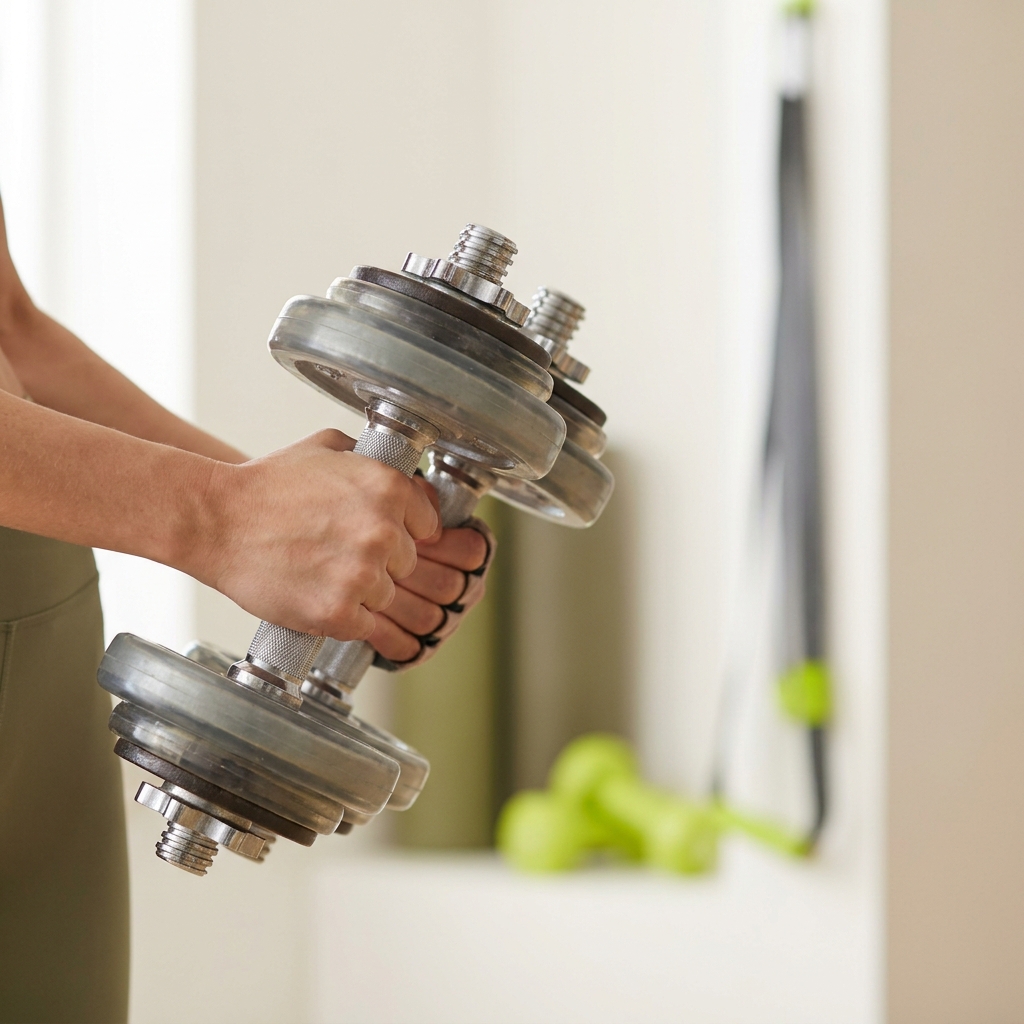
- Pick a conservative weight and perform a set in your target rep range (for many general-strength moves, 8-12 reps is a practical test window). If you can’t control the tempo or range, go lighter. If it’s easy, go heavier. The last few reps should feel challenging but not collapse your form (Fit Kit).
- Adjust in small steps and repeat a brief test set until the load feels right. Increasing by a couple of pounds (or roughly 1 kg) is a reasonable tweak (TODAY).
How to know it’s right (or not)
- Right: steady control, full range, no heaving or swinging, and the final reps feel tough but doable (Women’s Health).
- Too light: you breeze through with no real challenge by the end of the set (TODAY).
- Too heavy: form breaks, you rely on momentum, or you feel joint pain. Reduce the load and rebuild the pattern (TODAY).
Where to start and how to progress
Beginners
Start with lighter weights to learn the movement. Once you can complete your target reps with consistent technique, increase the load slightly or add a couple of reps in your next session. Small, regular progressions beat big jumps (Fit Kit).
Older adults
Practice the exercise first, then use a light weight that challenges you without breaking form. If the weight feels too heavy or technique slips, lower it. Build gradually and consider medical advice if you have existing conditions (More Life Health).
Between sets, rest long enough to keep your form crisp on the next set. For practical guidance on rest timing, see How long should I wait between sets for strength-training?
Picking weights by exercise type
- Heavier (relative): squats, lunges, hip hinges, chest presses and rows, where larger muscles and multiple joints share the load (Women’s Health).
- Lighter (relative): curls, lateral raises, triceps kickbacks, overhead work, and many core drills, where stability and smaller muscles limit load (Fit Kit).
Equipment choices at home
If you train at home, adjustable dumbbells can cover a wide range of exercises and make small load changes without buying many fixed pairs, which helps steady progression and saves space (RitKeep guide).
Pick your dumbbell for today’s workout
Common slip-ups (and quick fixes)
- Using one weight for everything: Switch loads by exercise; lower-body and compound moves usually need more.
- Chasing numbers over form: Keep reps smooth and aligned; if technique fades, drop the weight (TODAY).
- Skipping the warm-up: Take a few minutes to prepare so the test set reflects your real strength (TODAY).
FAQ
When should I increase my dumbbell weight?
When your planned sets feel controlled and the last reps are no longer challenging, increase by a small amount or add a couple of reps, then reassess next session (Fit Kit).
Can I pick by feel without exact numbers?
Yes. A simple test set works well: if the last few reps are tough but tidy, you’re in range. If they’re easy, go slightly heavier; if form breaks, go lighter (Women’s Health).

Related guides
Product options for this topic
As an Amazon Associate I earn from qualifying purchases. These are researched options, not hands-on test results. Check the exact size or model, current price and availability on Amazon.
| Product option | Fit and limits to check | Retailer |
|---|---|---|
| CAP rubber-coated hex dumbbells, 10 lb pair | A pair of fixed-weight dumbbells for exercises suited to this load. Choose weight for your current ability; a single pair will not cover every exercise or progression. | View on Amazon |
Sources and further reading
- Stop guessing: How to pick the perfect dumbbell weight every time
- This 4-step test will help you pick the right size dumbbells
- The Ultimate Guide to Choosing the Perfect Dumbbell Weight - Fit Kit
- A guide for seniors on choosing the right weights — More Life Health
- What weight dumbbells should l use? | RitKeep