Start with the movements and the clear space they need. Storage footprint and usable training space are different measurements.
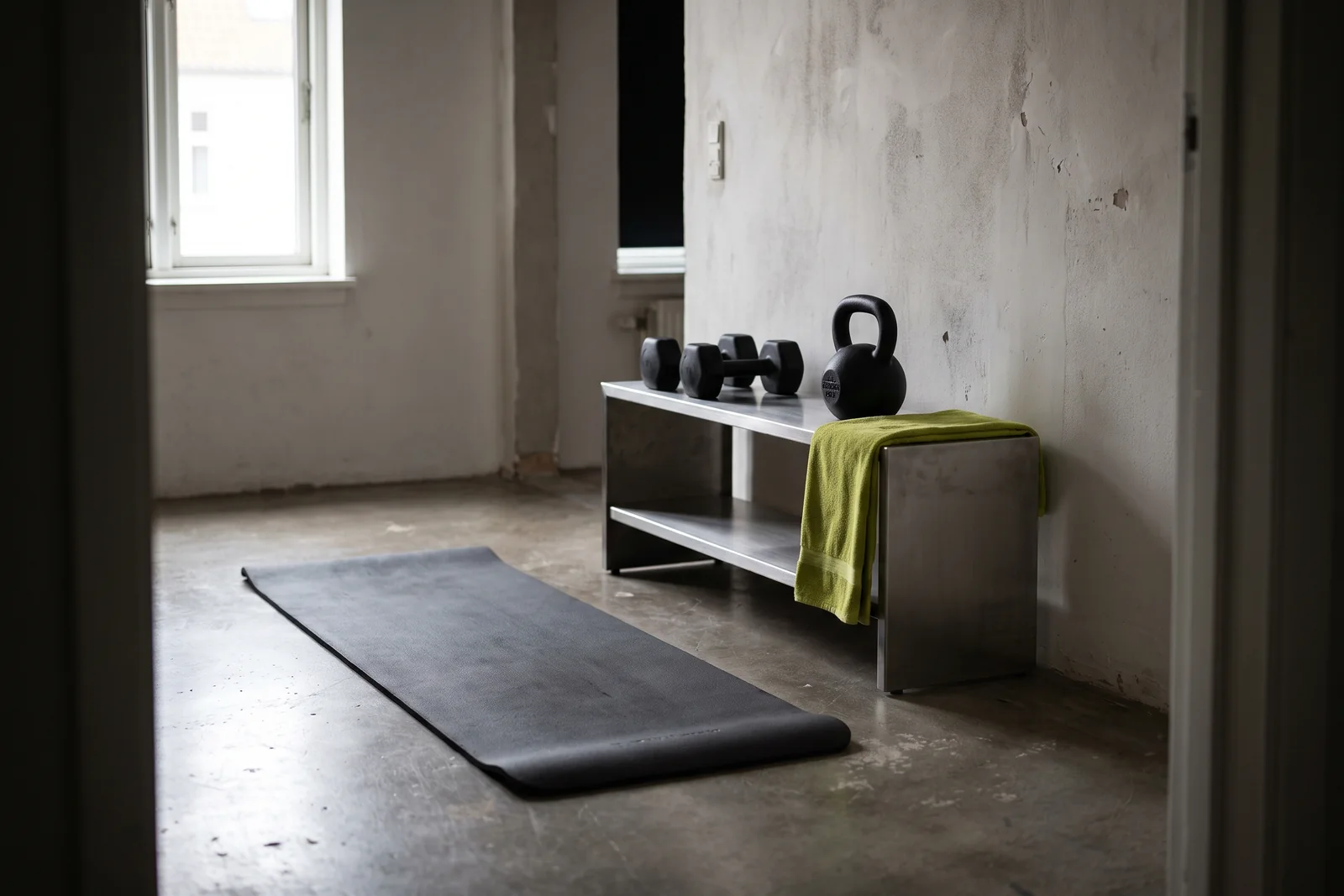
Map the session before the shopping list
Write the exercises you expect to perform. Mark the space needed to move into position, set down equipment and step away. A bench that fits between two pieces of furniture may still be difficult to use safely.
Try the setup with the room empty and light practice movements. Keep doors, walkways and emergency exits clear. The plan should work when the rest of the home is being used.
Count the everyday handling
A compact adjustable set may reduce stored equipment, but you still have to move and adjust it. Check the starting weight, increments and a stable adjustment surface. Do not assume a heavy stand is necessary before using the simpler setup you already own.
Consider noise, the floor surface, other people and pets. A floor covering can affect grip and handling; it is not a guarantee that a floor can carry a particular load or withstand dropped weights.
Keep installation separate
Anything fixed to a wall, ceiling or door creates an installation question. The building material, anchor specification, condition and manufacturer instructions matter. A generic home-gym article cannot certify a mount.
Choose movements that match a suitable setup. Do not improvise an anchor from furniture because the equipment looked portable in a product photograph.
Buy for a useful first month
Begin with the programme and the gaps in the equipment you already have. A mat, a modest resistance option and a place to keep the log may be enough to evaluate the routine.
Use the product shelf as a set of checks, not a package you must buy together. Return policies, local delivery, storage and replacement parts all belong beside the initial purchase price.
Bring one useful question to the next session
List your planned movements. Check usable clearance. Keep exits and storage practical. Keep the guide beside your own record so you can see which part of the decision still needs information.
The worked example below is hypothetical. Replace its inputs with the quantities or circumstances you actually know; do not turn an illustration into a personal training or nutrition prescription.
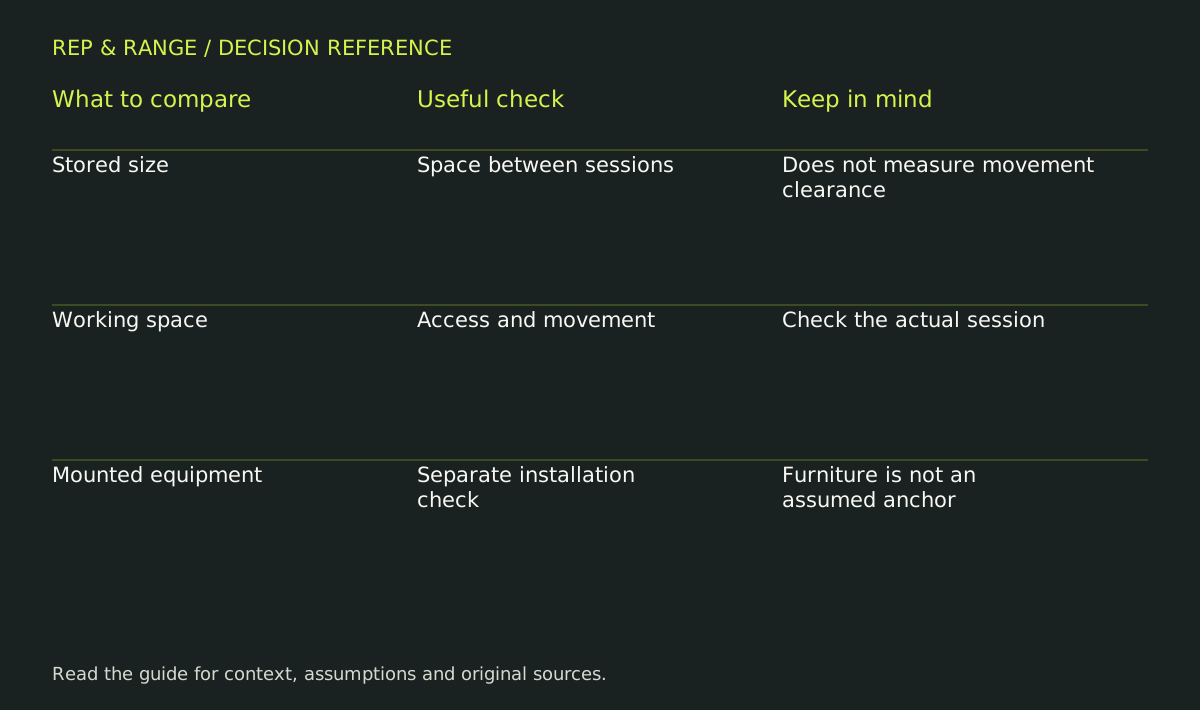
Compare the decision.
| What to compare | Useful check | Keep in mind |
|---|---|---|
| Stored size | Space between sessions | Does not measure movement clearance |
| Working space | Access and movement | Check the actual session |
| Mounted equipment | Separate installation check | Furniture is not an assumed anchor |
AN ILLUSTRATIVE EXAMPLE
Floor area is only the first measurement
A hypothetical 2 m × 2 m empty corner has 4 m² of floor area. That arithmetic does not establish that a bench, every movement or a mounted trainer can be used there. Check the full setup and access routes.
Take this with you.
- List your planned movements
- Check usable clearance
- Keep exits and storage practical
Your questions, answered.
How much space do I need?
There is no single answer. Check the actual equipment and the clearance needed for your planned movements, access and safe handling.
Do floor mats make any room suitable for weights?
No. Surface protection is not a structural assessment or a guarantee against damage.
Should I buy every item in the starter collection?
No. Keep what already works and investigate only the equipment that solves a real gap.