The journal
Muscles worked by the resistance band pull-apart
A clear guide to what the band pull-apart trains, how to feel the right muscles, simple form cues, band length notes and a quick setup checklist.
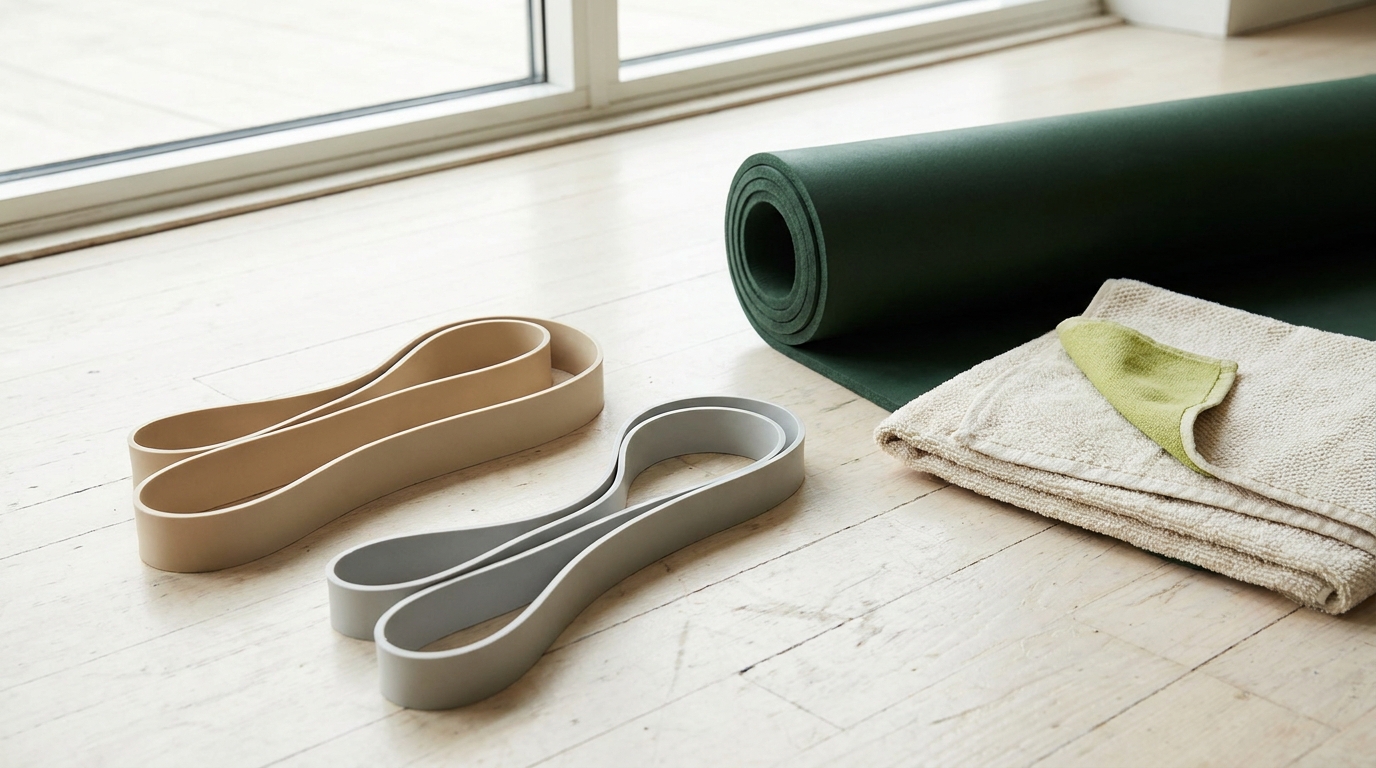
The resistance band pull-apart primarily works your rear deltoids and rotator cuff, with your trapezius assisting during the movement (StrengthLog: Band Pull-Apart).
Where you should feel it
Done correctly, the pull-apart targets:
- Rear deltoids: the back of your shoulders driving horizontal abduction.
- Rotator cuff: small stabilizers around the shoulder joint working to control arm rotation and humeral head position.
- Trapezius: assisting to move and stabilize the shoulder blades as you spread the band (StrengthLog: Band Pull-Apart).
How to do a clean pull-apart for those muscles
- Stand tall, hold the band at shoulder height with straight but soft elbows and palms facing down.
- Lock ribs down, keep shoulders away from ears.
- Pull the band apart by moving your arms out to the sides until you reach a wide T position. Think “shoulder blades together,” not “hands back.”
- Pause briefly, then return under control to the start (StrengthLog: Band Pull-Apart).
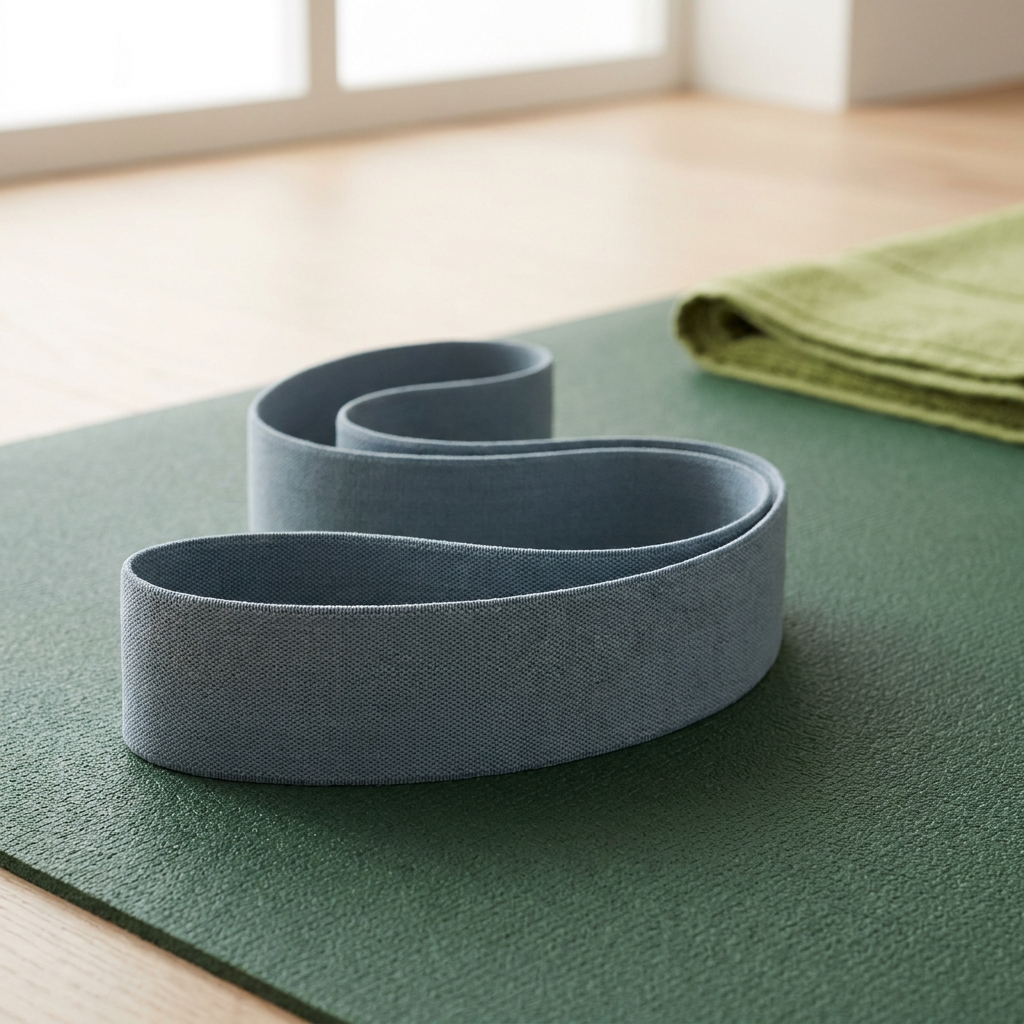
Grip width, band strength and band length
- Start lighter than you think. Adjust difficulty by moving your hands closer together on the band rather than forcing a heavy band with poor form (StrengthLog).
- Typical flat bands are often sold in 5-foot pre-cut lengths that work for most people. You can also cut from rolls to suit your arm span (Performance Health: THERABAND FAQ).
- Force comes from how far you stretch the band (its elongation). For the same band color, a 1-foot piece stretched to 2 feet produces similar force to a 2-foot piece stretched to 4 feet at the same percent elongation (THERABAND Latex Bands Support).
- Safety note: follow your exact band’s extension limit; the cited THERABAND FAQ describes 300% elongation as four times unloaded length to reduce break risk (Performance Health: THERABAND FAQ).
Choosing the right resistance helps you hit the target muscles cleanly. See our practical guide: How to choose the right resistance band strength and a quick explainer on labels: What do the pounds mean on resistance bands?
Common mistakes that take work off the target muscles
- Bending the elbows into a “row.” Keep arms long so the rear delts and cuff do the work, not the biceps.
- Shrugging the shoulders. Think long neck and slide shoulder blades back, not up.
- Leaning or arching the low back. Brace lightly and keep ribs stacked over the pelvis.
- Rushing the return. Control the band back to the start to keep the cuff engaged.
Simple variations
- Overhand vs. neutral grip: pick the one that lets you keep elbows straight and shoulders down.
- Slightly wider or narrower hand spacing: fine-tune the challenge without changing bands (StrengthLog).

Put this into practice
Note the band model, grip span and movement you can control before increasing resistance. Use the exercise to practise the intended motion rather than using a harder band to compensate for a changed path or loss of control.
Band pull-apart quick setup and form checklist
FAQ
Does a pull-apart work the lats?
Not primarily. The main movers are the rear delts and rotator cuff, with help from the trapezius (StrengthLog).
What band length should I buy for pull-aparts?
Five-foot pre-cut flat bands work for most people, and you adjust difficulty mainly by hand spacing. If you cut from a roll, size it to your arm span and follow the exact band’s stated extension limit (Performance Health: THERABAND FAQ).

Optional equipment for this guide
Compare long-band formats rather than substituting a short mini-loop. Use the exact model’s grip arrangement and stretch limit; the listed colours do not imply equivalent resistance.
As an Amazon Associate I earn from qualifying purchases. These are researched options, not hands-on test results. Check the exact size or model, current price and availability on Amazon.
| Product option | Fit and limits to check | Retailer |
|---|---|---|
| Product imageTHERABAND CLX looped resistance band, 5 feet / red | A long band with multiple loops, not a short mini-loop. Check the actual model’s resistance, starting length, approved use and stretch limit before adapting a pull-apart. | View on Amazon |
| Product imageTHERABAND latex resistance band, 6 feet / green | A longer latex-band option. Check latex suitability, model-specific stretch limits and the starting grip span; length or colour alone does not establish equivalent resistance. | View on Amazon |