The journal
Should you get a thick or thin yoga mat?
A practical way to choose yoga mat thickness based on your practice, joint comfort and portability, with quick tests and a checklist.
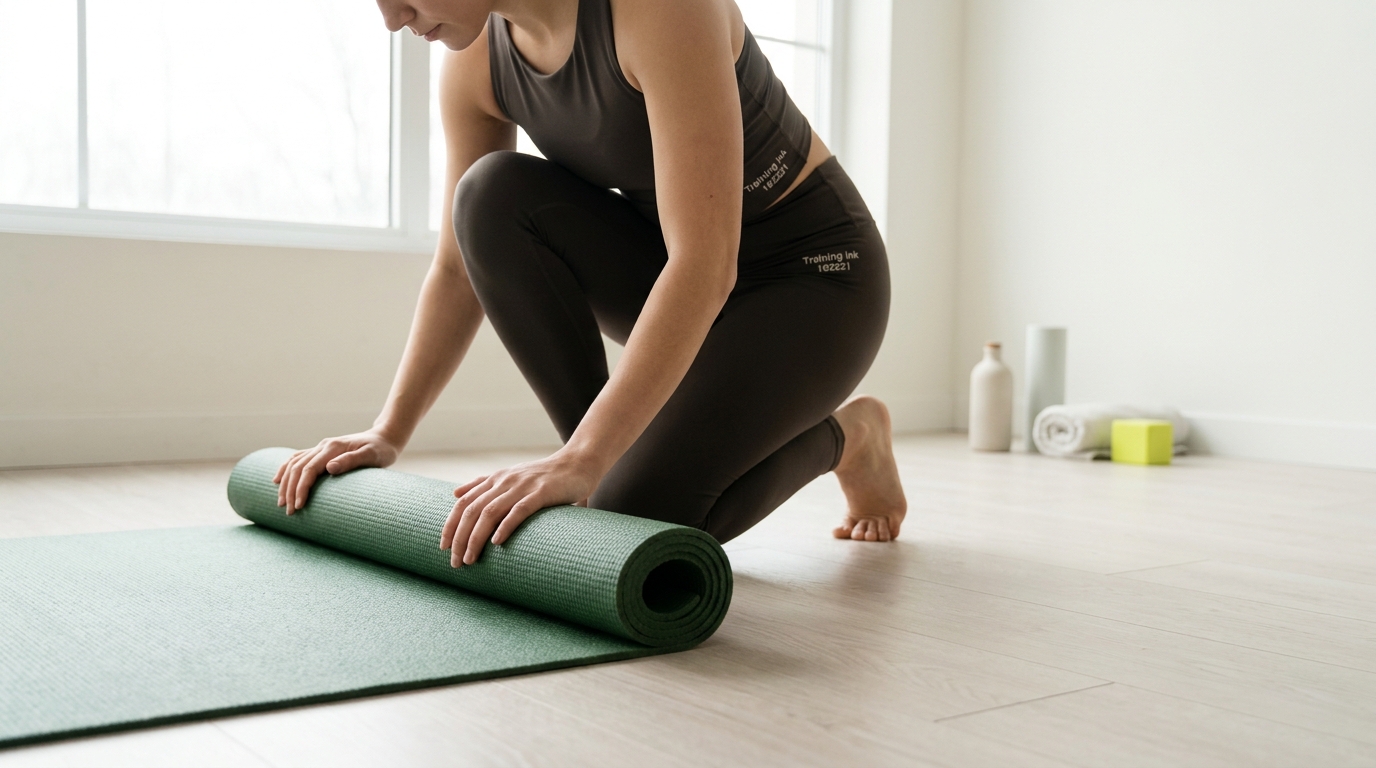
Short answer: neither is universally better. Thin mats around 1.5-3 mm tend to feel more stable and pack smaller, while thicker mats around 5-6 mm cushion joints and floor work. A dense mat around 3-4 mm is one middle-ground option for a balance of feel and comfort. Let your main practice, joint sensitivity and portability needs decide, not the number alone Hugger Mugger: thick vs thin, Yoga Design Lab: thin or thick.
How thickness changes stability and cushioning
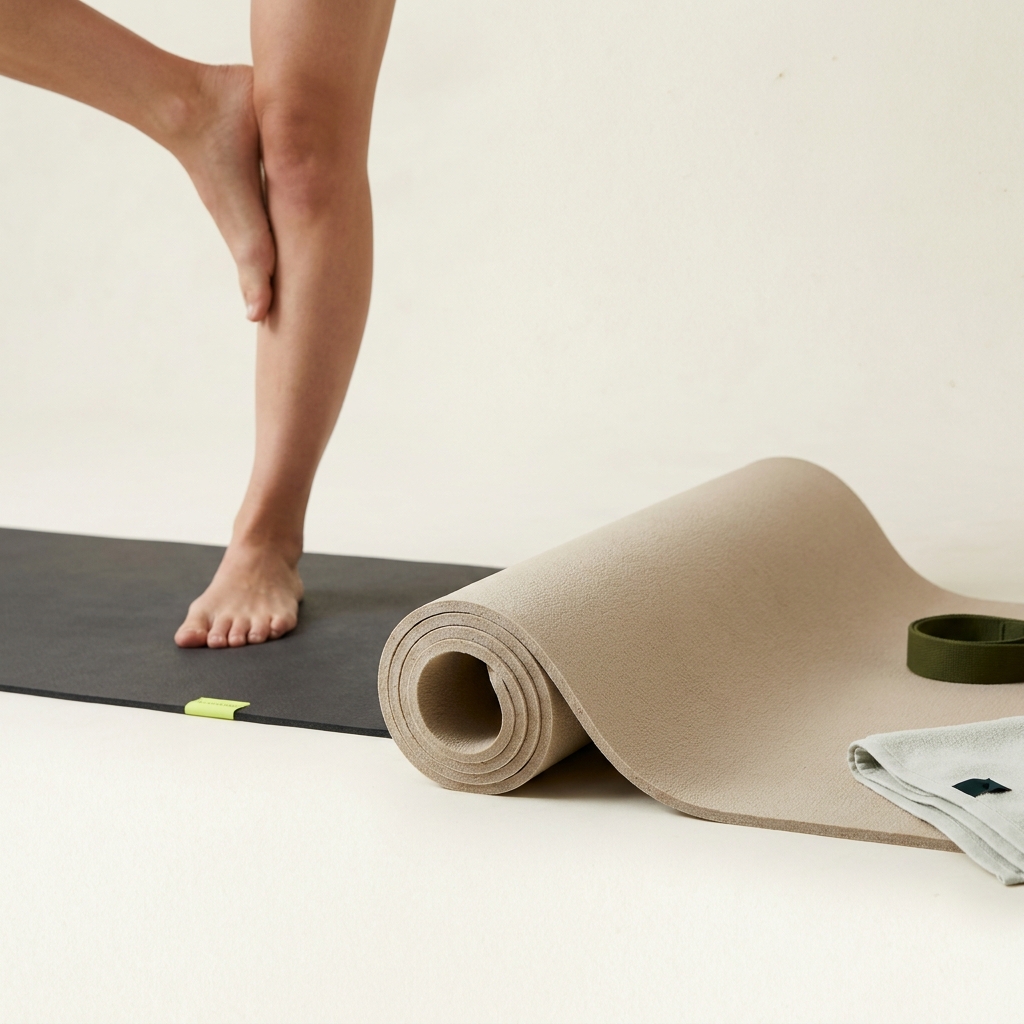
Thinner mats let your hands and feet sense the floor and usually wobble less in single-leg balances and fast transitions. Thicker mats spread pressure and feel kinder under knees, hips and spine during long holds and supine poses. Both makers also note a key caveat: if a mat is thick but low-density and squishy, it can reduce balance and even make wrists sink in uncomfortable angles during Downward Dog Yoga Design Lab: thicker mats, Hugger Mugger: thick vs thin.
When a thin mat makes more sense
Choose thin (about 1.5-3 mm) if you prioritize
- Balance and fast flows: firmer, closer floor contact helps in poses like Tree or Warrior III Hugger Mugger: thick vs thin.
- Travel and commuting: ultra-thin travel mats fold or roll smaller and weigh less Yoga Design Lab: thin or thick.
- Layering at studios: many use a 1.5-2 mm mat over a house mat for hygiene without extra bulk Yoga Design Lab: thin or thick.
When a thick mat is the better pick
Choose thick (about 5-6 mm) if you prioritize
- Restorative or Yin: more cushion supports long holds and floor time Yoga Design Lab: thicker mats.
- Joint comfort: extra millimeters help reduce pressure on knees, hips and spine on hard floors Yoga Design Lab: thick vs thin differences.
- Cold or hard surfaces: thicker mats insulate better from tile or concrete Hugger Mugger: thick vs thin.
Note: Stability on thicker mats depends on density. High-density constructions can feel steadier than soft foams at the same thickness Kurma: influence of thickness, Yoga Design Lab: thicker mats.
The versatile middle ground and why density matters
If you mix styles, a dense 3-4 mm mat is a common sweet spot for cushioning without losing floor feel. Makers consistently recommend looking beyond millimeters to density and material, because a dense 3.5 mm rubber mat can feel more supportive than a soft 6 mm foam mat Hugger Mugger: thick vs thin, Yoga Design Lab: thin or thick.
Other factors that often decide the feel
Practice surface and grip
- Hardwood or tile: consider at least mid-thickness (around 4 mm) for comfort.
- Carpet: a thinner, denser mat (about 2-3 mm) avoids a too-soft, unstable stack on plush carpet.
- Grip and texture are separate from thickness. Prioritize a grippy surface for sweaty classes, then choose the thickness that meets your comfort needs Yoga Design Lab: thin or thick.

How to test a mat quickly
Simple in-store or at-home sequence
- Balance test: try a brief, familiar balance with a stable support nearby. If the surface feels spongy and wobbly, try a denser or thinner option Yoga Design Lab: thick vs thin differences.
- Kneeling test: in tabletop or low lunge, note knee pressure. If you feel the floor sharply, you may want thicker or denser cushioning Yoga Design Lab: thicker mats.
- Wrist check: in Downward Dog, watch whether your palms stay level. If heels of hands sink more than fingers, the mat may be too soft; stop if the pose is uncomfortable and compare a firmer surface; ask a qualified instructor about adapting the pose Hugger Mugger: thick vs thin, Yoga Design Lab: thin or thick.
Prefer a thin mat but need knee comfort occasionally? Use a folded yoga blanket or small knee pad for targeted cushion instead of softening the whole surface Hugger Mugger: thick vs thin, Yoga Design Lab: thin or thick.
Quick checklist: pick your yoga mat thickness
FAQs
Is a 6 mm yoga mat too thick?
Not for everyone. It is helpful for joints and floor work, but many people find balances steadier on thinner or denser mats. If balance is a priority, test a dense 3-4 mm option first Hugger Mugger: thick vs thin, Yoga Design Lab: thicker mats.
Do travel mats have to be thin?
Most travel designs are about 1.5-2 mm to fold and pack easily. If you use one on hard floors, consider layering it over a studio mat for added cushioning Yoga Design Lab: thin or thick.
What if I practice on carpet?
Carpet already adds give. A thinner, denser mat (about 2-3 mm) usually keeps the surface from feeling too soft for standing poses Yoga Design Lab: thin or thick.
Care matters too. If you own a mat already, keep it clean so grip and feel stay consistent. See our guide: Do yoga mats need to be washed?. Building a small home recovery kit? You might also like How to choose a foam roller: the factors that matter.

Related guides
Product options for this topic
As an Amazon Associate I earn from qualifying purchases. These are researched options, not hands-on test results. Check the exact size or model, current price and availability on Amazon.
| Product option | Fit and limits to check | Retailer |
|---|---|---|
| Manduka PRO mat, 71 × 26 inches | A floor-mat option for mobility and supported floor work. Check dimensions, grip and care guidance for your surface and routine. | View on Amazon |