The journal
Rubber or foam yoga mat: which is better for you?
Quick, practical guidance on rubber vs foam yoga mats with thickness, grip, weight and care tips to choose confidently for hot classes, travel or home practice.
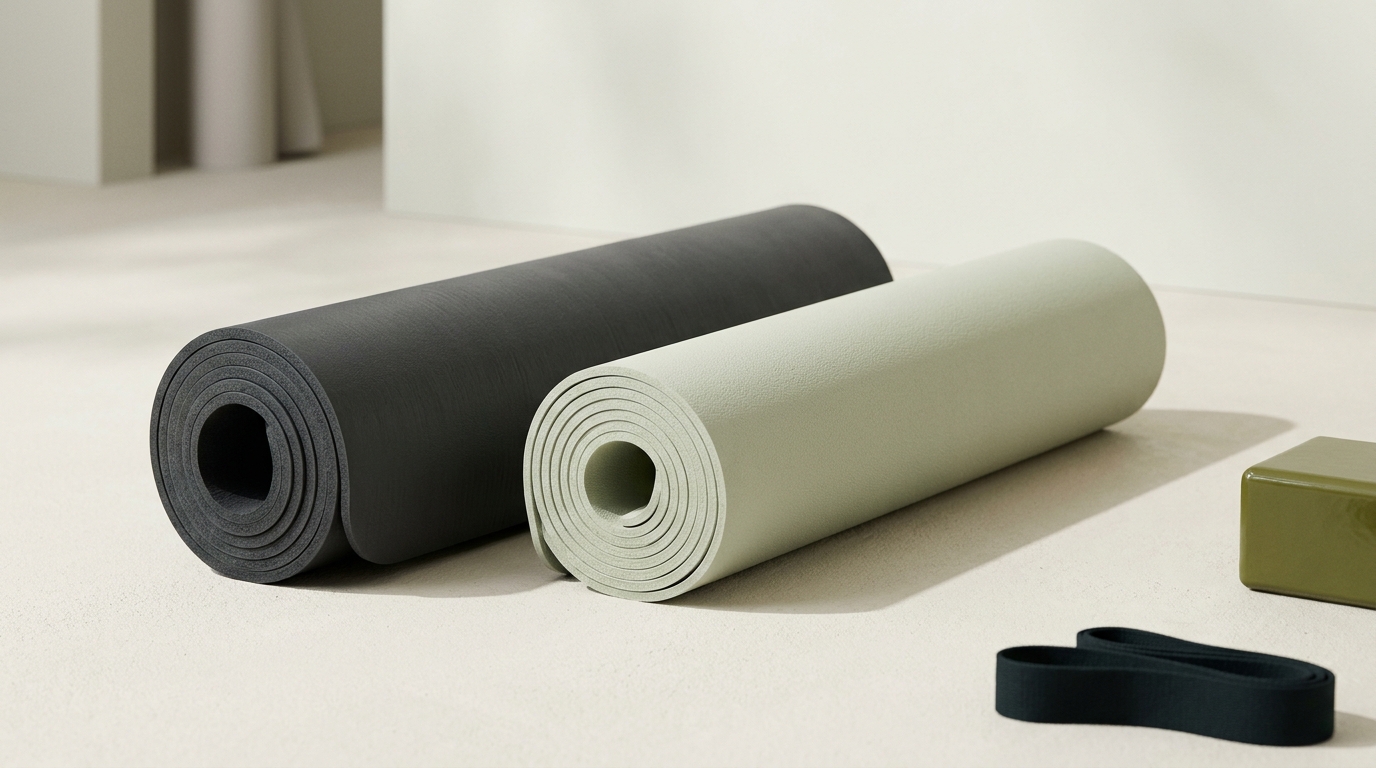
Short answer: consider natural rubber for a dense, stable base; judge wet grip by the actual top surface and product guidance; pick foam or TPE if you prioritize low weight, easy portability and a softer feel. Your ideal choice also depends on the thickness you select, because density and thickness together determine cushion and balance (Hugger Mugger guide).
How rubber vs foam changes your thickness choice
Grip and sweat performance
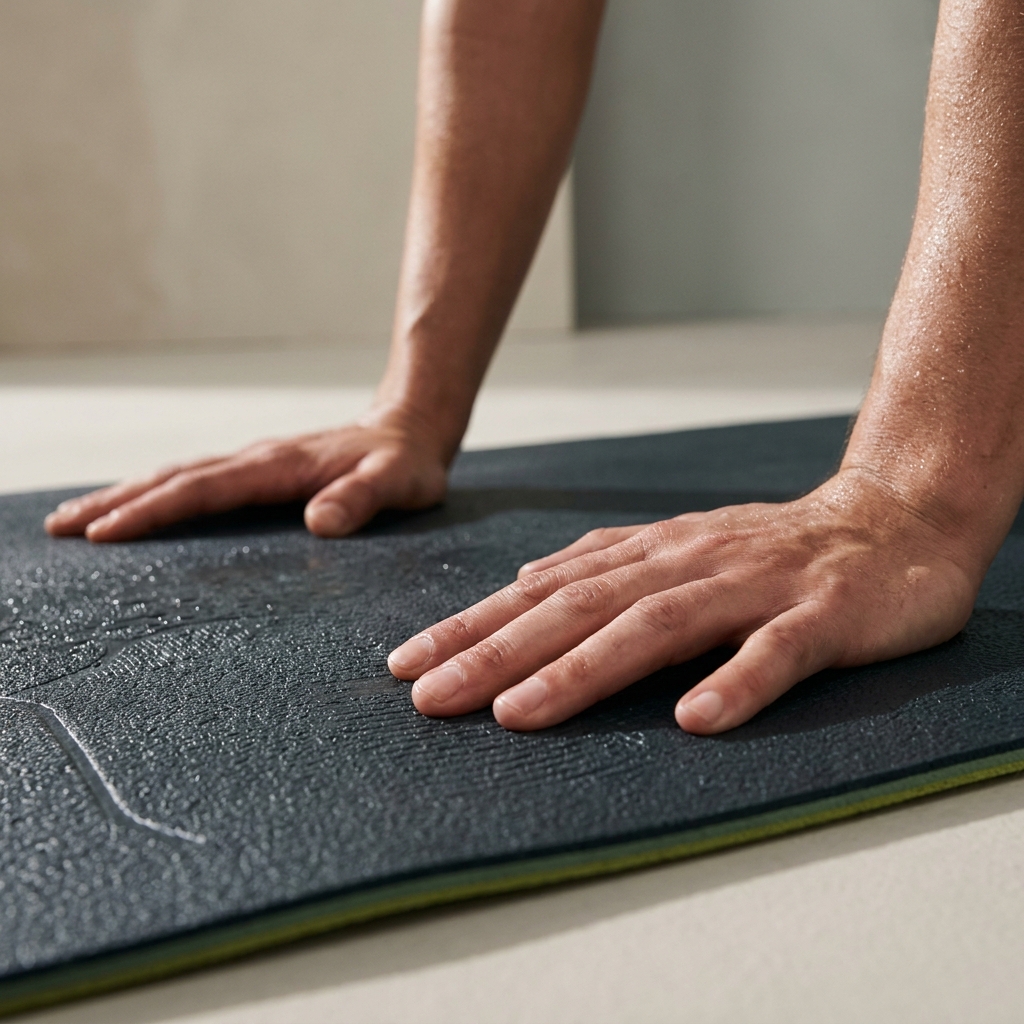
Material affects both surface grip and how securely the mat stays on the floor. Natural rubber is inherently grippy and dense, which helps the mat stay put during dynamic transitions (Yoga Design Lab guide). If you sweat heavily, look for constructions known to maintain traction when damp. For example, cork-over-rubber tops get tackier as moisture increases, while the rubber base provides floor grip and stability (Yoga Design Lab guide). Many lightweight foam or basic TPE mats offer decent dry grip but can slide or stretch more under load (Yoga Design Lab guide).
Thickness and density explained
Thickness alone does not guarantee comfort. Density prevents you from “bottoming out” on hard floors and helps balance poses feel steady. High-density rubber can be supportive even at ~3 mm, while very soft foams can feel plush but unstable at greater thicknesses (Hugger Mugger guide).
Common thickness categories you will see when shopping: travel ~1.5 mm, standard ~3-4 mm, and extra cushion ~5-6 mm. These ranges are widely used across rubber-based designs, with the trade-off that thicker builds are heavier to carry (Yoga Design Lab guide).
Portability, weight and staying flat
Carrying to class or travel
If you commute or fly with your mat, weight matters. Many foam and TPE mats are lightweight and easy to carry, which is why they are popular as everyday or travel options (Kati Kaia materials overview). For packability, travel formats around 1.5 mm roll or fold smaller while still offering a usable surface in studios or hotels (Yoga Design Lab guide).
Stability on the floor
Dense rubber bases have the mass to unroll flat and resist bunching during flowing sequences (Yoga Design Lab guide). Some lighter foam and TPE builds are more prone to edge curl or stretching, which can be distracting in balance work (Kati Kaia materials overview).

Check the complete material specification
If you have a latex sensitivity, check with the manufacturer before choosing natural rubber. Manduka’s eKO guidance, for example, advises people sensitive to traces of latex to choose a different mat series. A cork top does not establish that the rubber backing is suitable.
Price and care basics
What you usually pay
Expect many natural rubber or rubber-composite builds to cost more than basic foam options. That price often reflects denser materials and more complex constructions (Kati Kaia materials overview).
Care, cleaning and longevity
Follow the maker’s care label. Use the cleaner and method specified for that exact mat, then dry it before use or storage. Do not assume every rubber mat tolerates soap, soaking or direct sun (Yoga Design Lab guide). For step-by-step basics, see our Do yoga mats need to be washed?
Decide between rubber and foam: a quick action checklist
FAQs
Is thicker always better for sore knees?
Not necessarily. Density matters as much as thickness. A denser surface may feel more supportive than a very soft foam that compresses to the floor; this is a comfort comparison, not an injury-prevention guarantee (Hugger Mugger guide).
What thickness should most people start with?
A standard around 3-4 mm balances feel-for-the-floor and cushioning; choose denser rubber in this range for stability, or go 5-6 mm if you want extra padding and don’t mind extra weight (Yoga Design Lab guide).
Related reading: How to choose a foam roller

Related guides
Product options for this topic
As an Amazon Associate I earn from qualifying purchases. These are researched options, not hands-on test results. Check the exact size or model, current price and availability on Amazon.
| Product option | Fit and limits to check | Retailer |
|---|---|---|
| Manduka PRO mat, 71 × 26 inches | A floor-mat option for mobility and supported floor work. Check dimensions, grip and care guidance for your surface and routine. | View on Amazon |