The journal
Are 45 pound plates actually 45 pounds?
Most 45 pound plates aren’t exactly 45. Here’s why, how to check yours, and how to store plates safely so your setup stays consistent and tidy.
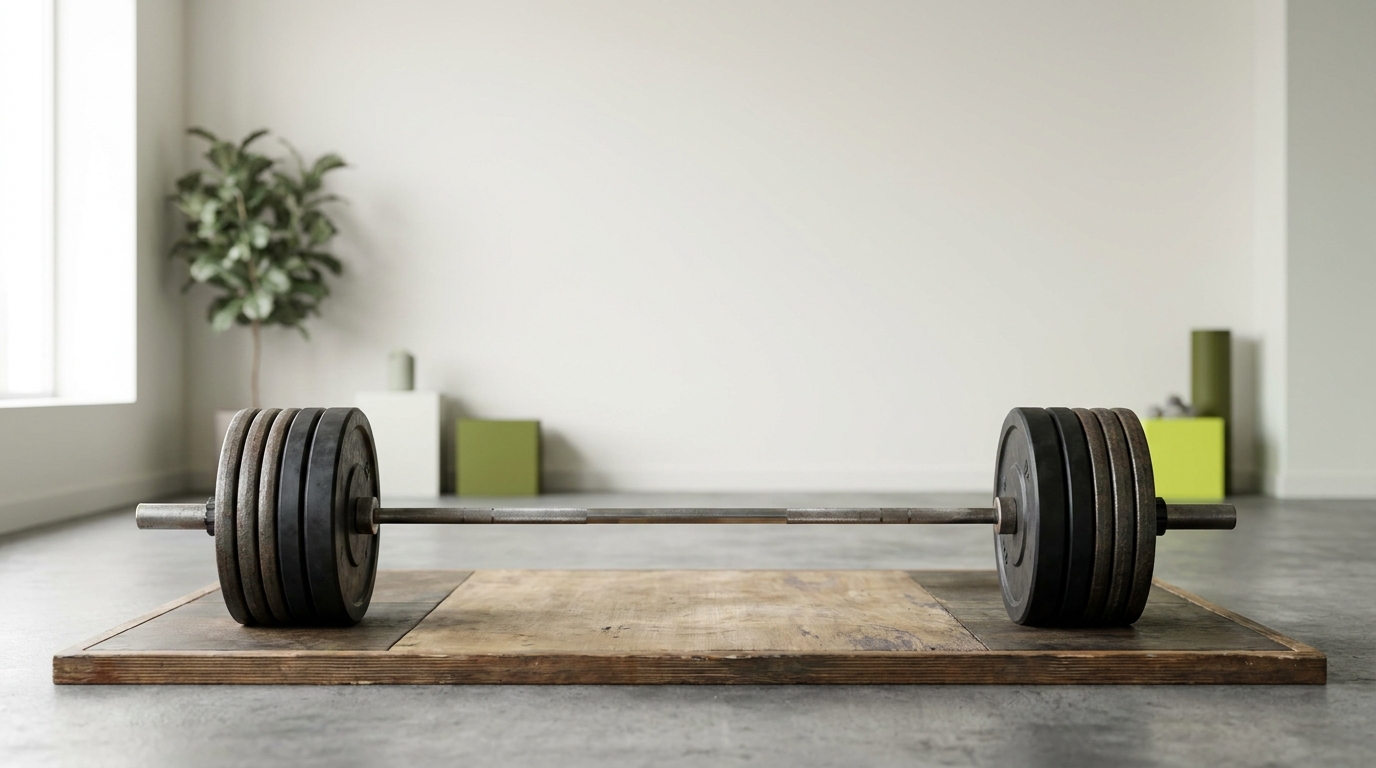
A plate marked 45 lb has a nominal weight of 45 pounds. Its actual mass can differ within the maker’s stated tolerance. Some general training plates allow a percentage variation; calibrated plates can have a much tighter gram-based specification. The label alone does not tell you the accuracy of an individual plate.
Read the tolerance for the exact plate
There is no single accuracy figure for every 45. For example, REP’s Old School Iron plate specification states a 3% weight tolerance. Its Calibrated Steel Plates in pounds instead state a tolerance of ±10 g. Rogue’s calibrated pound plates also specify ±10 g. These are the manufacturers’ specifications for those ranges, not measurements of your plates or a claim about every iron plate.
Check whether the tolerance applies to each plate, which weights it covers, and whether the permitted variation is symmetric or one-sided. A plate sold as a pair still needs its individual specification checked. Do not infer accuracy from paint colour, a shiny finish or the word “Olympic,” which also relates to equipment compatibility.
What a percentage means in pounds
As an arithmetic example, if a 45 lb plate has a stated symmetric tolerance of ±3%, the allowance is 45 × 0.03 = 1.35 lb. That gives a nominal permitted range of 43.65 to 46.35 lb. It does not mean every plate is 1.35 lb wrong, or that a particular plate you own falls at either end.
A gram-based tolerance is a different specification. Ten grams is about 0.022 lb. Keep the units consistent when comparing products, and read the current product details before buying rather than applying another range’s tolerance.
A 20 kg plate is not exactly 45 lb
Twenty kilograms is approximately 44.09 lb; 45 lb is approximately 20.41 kg. They are nearby denominations, not interchangeable exact conversions. Check the marked unit on every plate. A gym can have pound and kilogram sets with a similar appearance, so record the units along with the load.
How to check your own plates consistently
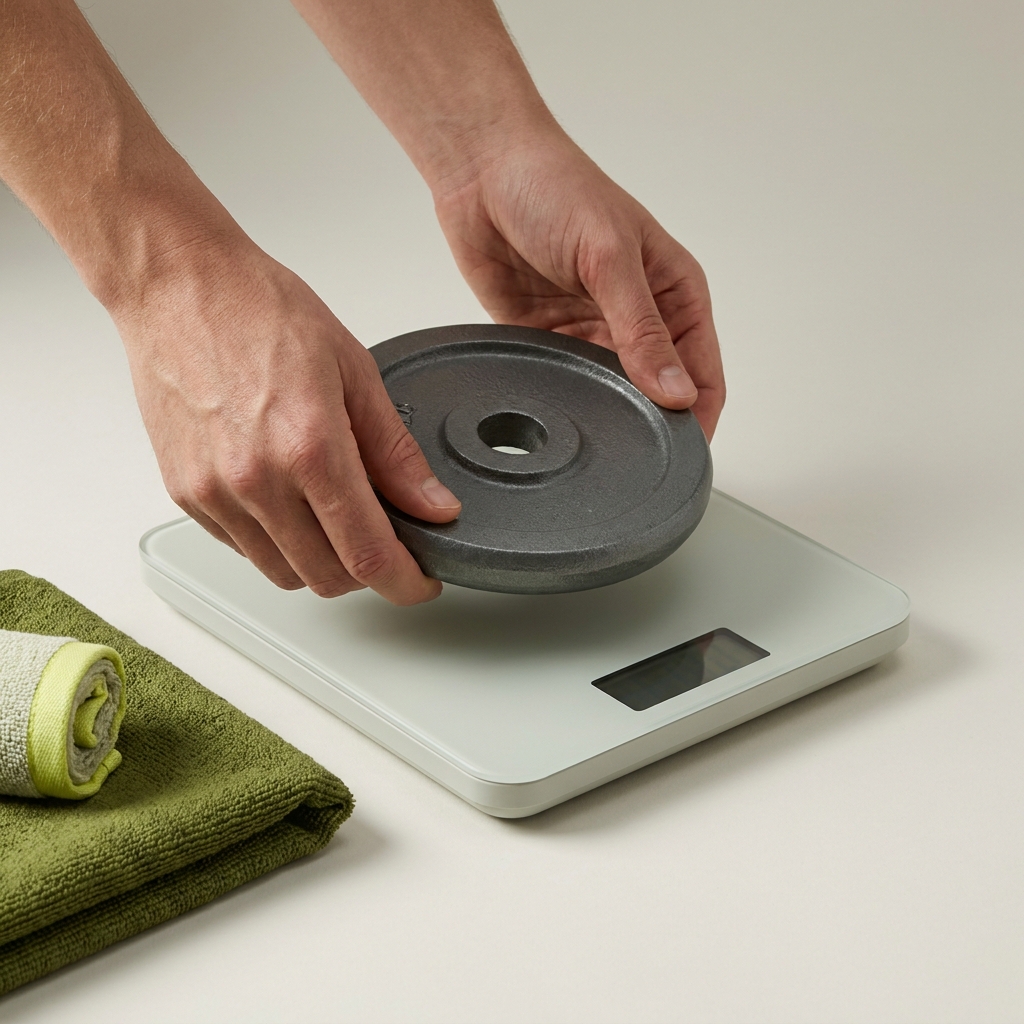
Use a scale with enough capacity for the plate and enough resolution for the difference you want to investigate. Put it on a firm, level surface, zero it, and place each plate centrally and securely. Keep fingers clear, avoid dropping a plate onto the scale, and repeat the reading after removing and replacing it.
Record the plate identifier, units, repeated readings and scale resolution. A coarse household scale can help spot a large mismatch; it cannot establish compliance with a ±10 g specification. For a small suspected error, ask the supplier how it verifies weights or use suitable weighing equipment rather than declaring a fault from an inadequate scale.
Check a 45 lb plate before comparing loads
Use the result in your training log
Identify matched pairs, keep units consistent, and note the bar as well as the plates. Comparing the same equipment over time is more useful than treating a nominal load from two different gyms as perfectly identical. For a small mismatch within the stated tolerance, decide whether ordinary training consistency or stricter calibration is your actual need.
Once pairs are identified, keep them easy to find with our guide to space-saving plate storage. For choosing an appropriate training load rather than checking a label, see how to choose a dumbbell weight.