The journal
The correct position for a weightlifting belt
Place a lifting belt around your midsection between the bottom of your ribs and the top of your hip bones, usually centered at the navel. Tighten so you can fit 1-2 fingers under it, then breathe and brace into the belt.
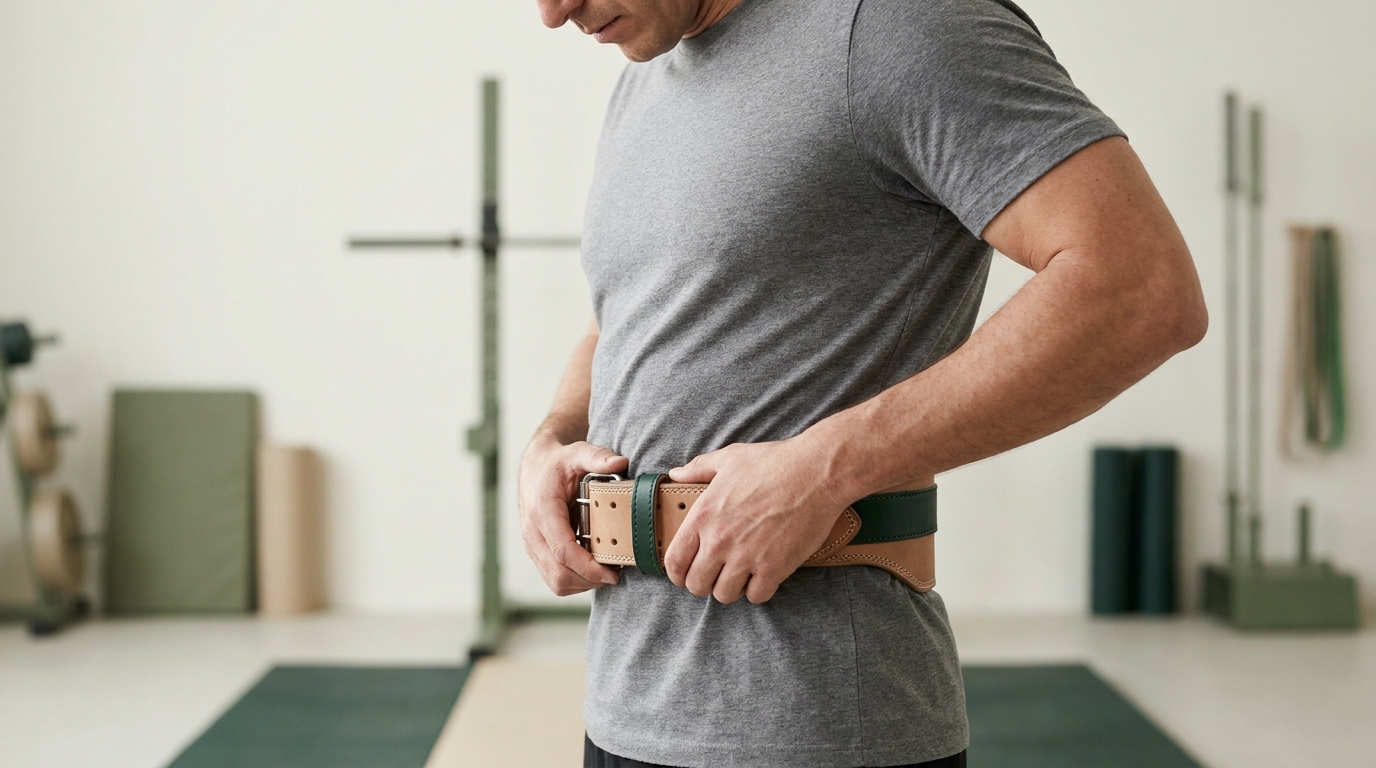
Wear your weightlifting belt around your midsection so it sits between the bottom of your ribs and the top of your hip bones, typically centered at the navel. Tighten it to a snug fit where you can slide 1-2 fingers under the belt, then take a deep breath and brace your abdomen into it before you lift (Eleiko beginner's guide; Strength Shop guide).
Simple belt fit in 5 steps
- Find landmarks: feel for your lower ribs and the top of your hip bones. The belt should span the softer area between them, wrapping evenly around your torso (Strength Shop guide).
- Center it: align the front roughly at your belly button and the back over your lower back for even contact (SoCal Powerlifting).
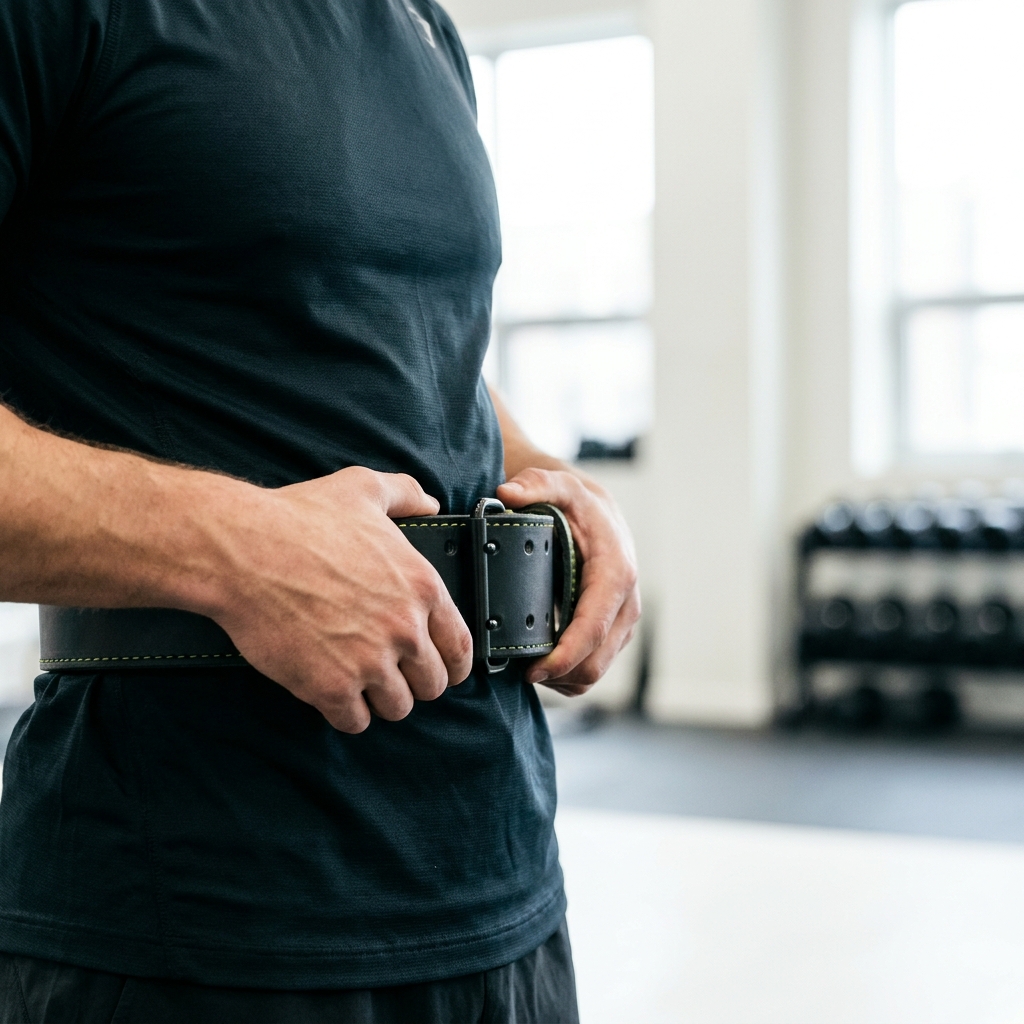
- Set tightness: fasten the belt snugly so you can fit one to two fingers (widthwise) between the belt and your body. That’s tight enough to brace, but not so tight that you can’t breathe in and expand against it (Eleiko beginner's guide; Strength Shop guide).
- Breathe and brace: inhale deeply, fill your abdomen with air, expand 360 degrees, and press your abs and obliques out into the belt before initiating the rep (Eleiko beginner's guide).
- Test and tweak: do a light rep. If the belt pinches your ribs, slide it slightly lower. If it digs into your hips on a hinge, move it a bit higher. Recheck the 1-2 finger fit.
Height tweaks by lift
- Squat: many lifters prefer a slightly lower placement on the waist and a firm tighten to support a deep brace (Eleiko beginner's guide).
- Deadlift: placing the belt a bit higher can make it easier to create pressure at the start of the pull without the belt catching on the hips (Eleiko beginner's guide).
- Overhead press: low and tight is commonly preferred for trunk stability (Eleiko beginner's guide).
- Olympic lifts: a lower placement is often comfortable for clean and jerk, while still allowing mobility (Eleiko beginner's guide).
How tight should it be?
Snug, not crushing. You should comfortably take a deep breath and feel your midsection expand against the belt. A practical rule is a 1-2 finger allowance under the belt when fastened; this helps you create intra-abdominal pressure without restricting movement (Eleiko beginner's guide; Strength Shop guide).
Quick example fit
You’re setting up for squats. Stand tall, place the belt so the top edge is below your lower ribs and the bottom edge is above your hip bones. Center the buckle at your navel, tighten to a 1-2 finger fit, inhale, expand your abdomen 360 degrees, feel your abs press into the belt, then sit into your first rep. If you feel rib pressure at depth, lower the belt a finger-width. If you can’t draw a full breath, loosen one notch and retry your brace.
Common mistakes to avoid
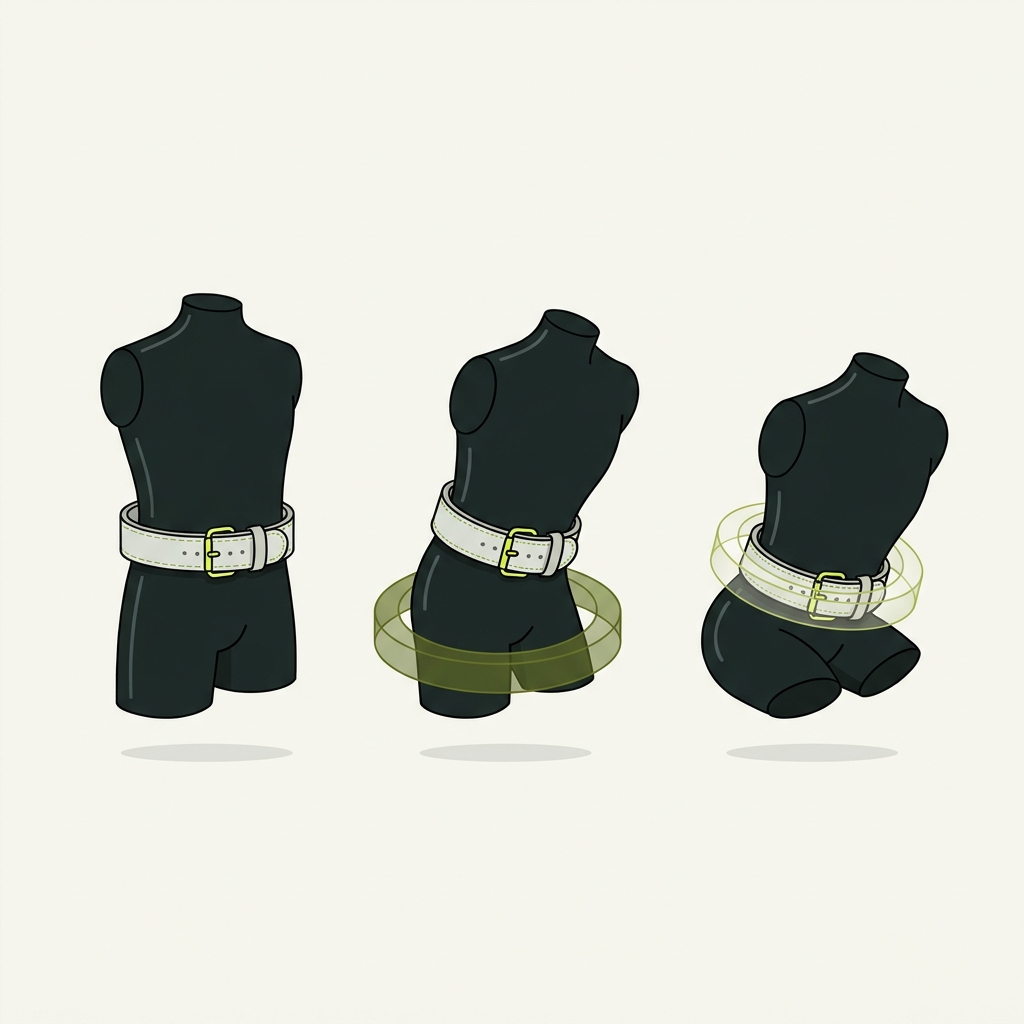
- Wearing it too high under the ribs so you can’t brace effectively.
- Wearing it too low on the hips so it catches on your pelvis in deadlifts.
- Cinching it so tight you can’t inhale and expand into the belt.
- Leaving it loose so your abs can’t press into it.
- Relying on a belt instead of learning to breathe and brace. A belt reinforces a good brace; it doesn’t replace it (SoCal Powerlifting).
Put this into practice
Test the belt position with a controlled setup and check that it does not obstruct the movement. Stop for pain or concerning symptoms; a belt is not a substitute for technique, appropriate load or qualified assessment.
Belt fit check before your work set
Short FAQs
Front or back? The belt should wrap evenly around your waist, with the back centered over your lower back and the front near your navel so you can brace against it (Strength Shop guide).
How wide are most belts? Many lifting belts are about 4 inches wide, offering consistent contact around the torso for bracing (Strength Shop guide).
Do belts prevent injuries? Belts don’t shield your back from injury on their own; used correctly, they help you brace and maintain better positions under load (Eleiko beginner's guide).
Related reading from Rep & Range
- What are some good 5-minute warm-ups to do before lifting weights?
- What is a deload week in powerlifting?